Use the filters to browse the information we have available or to narrow your search results for a specific audience (e.g. caregivers, military, children), a preferred type of content (e.g. videos, blogs, articles), or by topics of interest (e.g. family concerns, legal issues, symptoms).
I almost died giving birth. I don’t talk about it much because I didn’t die. I am here. Baby just turned 6 and her little sister is 4. They are thick as thieves and their dad and I are over the moon. But I almost died.
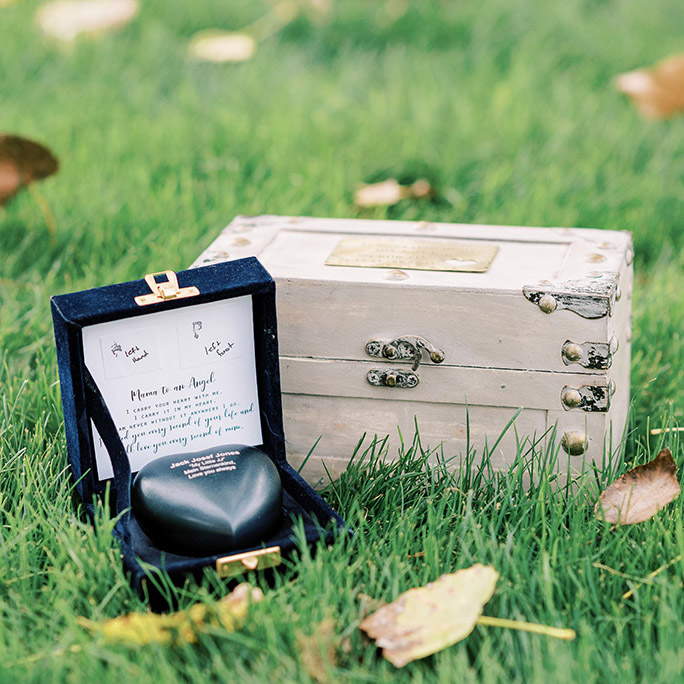
“During pregnancy, a mother celebrates the journey with family and friends — think baby names, baby showers, nurseries, tiny clothes … smiles from strangers and proud hands on an ever-expanding belly. The journey of being pregnant is both personal and public. So, what should be one of the most magical experiences shared with family, friends, and colleagues becomes one of private emotional and physical trauma in a closed room, an experience that is then often not acknowledged nor spoken about. The mother returns home still looking pregnant, her hormones still acting as if she is pregnant, but her arms and heart are empty.”
September is Suicide Prevention Awareness Month. If you are military-connected then you know the 22-veterans-a-day average. You’ve seen the blue ribbons plastered everywhere on base/post. If you are a veteran or caregiver, you’ve seen similar posters at the VA. You’ve probably gone to an annual suicide prevention training or two. You know the signs, you know what to look for and what to do if you are worried about someone’s safety. But nothing can truly prepare you for when it happens.
Trauma can be a strange and often insidious beast. We can be traumatized by directly being impacted by an event like a violent physical attack, a rape, a natural disaster, or an experience in combat, but we can also be traumatized indirectly by caring for, hearing about, or witnessing the intense suffering of others. Both the direct and indirect impact of traumatic events can lead to post-traumatic stress disorder (PTSD).
Last month, Sarah and I took a trip to rural Maine for another first-time life experience. I was more excited than fearful when I jumped out of a plane at 14,000 feet and I can now add skydiver to my life résumé! Had I listened to the advice I received from doctors a decade earlier, the thought of jumping out of a plane would have seemed preposterous.
Many people with disabilities use a service animal in order to fully participate in everyday life. Dogs can be trained to perform many important tasks to assist people with disabilities, such as providing stability for a person who has difficulty walking, picking up items for a person who uses a wheelchair, preventing a child with autism from wandering away, or alerting a person who has hearing loss when someone is approaching from behind.
“Open therapeutic discussion works. It’s like you’re in the woods, it’s pitch-black, there are noises and shadows … and it’s just you, alone, with your one beam of flashlight light bouncing around as you turn this way and that, fight or flight. It’s terrifying. It’s a lot less scary if you’ve got 20 buddies at your side, 20 flashlights that can easily illuminate the forest for what it is, yes, noises and shadows, but once revealed, not so frightening at all. So, all this listening, talking, and sharing made possible by gaming and streaming worked for me and there are a lot of people out there struggling in similar ways who can similarly heal."
Typical PTSD, a formal diagnosis in The Diagnostic and Statistical Manual of Mental Disorders (DSM-5-TR), is defined as a mental health condition that’s triggered by a terrifying event — either experienced or witnessed — such as a car crash, an earthquake, or a sexual assault. Complex PTSD, on the other hand, includes all the facets of a primary diagnosis of PTSD but is related to a series of traumatic events over time or one prolonged event. CPTSD is not yet a formal diagnosis in the DSM-5-TR.
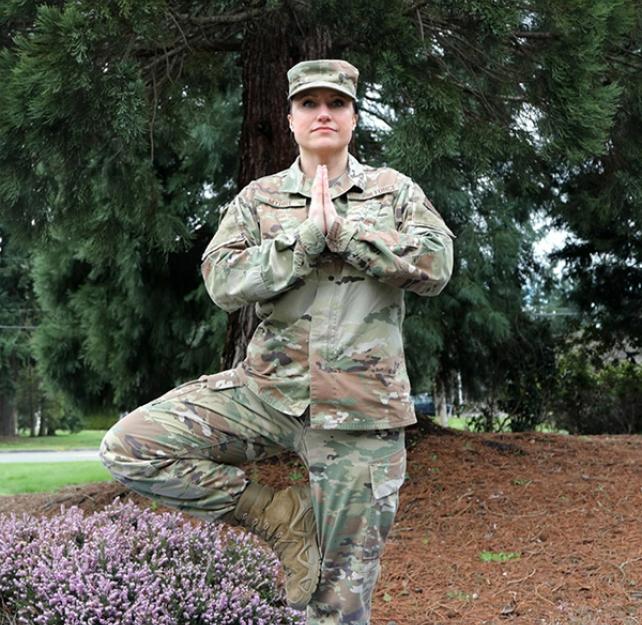
A Marine Veteran herself, she was resistant to try mindfulness, meditation, and yoga; these practices seemed ridiculous to her. But with time and patience, she began to feel great benefits of them.
A Field Operator in the Marines, Ashton Kroner downplayed her symptoms after sustaining traumatic brain injuries, which may have exacerbated them in the long term.
I think what’s crucial to understand is that we are not our emotions. I read somewhere that if you visualize yourself standing behind a waterfall, you can watch your emotions, one by one, fall with the water. They come, they go, they wash over you, but they are not you.
Being mindfully aware in the present moment meant that the past no longer owned me and that there really was no such thing as the future — there is just the here and now.
It is important to understand that no two people experience such horrific exposure in the same way. The extent of the trauma, stress or fear can vary. Survivors of a shooting may want to avoid the neighborhood where the shooting occurred or the context related to shooting, such as grocery stores, if the shooting happened at one. In the worst case, a survivor may develop post-traumatic stress disorder.
I have been speaking with veterans and military family members for BrainLine’s Veteran Voices series. They tell us their stories in an attempt to help anyone who might be experiencing issues with PTSD/TBI. Working with BrainLine has also made me realize just how much trauma occurs both during military service and before.
Tonya Oxendine, United States Army Command Sergeant Major, Retired, joined the military for safety and security but found much of the same trauma she faced at home.
“When I meet people, post-injury who may be stuck in a dark place, who may think their lives are destroyed, I say it’s going to be hard to picture the future but start by dipping your toes into the waters of adaptive sports in a group setting. The sooner you get involved, the better. You don’t have a clue what you will accomplish in life.”
While in the throes of dealing with symptoms from PTSD, my counselor suggested mindfulness and meditation, which I initially thought was a bunch of snake oil … something for hippies, monks, and weirdos. But then I started to learn about the science — and even a little history — and everything began to change; I literally started to breathe again.
William "Bill" Jones joined the United States Army in response to the attacks on 9/11. After several deployments anger, anxiety, and symptoms of post-traumatic stress disorder (PTSD) were taking over and he retired from active duty.
Ideally, trigger warnings allow individuals who have experienced trauma to be forewarned about material that may elicit unwanted memories of past traumatic events. However, some have hypothesized that trigger warnings have more costs than benefits, even for those with relevant traumas.
I enjoy watching my husband cry. That sounds so much worse than what I really mean. He’s been on various medications for his PTSD some of which cause emotional blunting — not being able to laugh or cry when appropriate.