Print Comment

Head Space and Timing

Duane France, Combat Veteran & Clinical Mental Health Counselor
Veterans' Mental Health from a Combat Veteran's Perspective

I’m a retired Army Noncommissioned Officer and clinical mental health counselor practicing in Colorado Springs, Colorado. Now that I’m retired from the military, I’ve come to realize that my mission is now the welfare of the veterans I’m honored to support in their journey to mental health and wellness. Learn more about Duane >
The Latest from Duane

The Worst Case Scenario Paradox

The Worse Case Scenario Paradox: Soldiers view a “sand table” model as 1st Battalion, 27th Infantry Regiment “Wolfhounds”, 2nd Infantry Brigade Combat Team, 25th Infantry Division hold a leader’s live fire exercise. Photo by Sgt. Thomas Calvert

...“hope for the best, plan for the worst.” Eventually, the “hope” part fades away, and they get into the habit of planning for the worst. Then they simply expect the worse to happen, especially as it has happened frequently in the past.

The Taking Credit Paradox

The Taking Credit Paradox, A U.S. Marine is awarded a Navy and Marine Corps Achievement Medal during a regularly scheduled deployment, July 14, 2018. (U.S. Marine Corps photo by Cpl. A. J. Van Fredenberg)

It can be awkward or uncomfortable for veterans to accept or acknowledge personal compliments, which can possibly speak to their self-esteem and self-worth. Resolving the Taking Credit paradox can improve self-worth and make post-military life much more pleasant.

The Networking Paradox

The Networking Paradox - Veterans networking at Naval Surface Warfare Center, Philadelphia Division (NSWCPD) career fair (U.S. Navy photo by Keegan Rammel)

Veterans don’t seem to understand that some of the skills that they developed in the military are easily transferrable. Networking seems overwhelming and daunting…

The Mastery Paradox

The Mastery Paradox - U.S. Army Soldiers assigned to Combined Joint Task Force Horn of Africa discuss land navigation during training in preparation for an Expert Infantryman Badge evaluation at Arta Range, Djibouti. Army Photo by SSgt Timothy Moore

Many veterans find it difficult to transition from a highly interconnected collectivist culture to a highly dispersed and somewhat individualistic culture. 

The Perspective Paradox

The Perspective Paradox: U.S. Sailors prepare for flight operations on the flight deck of the aircraft carrier USS Theodore Roosevelt (CVN 71) April 6, 2021. (U.S. Navy photo by Mass Communication Specialist 3rd Class Alexander B. Williams)

They say that hindsight is always 20-20…that we understand the ramifications of our behavior only from the perspective of looking back on that behavior.

The Cruel to be Kind Paradox

Cruel to be Kind: A recruit carries another recruit during the Confidence Course at Marine Corps Recruit Depot San Diego, Sept. 17. Marine Corps Pfc. Cristian Torres

Service Members and Veterans can demonstrate their genuine concern for others by being aggressive or mean, either to help improve others or to protect others from the veteran’s own pain.

The Risk Taking Paradox

Aircrew members from Coast Guard Air Station San Francisco lower a rescue swimmer towards the cliffs of Mori Point in Pacifica, CA, during vertical surface cliff rescue training, 4.16.2019. U.S. Coast Guard photo by Petty Officer 2nd Class Jordan Akiyama.

Service members and veterans are experts at calculating and mitigating risks in the military but engage in high-risk behaviors outside of the military environment 

The Safety Paradox

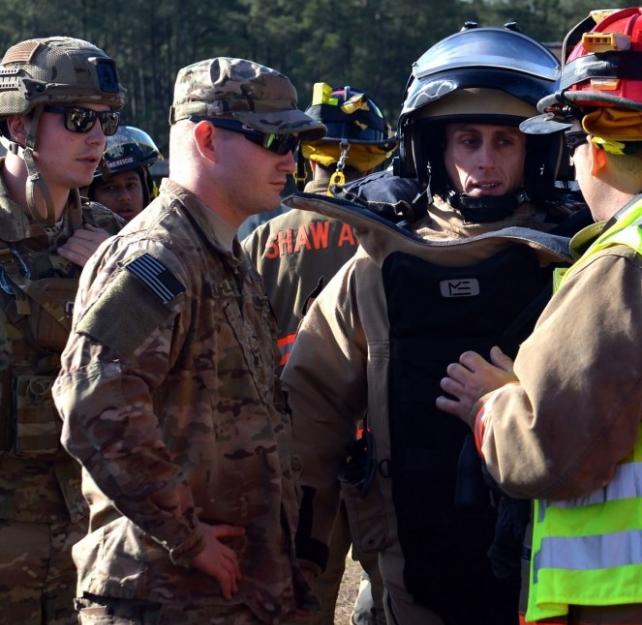
U.S. Airmen discuss a plan of action before participating in a joint hazardous material training at Shaw Air Force Base, S.C., Jan. 19, 2017. (U.S. Air Force photo by Airman 1st Class Christopher Maldonado)

In the military, risk and danger are part of the obstacles to overcome; many veterans, however, see the world as an unsafe place that they need to protect against once they leave the military.

The Relational Paradox

A US Navy Chief Machinist’s Mate greets his family after returning home. (U.S. Navy photo by John Narewski/Released)

Service members and veterans form intimate bonds with their teammates that will last a lifetime, yet struggle to form or reform intimate relationships with others

The Courage Paradox

A service member jumps out of an Air Force C-130J Hercules during a military freefall jumpmaster course over Aviano Air Base, Italy, Sept. 11, 2020. DoD Photo By: Air Force Senior Airman Savannah Waters

Courage is not the absence of fear, as some think; instead, it is the act of continuing in the face of adversity in spite of the presence of fear.