Use the filters to browse the information we have available or to narrow your search results for a specific audience (e.g. caregivers, military, children), a preferred type of content (e.g. videos, blogs, articles), or by topics of interest (e.g. family concerns, legal issues, symptoms).
I have been speaking with veterans and military family members for BrainLine’s Veteran Voices series. They tell us their stories in an attempt to help anyone who might be experiencing issues with PTSD/TBI. Working with BrainLine has also made me realize just how much trauma occurs both during military service and before.
Tonya Oxendine, United States Army Command Sergeant Major, Retired, joined the military for safety and security but found much of the same trauma she faced at home.
“When I meet people, post-injury who may be stuck in a dark place, who may think their lives are destroyed, I say it’s going to be hard to picture the future but start by dipping your toes into the waters of adaptive sports in a group setting. The sooner you get involved, the better. You don’t have a clue what you will accomplish in life.”
While in the throes of dealing with symptoms from PTSD, my counselor suggested mindfulness and meditation, which I initially thought was a bunch of snake oil … something for hippies, monks, and weirdos. But then I started to learn about the science — and even a little history — and everything began to change; I literally started to breathe again.
William "Bill" Jones joined the United States Army in response to the attacks on 9/11. After several deployments anger, anxiety, and symptoms of post-traumatic stress disorder (PTSD) were taking over and he retired from active duty.
Ideally, trigger warnings allow individuals who have experienced trauma to be forewarned about material that may elicit unwanted memories of past traumatic events. However, some have hypothesized that trigger warnings have more costs than benefits, even for those with relevant traumas.
I enjoy watching my husband cry. That sounds so much worse than what I really mean. He’s been on various medications for his PTSD some of which cause emotional blunting — not being able to laugh or cry when appropriate.
The National Military Family Association understands deeply that “military families serve, too,” alongside their service member or veteran parent or spouse.
Our Miiltary Kids recognizes children for being brave despite their parent’s deployment and all the challenges — large and small — that can come with a parent’s recovery from combat injuries.
Retired United States Army Sergeant Angela Peacock shares how a service dog, an RV, and Wounded Warrior Project helped heal her post-traumatic stress (PTSD).
If you are anything like me, when you or your loved one are first given a diagnosis, you research. There is so much information available online, it can be overwhelming or frustrating to know which is accurate, but I find research helpful in being able to report or advocate to doctors for both myself and my loved ones.
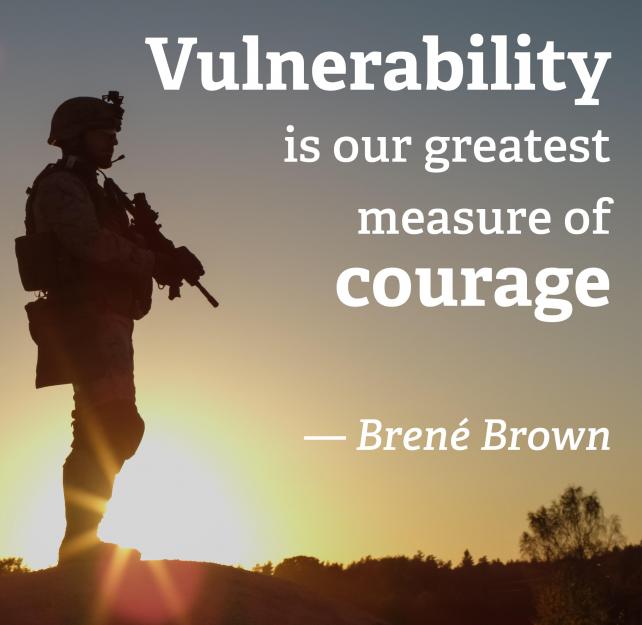
One lesson I have learned since I started meditating is the connection between courage and vulnerability. Yes, vulnerability. I know, it sounds like the antithesis of everything related to being a SEAL, but I have come to understand that while vulnerability and courage aren’t necessarily the same thing, it takes courage to show vulnerability and, in turn, as you show more vulnerability, you actually become more courageous.
"The trek helped me go through this big, heavy basket of rocks I had been carrying around, understand why it was weighing me down, and how to deal with each rock — each experience, each loss — one at a time.," he says.
Meeting many others along the 2,700-mile trek was a trust-building exercise and a way to offer people an opportunity to help and support veterans once home from combat.
Army Veteran Tom Voss learned that meditation is a meaningful and effective way to take time to be with yourself while also recognizing and honoring what's going on in your spirit, brain, and body.
I believed in heroes growing up, even though I saw very few, if any, up close. Heroes existed in comic books and television shows, or in the real lives of others. Not in my life. I saw the world as one big jungle where survival meant hoping the lion would spare me and those I loved, rather than having the strength to resist being eaten. The only way to stop any abuse I saw as a kid was to run from it. Cry about it. Then try to forget it. No heroes. Just a desire to be one every time I left my home, even as I often felt powerless to make life safer for my mom and younger siblings.
When you’re a man in society — not to mention a Navy SEAL in special operations — you are taught that the best (only) option is to be the strong, silent type. You can’t let your emotions control you. You can’t be sad, or too happy. Really, the only acceptable emotions for the masculine persona are stoicism and anger.
The evening should have been one of the most memorable and enjoyable evenings of my 25-year military career. Instead, I nearly destroyed it because I couldn’t control my drinking.