Use the filters to browse the information we have available or to narrow your search results for a specific audience (e.g. caregivers, military, children), a preferred type of content (e.g. videos, blogs, articles), or by topics of interest (e.g. family concerns, legal issues, symptoms).
Last month, Sarah and I took a trip to rural Maine for another first-time life experience. I was more excited than fearful when I jumped out of a plane at 14,000 feet and I can now add skydiver to my life résumé! Had I listened to the advice I received from doctors a decade earlier, the thought of jumping out of a plane would have seemed preposterous.
I think what’s crucial to understand is that we are not our emotions. I read somewhere that if you visualize yourself standing behind a waterfall, you can watch your emotions, one by one, fall with the water. They come, they go, they wash over you, but they are not you.
Being mindfully aware in the present moment meant that the past no longer owned me and that there really was no such thing as the future — there is just the here and now.
I have been speaking with veterans and military family members for BrainLine’s Veteran Voices series. They tell us their stories in an attempt to help anyone who might be experiencing issues with PTSD/TBI. Working with BrainLine has also made me realize just how much trauma occurs both during military service and before.
While in the throes of dealing with symptoms from PTSD, my counselor suggested mindfulness and meditation, which I initially thought was a bunch of snake oil … something for hippies, monks, and weirdos. But then I started to learn about the science — and even a little history — and everything began to change; I literally started to breathe again.
I enjoy watching my husband cry. That sounds so much worse than what I really mean. He’s been on various medications for his PTSD some of which cause emotional blunting — not being able to laugh or cry when appropriate.
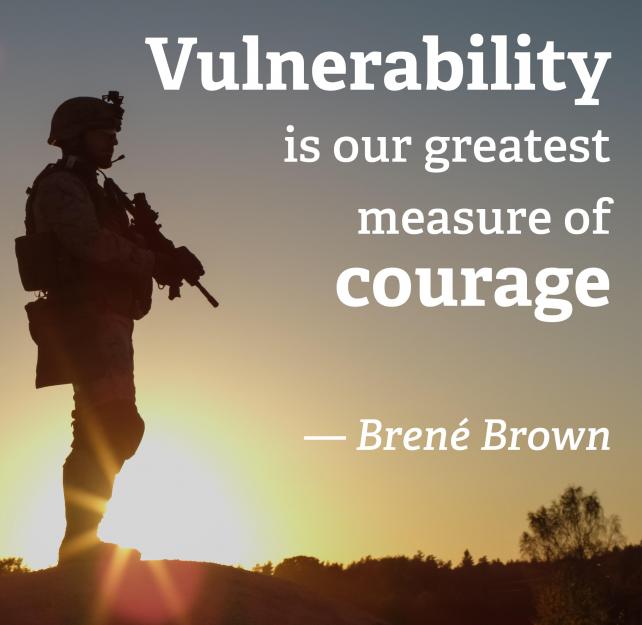
One lesson I have learned since I started meditating is the connection between courage and vulnerability. Yes, vulnerability. I know, it sounds like the antithesis of everything related to being a SEAL, but I have come to understand that while vulnerability and courage aren’t necessarily the same thing, it takes courage to show vulnerability and, in turn, as you show more vulnerability, you actually become more courageous.
When you’re a man in society — not to mention a Navy SEAL in special operations — you are taught that the best (only) option is to be the strong, silent type. You can’t let your emotions control you. You can’t be sad, or too happy. Really, the only acceptable emotions for the masculine persona are stoicism and anger.
I will admit when I first watched Encanto I was not terribly impressed, though the songs in Miranda’s signature style are quite catchy. I have two little girls, 3 and 5, and for those of you with children or grandchildren, you know that they must watch something like Encanto again and again and again. So, suffice it to say, I had the opportunity to really listen and pay attention to the story more than once.
In the past, Russ and I would celebrate across oceans and time zones, sometimes a half hour off. Yes, really. Afghanistan is nine-and-a-half hours ahead of the east coast, 10-and-a-half from Texas. It was wild trying to sync up schedules but I would never turn down a 3AM-my-time video chat. I am grateful we don’t have to contend with that any longer. But Russ being home hasn’t made the transition from 2021 to 2022 any easier.
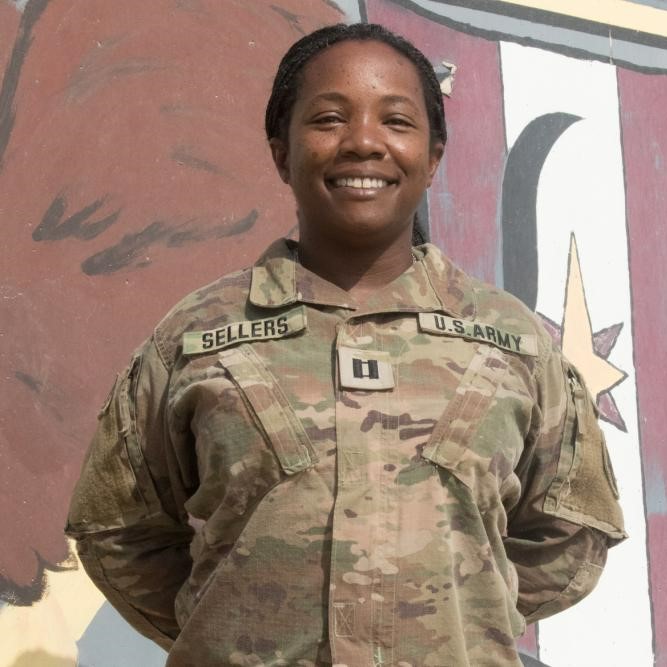
Capt. Dawn D. Sellers knows she can’t save the world, but prays she can at least reach a couple of Soldiers during her time here. The psychiatric mental health nurse practitioner has been deployed here since May working at the 3rd Medical Command’s Gaining Resilience in Theater, or GRIT, Clinic here practicing battlefield acupuncture and providing supportive therapy and psychoeducation—therapeutic intervention that provides Soldiers with tools to help them heal.
Relationships after a life-altering injury or diagnosis is, well, weird. Some people will stand by you no matter what. Hold on to them and let them know, often, how grateful you are that they are in your life. Others, even family—no, especially family—are not so loyal.
I have desiderium. There are aspects in my life I wish I could get back. There are things I miss. Things which once were true that will never be again.
Genevieve Chase accomplishes everything she attempts. She made master sergeant in 15 years in the Army reserves... she was inducted into the Army Women’s Hall of Fame. In the military, she learned Pashto and was an intelligence soldier in Afghanistan. But, like a lot of military women, one dream eludes her: She hasn’t been able to get pregnant.
I have a streaming service subscription. Unlike the popular streaming services so many of us are familiar with, the rules for this service are different: The terms of agreement are lifelong, and there is no opportunity to cancel. And this streaming service allows new content based entirely on my previous viewing habits.
The news about the United States withdrawing military forces from Afghanistan is hard to stomach. I am angry. I am sad. And I am worried. Worried about the people left there under the Taliban regime. Worried about the possible backlash to the Muslim community here in the United States. Worried about the troops still there working with humanitarian aid. Worried about the veterans and their families who sacrificed so much. Decades of work, deployments, injuries, and death for seemingly nothing.
Duane France has a conversation with Layla Hernandez, Behavioral Health Manager for Silver Key Senior Services. In the Insight Segment, Duane looks at former service members who might be overlooked when it comes to mental health.
As my 60th birthday approaches, the internal emotions are ramping up. Over the years, I’ve heard the saying that health is one of those things you never fully appreciate until it’s gone. While this is definitely true, most often it’s used in reference to physical health. But what happens when your mental health is compromised?
Sir, I do not request an apology, explanation, or acknowledgment of my letter. As a lecturer at Texas A&M who advises future leaders, I wrote this to say that I mattered then, and I matter now. I did not deserve to be relegated to a second-class soldier.
This week Duane France explores the paradoxes service members face, a conversation with Eli Varney, combat veteran and mental health counselor and the resource of the week: Onward to Opportunity.
Duane France talks with Charlton Clarke, a licensed professional therapist and co-clinical director at the Family Care Center. Plus the reasons why service members avoid therapy and the resource segment highlighting Project Sanctuary.