Use the filters to browse the information we have available or to narrow your search results for a specific audience (e.g. caregivers, military, children), a preferred type of content (e.g. videos, blogs, articles), or by topics of interest (e.g. family concerns, legal issues, symptoms).
Like so many other brain injury survivors, I appear to be okay. And while many know of my past history, many others think I am well beyond my brain injury challenges and struggles. Why wouldn’t they?
Looking at a person’s heart rate, skin conductance, or other ways the physical body reacts to the stressors of PTSD offers providers a more nuanced path toward understanding how PTSD impacts a person’s life and in what ways treatments can alter those physical and emotional reactions.
Todos los años, hay niños y adolescentes que están expuestos a acontecimientos catastróficos y otras experiencias traumáticas. Los padres de familia, los socorristas y los miembros de la comunidad en general pueden ayudar a los niños a iniciar el proceso de recuperación y a superar estas experiencias.
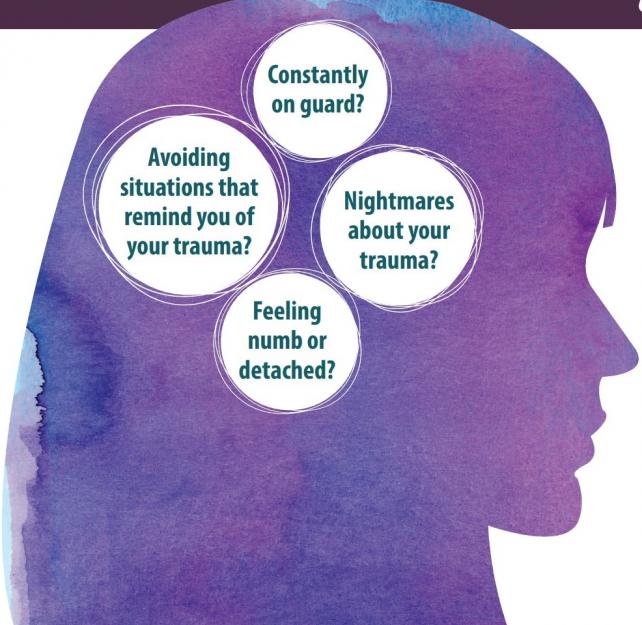
Trauma is common in women; five out of ten women experience a traumatic event. Women tend to experience different traumas than men. While both men and women report the same symptoms of PTSD (hyperarousal, reexperiencing, avoidance, and numbing), some symptoms are more common for women.
A University of Washington study finds 81% of sexual assault survivors experience significant PTSD-related symptoms just one week after the attack, 75% after a month, 53% after three months. After a full year, 41% percent met the criteria for PTSD diagnosis. Study authors discovered that many started feeling better within three months.
Duane France talks with Charlton Clarke, a licensed professional therapist and co-clinical director at the Family Care Center. Plus the reasons why service members avoid therapy and the resource segment highlighting Project Sanctuary.
Luego de sufrir un trauma, los sobrevivientes a menudo dicen que su primera sensación es sentirse aliviados por estar vivos. Esto podría estar seguido por estrés, miedo e ira. Los sobrevivientes de un trauma también podrían descubrir que son incapaces de dejar de pensar en lo que ocurrió. Muchos sobrevivientes presentan un alto grado de alerta, lo que hace que reaccionen intensamente ante los sonidos e imágenes a su alrededor.
Most people have stress reactions after a trauma. Having such a reaction has nothing to do with personal weakness. Stress reactions may last for several days or even a few weeks. For most people, if reactions or symptoms that feel like PTSD occur, they will slowly decrease over time.
Acute stress disorder (ASD) is a mental disorder that can occur in the first month following a trauma. The symptoms that define ASD overlap with those for PTSD.
Connor Martin's brother, veteran and athlete Kevin Ash, returned from his deployments changed. He sought help and his mother fought for him, but they never found what he needed.
When he returned from his first deployment Connor Martin's brother Kevin Ash wasn't the same. Even though Connor was young he recognized Kevin's increasing anger and isolation.
Connor Martin talks about donating his brother Kevin Ash's brain for study. Kevin was a veteran and an athlete who began exhibiting personality changes and his family wanted to understand what had happened, even if it was after his death.
Veteran Morgan Luttrell was part of a terrible helicoper crash that left him with a spinal cord injury and a TBI. He says, "The physical injuries are the easy part...it was the neck up [that was problematic]."
Veteran Jonathan Warren was very skeptical of transcranial magnetic stimulation session, but as his sessions continued his improved sleep continued and his heavy use of alcohol and marijuana reduced.
Veteran Jonathan Warren came back from service convinced he was fine -- until things started to change. Even though tests told him nothing was physically wrong, he new something wasn't right. So he took action. He dove in to finding treatments that might help -- and he started seeing results.
Dr. James Kelly knows that many of those in the millitary receive "invisible wounds" while in service and those can go unnoticed. The Marcus Institute evaluates to see if a person for those wounds and then provides comprehensive care for the physical, emotional, and cognitive changes that can accompany trauma to the head using a combination of traditional and complementary treatments.
Kristi Kragthorpe knew she had cognitive issues after her brain injury but struggled to find the help she needed. Without support from her doctor she had to take matters in to her own hands, which wasn't easy.
Kristi Kragthorpe uses smartphone apps as aids to help make her life easier after brain injury, but she makes sure not to overwhelm herself with too many.
Many people with a brain injury lose their social connections. In this video three people with TBI bring their experiences of social isolation, stigma, and difficulties with communication to this short comedy film.
In the military, risk and danger are part of the obstacles to overcome; many veterans, however, see the world as an unsafe place that they need to protect against once they leave the military.
Service members and veterans form intimate bonds with their teammates that will last a lifetime, yet struggle to form or reform intimate relationships with others