Use the filters to browse the information we have available or to narrow your search results for a specific audience (e.g. caregivers, military, children), a preferred type of content (e.g. videos, blogs, articles), or by topics of interest (e.g. family concerns, legal issues, symptoms).
BrainLine sat down with Dr. Edward C. Wright to discuss PTSD. Dr. Wright is a board-certified clinical psychologist in the Home Base Program of Massachusetts General Hospital, focused primarily on providing treatment for PTSD. He is also part of the Wounded Warrior Project’s® Warrior Care Network®, which helps veterans transition to civilian life. Dr. Wright spoke about PTSD and his use of cognitive-behavioral therapies to treat anxiety and depression.
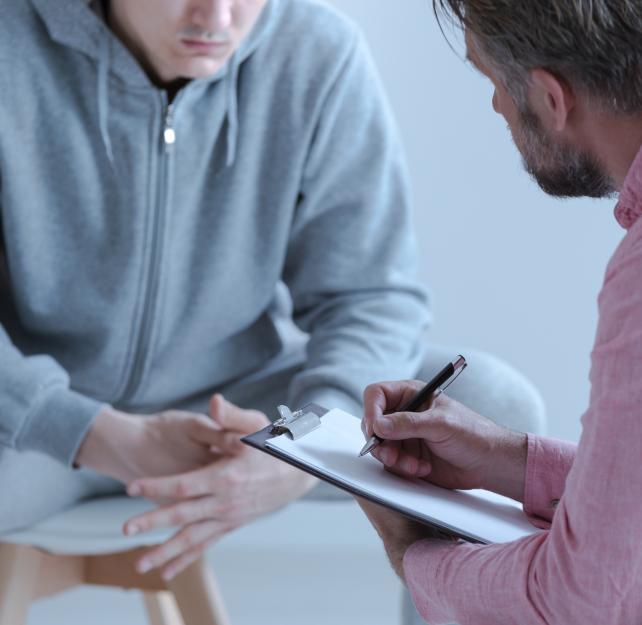
This decision aid from the National Center for Posttraumatic Stress Disorder helps you learn about effective PTSD treatment options. You can read about the treatments or watch videos explaining how they work. You can even build a chart to compare the treatments you like most. At the end, you will get a personalized summary.
This handout provides a brief summary of what researchers currently know and don’t know about chronic traumatic encephalopathy, or CTE. Research on CTE is growing, and more studies are needed to help answer many remaining questions. CDC will update this handout as more information on CTE becomes available.
BrainLine sat down with Dr. Barbara Rothbaum, a professor in the Department of Psychiatry and Behavioral Sciences and director of the Trauma and Anxiety Recovery Program at Emory University School of Medicine and part of the Wounded Warrior Project’s® Warrior Care Network®. Dr. Rothbaum spoke about treating PTSD and her pioneering work in virtual reality exposure therapy.
Scientists are now able to see that PTSD causes distinct biological changes in your brain. Not everybody with PTSD has exactly the same symptoms or the same brain changes, but there are observable patterns that can be understood and treated.
Sleep problems and post-traumatic stress disorder (PTSD) share a complicated relationship, so for those experiencing or at risk for this double whammy, as well as for those treating patients, it’s important to understand how they can influence each other in a cycle. Learn the connection between PTSD and sleep, the different ways to approach treatment, the therapies available, and explore the connection between trauma and nightmares.
Post-traumatic growth (PTG) means many who experience trauma can come out stronger as a consequence. Here are some positive changes you might see after trauma.
Generalized anxiety, panic disorder, and anxiety related to PTSD are common. An estimated 31 percent of U.S. adults experience anxiety at some point in their lives. Learn more.
There are many barriers that people encounter when seeking mental health support from outside sources. Here are examples of what the most common barriers sound like and some recommended courses of action you can take to start moving past whatever is standing in your way.
Meditation may hold some benefits for those with TBI, but currently there is not enough research on the ability of those affected by TBI to meditate or the impact of meditation on those with TBI, and the few published studies report different results, so its effectiveness remains to be proven.
Acupuncture can be highly effective in treating a wide range symptoms associated with traumatic brain injuries, such as depression, anxiety, insomnia, and headaches.
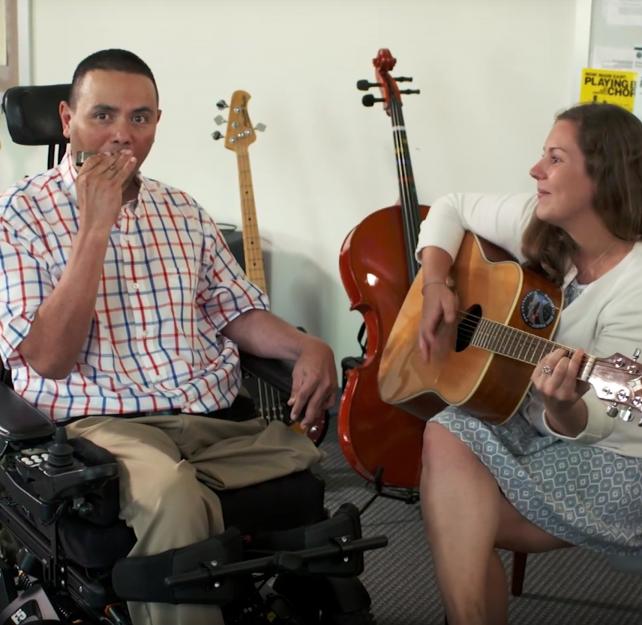
Music therapy is an evidence-based therapeutic application for the treatment of brain and psychological injuries such as TBI and PTSD. Substantial scientific evidence supports how and why music therapy works, but it also can be understood intuitively.
Medications that have been shown to be helpful in treating PTSD symptoms are some of the same medications also used for symptoms of depression and anxiety.
La DRMO le ayuda a procesar y dar sentido a su trauma mientras que presta atención a un movimiento oscilatorio o sonido (como un dedo moviendo lado a lado, una luz, o un tono).
Leer una descripción sobre los tratamientos que han demostrado ser más eficaces para el TEPT. Esos tratamientos incluyen terapia de conversación y medicamentos.
Your child was seen today for a concussion. Use this article to help you watch for changes in how your child is feeling or acting, and to help your child feel better.
If your survivor is not yet ready for rehabilitation but no longer requires the special care of an acute hospital, your health insurer will no longer pay the hospital bill. In this situation, you have three options: pay the bill yourself if a bed is available, care for your patient at home or place your loved one in a long-term care facility, such as a nursing home, until they are ready for rehabilitation. Given that some nursing homes provide substandard care and most have little expertise in brain injury, this can be a chilling prospect.