Use the filters to browse the information we have available or to narrow your search results for a specific audience (e.g. caregivers, military, children), a preferred type of content (e.g. videos, blogs, articles), or by topics of interest (e.g. family concerns, legal issues, symptoms).
A brain injury is not "supposed to be," nor is the trajectory for recovery, says Hospital Executive Amy Mansue. "In rehab, we help kids with TBI reach their maximum potentional not only when they are 7 but also when they're 70 ... "
"One mother I worked with needed to fully grieve the son she lost but who did not die in order to embrace the child who remained," says Hospital Executive Amy Mansue.
Hospital Executive Amy Mansue talks about how rehab specialists can help kids with TBI and their families deal with the social challenges that can arise soon after the injury, but often more importantly, months or years after the injury.
"Opportunities for meaningful and fun socialization for kids with TBI are as important as any of the medical or rehab therapies they receive," explains Hospital Executive Amy Mansue.
Hospital Executive Amy Mansue talks about how an individualized rehabilitation plan for a child with TBI is created with a full team of specialists and how it is reacessed and managed as the child makes progress.
Hospital Executive Amy Mansue tells the story of a child with TBI who only started to progress after she made a connection with a security guard who worked in the rehab hospital.
Hospital Executive Amy Mansue talks about her pediatric cognitive rehab program that is set up like a school to help a child with TBI deal with issues like frustration in addition to regular academic work.
Hospital Executive Amy Mansue talks about the importance of giving parents and siblings the words and supports they need to help them deal with their loved one's TBI — in the short- and long-term.
Hospital Executive Amy Mansue talks about the essential role the entire family plays in a child's recovery from TBI — from being able to care for and push the child during rehab therapy to reinforcing those therapies in the home.
Hospital Executive Amy Mansue talks about the team of nurses, doctors, rehab therapists, and Child Life specialists that helps kids with TBI recover what they've lost or establish new goals for life.
"It’s my personal belief that the quality of fulltime care someone with TBI receives during the first two years post injury has the potential to greatly impact outcome."
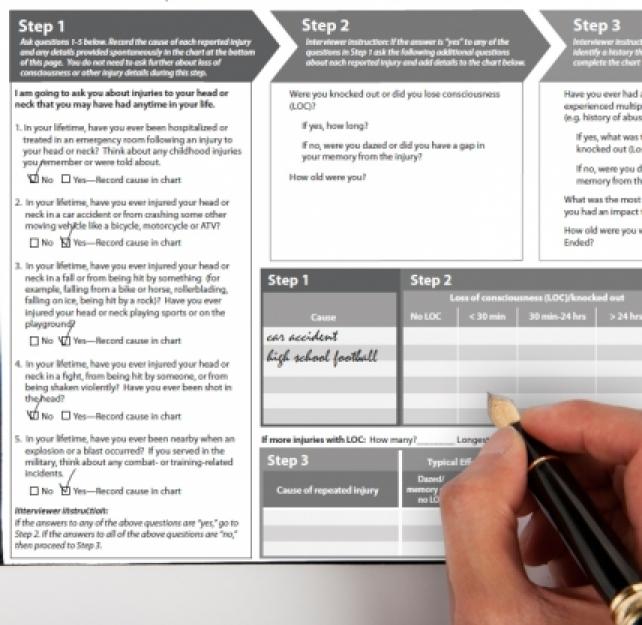
This presentation provides health care and social service professionals with an interview guide designed to elicit a patient's history of traumatic brain injury.
A TBI can put everything on hold, but as time passed, Abby Maslin knew she had to help her injured husband — and herself — return to their previous healthy habits.
Not having coordinated medical care after a TBI can complicate matters, especially for adolescents who are trying to transition to independent adulthood.
Many high schools offer programs in technology or culinary arts, for example, that are one way for teens with TBI to learn some skills as jumping off places for future career opportunities.
If a student with TBI fails in college, go back to your family and circle of support to see what went wrong and what you can do differently to succeed in college or work.
Everyone wants to see a teen with TBI graduate with his class, but not tapping into all available support services like special ed or vocational rehab before graduating can set that person back later.
Dr. Juliet Haarbauer-Krupa talks about how parents and schools can partner with medical facilities to better understand how a brain injury can affect a student socially, behaviorally, and academically.
Although states and school systems vary, schools can be great resources for kids with TBI — and their parents. Support services can range from 504 plans and special ed to transition plans for teens.