Use the filters to browse the information we have available or to narrow your search results for a specific audience (e.g. caregivers, military, children), a preferred type of content (e.g. videos, blogs, articles), or by topics of interest (e.g. family concerns, legal issues, symptoms).
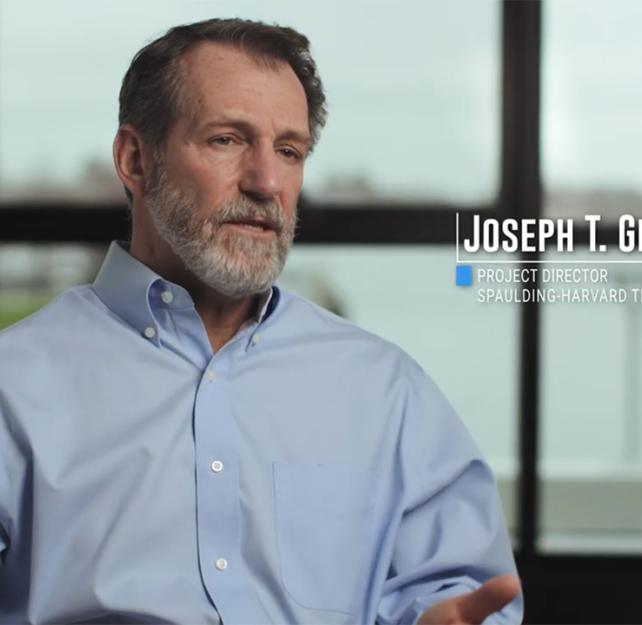
In this video, Joseph Giacino, PhD, explains how specialized inpatient rehabilitation helped uncover the cause of Hannah’s slow language recovery after a disorder of consciousness.
Life after brain injury remains a bit surreal. One might think that after fifteen years, I would have mastered the subtle nuances of this second life, but not even close. Occasionally, I am reminded that I live on a different plane than the neuro normals of the world but I've found ways to adapt and celebrate.
What is neurofatigue? How does it affect people with brain injury (TBI)? Find out what it is, what it feels like, and what you can do to help mitigate symptoms and start to feel better.
There is more to wellness than treating brain injury alone. I am a living, breathing, oftentimes thriving human being with a whole lot more than just a brain injury.
USAF Staff Sergeant Adam Watson joined the military just before 9/11 to find a sense of direction as a young adult. He was trained as a linguist and worked in intelligence. He found purpose and fulfillment in his mission to target terrorists but at a high cost. His time in service took a toll on him and, eventually, his family.
Hear how Home Base, a part of the Wounded Warrior Project's Warrior Care Network, helped Adam treat his depression and post-traumatic stress disorder (PTSD) with Prolonged Exposure Therapy (PE) and other complementary therapies in their Intensive Outpatient Program (IOP). For information about treatments for PTSD please visit The Treatment Hub: https://www.brainline.org/treatment/ Don’t forget to like and subscribe! Information about Prolonged Exposure Therapy (PE): https://www.brainline.org/treatment/pe Home Base in Boston, MA, USA: https://homebase.org/ Wounded Warrior Project's Warrior Care Network: https://www.woundedwarriorproject.org/programs/warrior-care-network Website: https://www.BrainLine.org Donate: https://tinyurl.com/BrainLineDonation Facebook: https://www.facebook.com/brainline Twitter: https://twitter.com/brainline LinkedIn: https://www.linkedin.com/company/brainline.org/
U.S. Marine Corps Reserves Veteran Nick Morrison's Humvee was hit by improvised explosive devices twice while he was deployed in Iraq. When he got home, the symptoms of post-traumatic stress disorder (PTSD) became debilitating. Nick shares how his survivor's guilt and moral injury caused his PTSD and how WWP’s Road Home Program helped him heal.
A surprising thing happened when researchers began exploring whether early-life stress compounds the effects of a childhood head injury on health and behavior later in life: In an animal study, stress changed the activation level of many more genes in the brain than were changed by a bump to the head.
Bryan, who deployed to Iraq in 2009 as a psychologist in the Air Force started to view active-duty suicide as “death by a thousand paper cuts,” he says.
Experiencing three or more concussions is linked with worsened brain function in later life, according to major new research. The study – the largest of its kind - also found having just one moderate-to-severe concussion, or traumatic brain injury (TBI), can have a long-term impact on brain function, including memory.
Her husband was different when he came home from his deployment. Jenna married the love of her life, Isaac, in the United States Navy. He returned home from Afghanistan a changed man. Jenna started feeling stressed out herself.
“Long COVID is an umbrella term for the many post-acute consequences that result from COVID-19. The more we learn, the more we see that COVID-19 can affect nearly every organ in the body — from the heart and brain to the lungs, kidneys, skin, and gastrointestinal (GI) tract. We are still learning, but we need to listen to our patients, validate their experiences, and treat their symptoms.”
Trauma can be a strange and often insidious beast. We can be traumatized by directly being impacted by an event like a violent physical attack, a rape, a natural disaster, or an experience in combat, but we can also be traumatized indirectly by caring for, hearing about, or witnessing the intense suffering of others. Both the direct and indirect impact of traumatic events can lead to post-traumatic stress disorder (PTSD).
A Field Operator in the Marines, Ashton Kroner downplayed her symptoms after sustaining traumatic brain injuries, which may have exacerbated them in the long term.
I have been speaking with veterans and military family members for BrainLine’s Veteran Voices series. They tell us their stories in an attempt to help anyone who might be experiencing issues with PTSD/TBI. Working with BrainLine has also made me realize just how much trauma occurs both during military service and before.
Tonya Oxendine, United States Army Command Sergeant Major, Retired, joined the military for safety and security but found much of the same trauma she faced at home.
William "Bill" Jones joined the United States Army in response to the attacks on 9/11. After several deployments anger, anxiety, and symptoms of post-traumatic stress disorder (PTSD) were taking over and he retired from active duty.
Ideally, trigger warnings allow individuals who have experienced trauma to be forewarned about material that may elicit unwanted memories of past traumatic events. However, some have hypothesized that trigger warnings have more costs than benefits, even for those with relevant traumas.
A new study published in Neurology dispels the notion that "mild" concussions have no lasting impact on mental skills like thinking, remembering, and learning. Poor cognitive outcomes are common 1 year after injury.