Use the filters to browse the information we have available or to narrow your search results for a specific audience (e.g. caregivers, military, children), a preferred type of content (e.g. videos, blogs, articles), or by topics of interest (e.g. family concerns, legal issues, symptoms).
Chronic traumatic encephalopathy (CTE) is a neurodegenerative disease associated with a history of repetitive head impacts (RHI). To better understand the strength of evidence underlying the possible causal relationship between RHI and CTE, we examined the medical literature through the Bradford Hill criteria for causation.
After fighters' cessation of RHI exposure, cognitive function and brain thickness measures may stabilize and blood NfL levels may decline. This study could be a starting point to identify potential predictors of individuals who are at a higher risk of RHI-related long-term neurologic conditions.
A new study published in Neurology dispels the notion that "mild" concussions have no lasting impact on mental skills like thinking, remembering, and learning. Poor cognitive outcomes are common 1 year after injury.
Intimate partner violence (IPV) affects up to 1 in 3 women over their lifetime and has intensified during the COVID-19 pandemic. Although most injuries are to the head, face, and neck, the intersection of IPV and brain injury (BI) remains largely unrecognized. This article reports on unexplored COVID-19–related impacts on service providers and women survivors of IPV/BI.
A study designed to measure exosomal and plasma levels of candidate blood biomarkers in veterans with history of mild traumatic brain injury (mTBI) and test their relationship with chronic symptoms.
Question Are repetitive head impacts during a professional football career associated with mortality among National Football League players?
Findings In this cohort study of 13 912 National Football League players, a 25% increase in repetitive head impacts during a professional football career was associated with a statistically significant increase in the hazard ratio of death.
Meaning The findings suggest that repetitive head impacts are associated with an increase in the risk of all-cause mortality among professional football players.
A look at how to describe clinical recovery time and factors that might impact recovery after a sports-related mild traumatic brain injury (SR-mTBI; concussion).
The national age-adjusted rate of fall-related TBI deaths increased by 17% from 2008 to 2017; rates increased significantly in 29 states and among nearly all groups, most notably persons living in noncore nonmetropolitan counties and those aged ≥75 years.
The association of dispositional optimism with health-related factors has been well established in several clinical populations, but little is known about the role of optimism in recovery after traumatic brain injury (TBI). Given the high prevalence of cognitive complaints after TBI, the present study examined the association between optimism and cognitive functioning after TBI.
Traumatic brain injury (TBI) is a leading cause of death and disability. Older adults are more likely than younger individuals to sustain TBIs and less likely to survive them. TBI has been called the “silent epidemic,” and older adults are the “silent population” within this epidemic. This study evaluates whether indicators of preinjury health and functioning are associated with risk of incident traumatic brain injury (TBI) with loss of consciousness (LOC) and to evaluate health‐related factors associated with mortality in individuals with incident TBI.
Traumatic brain injury (TBI) can have lifelong and dynamic effects on health and wellbeing. Research on the longterm consequences emphasises that, for many patients, TBI should be conceptualised as a chronic health condition. Evidence suggests that functional outcomes after TBI can show improvement or deterioration up to two decades after injury, and rates of all-cause mortality remain elevated for many years. Furthermore, TBI represents a risk factor for a variety of neurological illnesses, including epilepsy, stroke, and neurodegenerative disease. With respect to neurodegeneration after TBI, post-mortem studies on the long-term neuropathology after injury have identified complex persisting and evolving abnormalities best described as polypathology, which includes chronic traumatic encephalopathy. Despite growing awareness of the lifelong consequences of TBI, substantial gaps in research exist. Improvements are therefore needed in understanding chronic pathologies and their implications for survivors of TBI, which could inform long-term health management in this sizeable patient population.
Concussion is a common childhood injury that may lead to long-term physical, behavioral, and neurocognitive effects, affecting learning and school performance. There is increasing concern about the potential for repeat concussions among professional and high school athletes, with specific attention focused on understanding how sustaining a concussion alters future concussion risk. Addressing repeat concussion risk among youth has substantial implications for clinical practice in terms of managing exposure — particularly regarding youth sports participation — and long-term health and development.
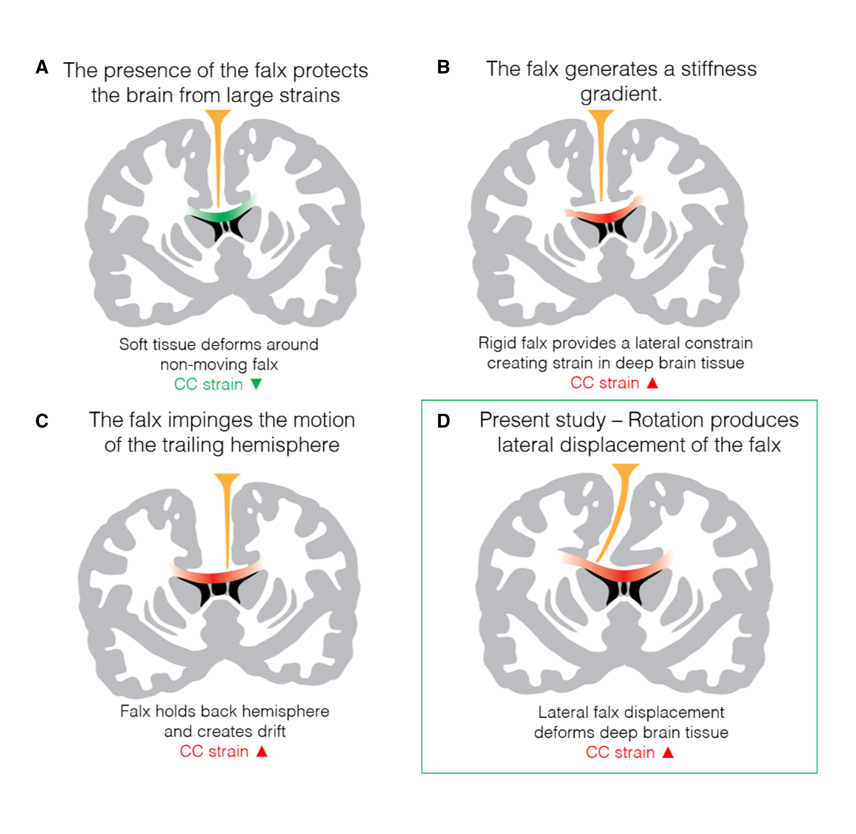
Through a combination of biometric tracking, simulated modeling and medical imaging, researchers detail how hits to the side of the head cause concussion
Researchers show how even mild exposure to a single blast shock wave is able to induce small but potentially very meaningful pathogenic effects that accumulate with time.
The American Academy of Pediatrics (AAP) has updated its concussion recommendations to support children and teens engaging in light physical activity and returning to school as they recover. The report, revised for the first time in eight years, also advises against complete removal of electronic devices following a concussion.
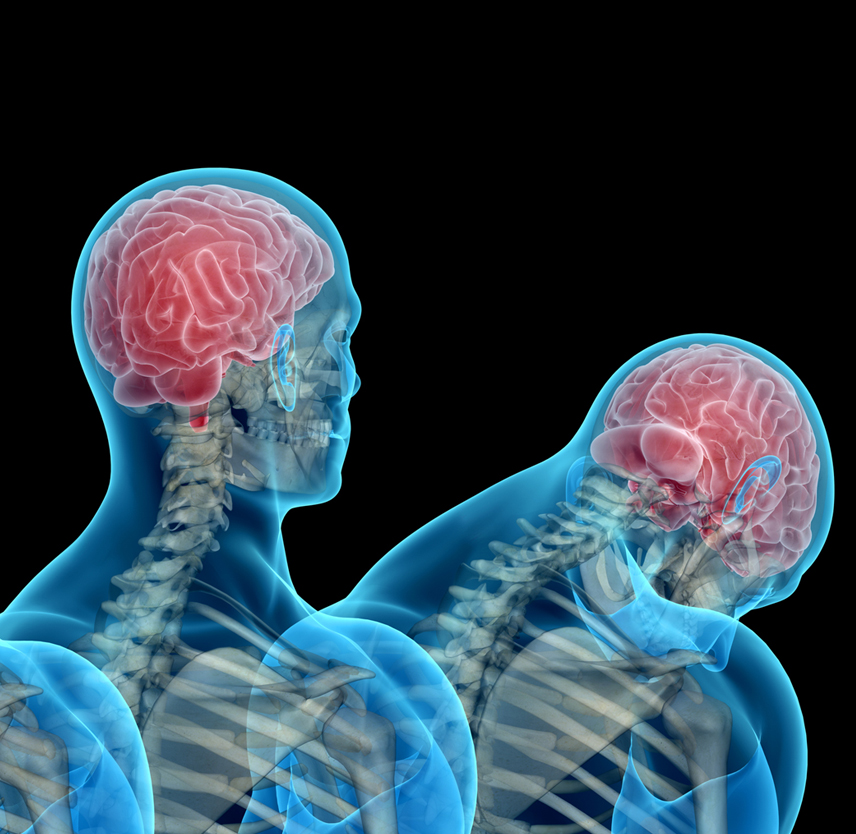
The way our head and neck are positioned during a head-on impact may significantly affect the risk of concussion — but tensed up neck muscles seem to offer far less protection.
In this cohort study of more than 350 000 veterans, even mild TBI without LOC was associated with more than a 2-fold increase in the risk of dementia diagnosis.
An analysis of news reports and high school participation data determines if there is an association between concussion concerns and declining participation of high school football.
Light-induced pain or discomfort, or ‘photalgia’ (otherwise known as light sensitivity, photophobia, asthenopia, photoallodynia or photodynia) is a well-known consequence of mild traumatic brain injury.
“You’re supposed to rest after concussion.” This advice has been given countless times to patients recovering from concussion. How did we get here, what is the evidence that brought us here, and what does the evolving evidence actually tell us?
Study finds presence of abnormal saccadic eye movements, diminished accuracy of primary saccadic horizontal eye movement, and a widespread slower reaction to both visual and auditory stimuli.