Use the filters to browse the information we have available or to narrow your search results for a specific audience (e.g. caregivers, military, children), a preferred type of content (e.g. videos, blogs, articles), or by topics of interest (e.g. family concerns, legal issues, symptoms).
The core services of Wounded Warrior Project’s Independence Program include case management, resource management, care coordination, home health aide, alternative therapies, and more, with the primary goal of helping service members and their families rebuild a normal routine, plan for and succeed in the long-term, independently. But the program is always there as a safety net if new challenges arise.
Wounded Warrior Project’s Independence Program does not have a protocol to work with service members and their families when they transition home from a clinical facility, but they do have a highly successful formula for independent programing that caters to the individual needs of their clients whether those needs arise from the vet’s neurological trauma or from emotional or psychological challenges that result from that trauma.
Wounded Warrior Project wants vets to return home and thrive in their communities. With that in mind, WWP offers a continuum of supports and services for vets to address mental health, brain health, and physical health well-being. Acting collaboratively, WWP staff work to find the best program or combination of programs to fit an individual’s needs.
There is some good research showing that the use of psychedelics may be beneficial in combination with psychotherapy for treating PSTD, but more research and more comprehensive data are needed before fully implementing them as a viable option.
Treating PTSD in post-9/11 and other veterans is best undertaken with experts in prolonged exposure and cognitive processing therapy. Experts in these therapies can be found in person or via telehealth through the Warrior Care Networks. WCN providers also share their treatment models with primary care doctors and buddy system programs to expand their reach.
Two of the most researched and effective treatments for PTSD are prolonged exposure and cognitive processing therapy. The first involves approaching instead of avoiding traumatic memories, the second working on changing thought patterns to reduce the impact of the trauma. With the help of an experienced provider, people can be successfully treated for PTSD.
Emory Healthcare Veterans Program’s two-week PTDS Treatment intensive for post-9.11 vets is a convenient and effective means for people to get needed treatment for PTSD, TBI, depression, chronic pain, and substance abuse from home. The results are the same whether accessing care via telehealth or on site.
Experiencing PTSD and chronic pain simultaneously can sometimes lead to suicidal thoughts. But with guidance from family and friends to find the right resources and professionals, people can access highly effective combined treatments that help them return to a full life—physically and emotionally.
This week Duane France explores the paradoxes service members face, a conversation with Eli Varney, combat veteran and mental health counselor and the resource of the week: Onward to Opportunity.
Veteran Morgan Luttrell wasn't interested in focusing his studies on brain injuries, but he quickly became a resource for those who had questions. Soon he was helping others by sharing his experiences and connections.
Veteran Morgan Luttrell traveled the country looking for help after the injuries to his brain and body. He found the most with Dr. James Kelly at the National Intrepid Center of Excellence (NICoE). They provided him with a whole picture and a plan.
Those in the military go through so much and that can lead to issues once they leave the service. They can get help for themselves by seeking out treatments, but they can also help others going through the same thing.
Karl Kajomo Moritz faced the ultimate life change when he was bicycle commuting home from work in 2010 and was hit head on by a car and spent five weeks in a coma. He woke up with a TBI and developed a healing plan with healthy eating, acupuncture, speech therapy, neurofeedback, and high cardio velodrome track riding.
Karl Kajomo Moritz faced the ultimate life change when he was bicycle commuting home from work in 2010 and was hit head on by a car and spent five weeks in a coma. He woke up with a TBI and developed a healing plan with healthy eating, acupuncture, speech therapy, neurofeedback, and high cardio velodrome track riding.
Meditation may hold some benefits for those with TBI, but currently there is not enough research on the ability of those affected by TBI to meditate or the impact of meditation on those with TBI, and the few published studies report different results, so its effectiveness remains to be proven.
Acupuncture can be highly effective in treating a wide range symptoms associated with traumatic brain injuries, such as depression, anxiety, insomnia, and headaches.
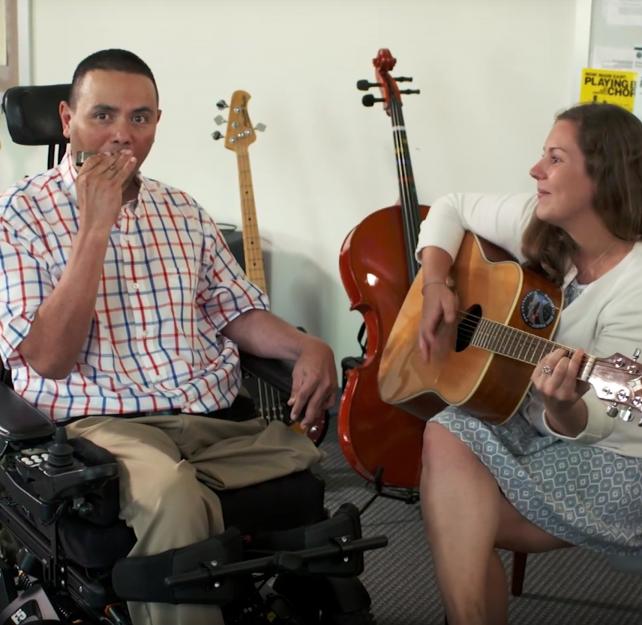
Music therapy is an evidence-based therapeutic application for the treatment of brain and psychological injuries such as TBI and PTSD. Substantial scientific evidence supports how and why music therapy works, but it also can be understood intuitively.
Today there is more interest in concussions and their lingering effects, which has led to more funding and research. Dr. James Kelly sees the information gathering and treatment implemenation landscape growing even further as time goes on.
Dr. James Kelly talks about how a lot of people were interested in concussion in the 1980s. It's taken a long time, but more and more people have come on board with the view that brain injury is an important issue. This change is leading to more developments in the diagnosis and treatment of mTBI.
Dr. James Kelly believes that taking extra time with patients means developing a more accurate diagnosis and, therefore, a more effective treatment plan for the patient.
At the Marcus Institute, the focus is on spending time learning about their veteran patients and finding as accurate a diagnosis as possible in order to best tailor treatment.