Use the filters to browse the information we have available or to narrow your search results for a specific audience (e.g. caregivers, military, children), a preferred type of content (e.g. videos, blogs, articles), or by topics of interest (e.g. family concerns, legal issues, symptoms).
As I moved throughout 2019 I asked myself, “What could people give survivors that would actually feel meaningful? What kinds of offerings and interactions provide a lasting impression?”
While my thoughts should have been carefree during our summer vacation at our favorite North Carolina beach, each day as I took in the vastness of the ocean, I was reminded of the far reaches of traumatic brain injury (TBI) and grief.
My name is Nicole Bingaman. I am a mother to three sons, all in their twenties. Our oldest son, Taylor, suffered a catastrophic brain injury seven years ago. There are some hard truths I’ve discovered about myself over the years. Please know some of them require great courage to share with you.
A gentleman asked me, “Looking back at the beginning of your journey, what could have been done on the healthcare team's end to help you?” Taking a deep breath, I realized the question was an open door. I wasn’t sure I felt fully prepared to walk through it. I’ve pondered this question since then and want to share five qualities of healthcare providers that left an impression on me.
These words are part of my caregiving truth. Even though they are messy and imperfect, they are full of love. For you. For me. For the caregivers dealing with moments they can’t bring themselves to share, or those who want to cry, but find their tears have run dry.
Finding acceptance after a brain injury isn't easy. "For a long while, I bucked against our reality. I found myself caught between what I had once known and an uncertain future. The in-between caused marked turmoil. As much as I didn’t want to accept Taylor’s brain injury as part of our lives, it is. As much as I wish it didn’t affect Taylor and our family … it does."
Taisha Rios shares her story about loving and raising her son Yael and how their lives were dramatically changed by an accident. She discusses behavioral challenges, the impact on Yael's confidence, school accommodations and more.
Amanda Stombaugh shares how she managed through the trauma, her daughter Ashlyn's rehabilitation, managing the behavior of a young child with a severe TBI, how to practice self-care while parenting three children, communicating with Ashlyn’s school, helping Ashlyn with social situations, and more.
Over the last few months, a group of people has weighed heavily on my heart. I’ve been thinking about them, and I’ve wanted to express my concern and compassion for them. They are the siblings of brain injury survivors. What happens when your brother or sister suffers with a brain trauma?
If you were to look into the windows in our house of life, we would appear to be a “normal” family, but the reality is, we don’t feel normal. Most days are spent figuring out what will help Kyle on that day; how can that brain of his be calmed.
Hope—love—tenacity—go for it—get mad, let yourself be sad—but don’t let the madness or sadness swallow you. These were repeated themes, said in a thousand ways for a thousand reasons. These are the messages we need to hear again and again.
We admit, despite celebrating Steven’s recovery, we did fall into the dismal comparison trap. "Why is Steven’s rehab roommate already walking?" "His accident was as severe as Steven’s; how did he escape a craniectomy and the helmet?" "How did she escape the epilepsy curse?"
Caregiving is hard. The lack of support for adults with brain injury (in our area) is ridiculous. I find myself wanting to scream when people ask, "Don't they have services for that?”
Some may question the morality of lying. As I moved deeper into my new role as a caregiver, I reached out to learn as much as I could about caring for someone with mom’s type of brain injury. My mistruths are categorized as Therapeutic Lying.
It’s been six and a half years since I began this brain injury journey. Or, to compute, 2,372 days, 56,928 hours, 3,415,680 minutes. As I think back, I take pride in each of those days (the bad ones included), remembering too vividly a time in which I was convinced we couldn’t make it at all.
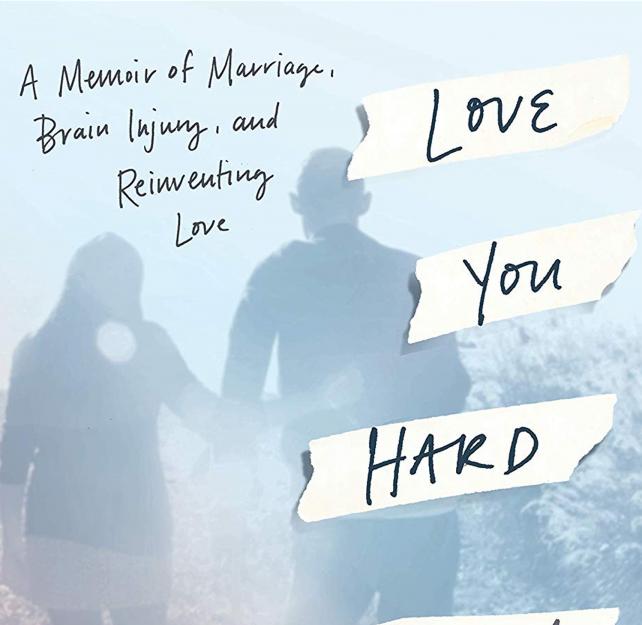
This book packs a lot of wisdom. You’ll learn about aphasia; you’ll understand ambiguous loss; you’ll follow Abby down dark hallways and into sunlit rooms and learn what it means to own a life built on raw truth.
The emotional equivalent of being caught in the undertow came earlier this week. I was scrolling through old photos, reconnecting to moments captured in time. I found my mind trapped in the tumultuous waters of ambiguous grief, fighting my way to the surface.
I don’t often write about my teen kids. But in this case, I want to share something. I need to, because coming full circle means that I get to let go a little of this job of informing our kids what happened to their wonderful father.
Life inside the bubble of brain injury is a roller coaster. In our bubble, the daytime is generally good. Nighttime brings the opposite. Each evening, Taylor's post-injury thought process evolves into a profound sense of sadness, frustration, and defeat. It is hell to witness.
It’s time for a broader, braver dialogue around gender and caregiving. It’s time to start talking about the transformation in identity that occurs when one spouse adopts the role of the other. It’s time to recognize that caregiving is a role that requires the revision of gender norms and the acceptance of power transfers.
After my son was diagnosed with a severe brain injury, despite the shock, I remember hearing Steven’s healthcare providers repeating the word caregiver, over and over, as if they were determined to make me, of all unqualified people, claim the title. I felt an urgency to scream that nowhere on my resume indicated that I was qualified to take care of a severely, brain injured son.
In learning how to manage the small, we become better equipped to manage the large. A well-rounded caregiver doesn’t just come into being because a trauma occurred. Becoming is a process, a transformation.
In August, we were presented with both high and low points. Our son, Taylor, was able to attempt to return back to work two days a week. Within fifteen days of returning to work, Taylor lost his brain injury service waiver. We had to hope nothing happened. And then…it did.