Use the filters to browse the information we have available or to narrow your search results for a specific audience (e.g. caregivers, military, children), a preferred type of content (e.g. videos, blogs, articles), or by topics of interest (e.g. family concerns, legal issues, symptoms).
Home Base, a free Red Sox Foundation and Mass General Hospital program, started small, but then and now—as it has grown to help 1,000s of veterans and service members nationwide—it remains a passion for many. The program focuses on treating the invisible wounds of war like TBI and PTSD. With evidence-based treatments in all domains like behavioral therapy, physical therapy, health and wellness, and medications, providers help these warriors with issues that run the gamut from sleep apnea and cognitive function to depression and physical pain.
Changes don’t happen 0-60 mph, rather they occur incrementally. Providers know that barriers can impede improvement to healing, but by setting a series of step-by-step goals—whether treatments for better sleep, pain relief, or relationship strategies— service members and veterans can see improvements to their physical, behavioral, and emotional issues and build on them from there.
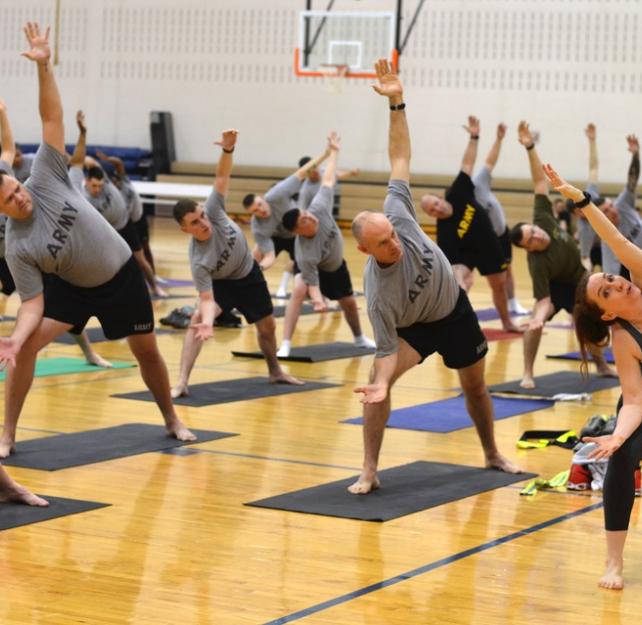
There may not be definitive quantitative data to support the efficacy of yoga for military members, especially those with PTSD, but there is a lot of research and experiential evidence that shows that yoga can make a significant difference in the healing process. Yoga helps to calm the central nervous system, so after even practicing a short time, people with PTSD may start to sleep better, feel less trauma-related physical pain, and experience a greater sense of quietude.
"I’ve seen both sides of the suicide coin, both as a surviving family member as well as an actual survivor. I have a deep empathy for those who think life would be better off without them, but I know that they are wrong. When you feel that way, you have no perspective; you are unable to understand that there are people who love you unconditionally and who would be shattered had you succeeded."
Most people who experience a trauma will not develop PTSD. But whether from a natural disaster, car crash, combat exposure, or sexual assault, those who develop PTSD tend to avoid dealing with the trauma’s “stuck memories” or feel unable to handle negative emotions and experiences.
Since it's inception, yoga has been an integral part of the Emory Healthcare Veterans Program. During the intensive two-week program, veterans take one hour of yoga three times a week where they learn to release physical and emotional pain. Mr. Yura says that although some students are more engaged than others, it is rewarding for him to see the extent of people's responses to the practice, including embracing what they have learned to use post-program like specific movements for lower back release, breathing techniques, and strategies for calming the nervous system during a reactive situation.
The Pace My Day app allows people with a TBI to judge their stamina post-brain injury. By monitoring your energy levels and physical comfort using the app it's possible to learn how long you can perform a given task without feeling drained or in pain.
Fatique can be a significant issue after brain injury. The PaceMyDay app provides a way to monitor an adjust your energy consumption so you to learn your patterns and adjust your actions so that you can avoid becoming run down or in physical pain.
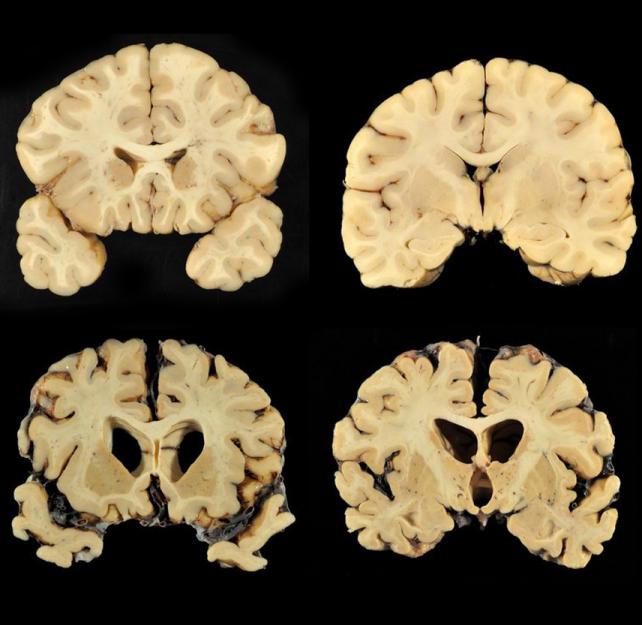
Todd Ewen, a former professional hockey player, took his own life in 2015. Before his death, he confided in his wife, Kelli, that he feared he may have chronic traumatic encephalopathy, or CTE.
Dr. Ann McKee says that even though chronic traumatic encephalopathy (CTE) is triggered by trauma, at some point it becomes trauma-independent. While it takes time for CTE to become full-blown, even less severe cases can have significant emotional and behavioral impacts.
“I was blown away.” Dr. Ann McKee recounts the first time she saw signs of chronic traumatic encephalopathy (CTE) in boxer Paul Pender, who was thought to have had Alzheimer’s disease.
Light-induced pain or discomfort, or ‘photalgia’ (otherwise known as light sensitivity, photophobia, asthenopia, photoallodynia or photodynia) is a well-known consequence of mild traumatic brain injury.
Recently, life unfolded in a way I never saw coming. The raw, gut-level emotional pain was unimaginable. And for the first time ever, I decided that a topic was too raw, too real, and too emotional to even consider writing about. Until now.