Use the filters to browse the information we have available or to narrow your search results for a specific audience (e.g. caregivers, military, children), a preferred type of content (e.g. videos, blogs, articles), or by topics of interest (e.g. family concerns, legal issues, symptoms).
I enjoy watching my husband cry. That sounds so much worse than what I really mean. He’s been on various medications for his PTSD some of which cause emotional blunting — not being able to laugh or cry when appropriate.
I have desiderium. There are aspects in my life I wish I could get back. There are things I miss. Things which once were true that will never be again.
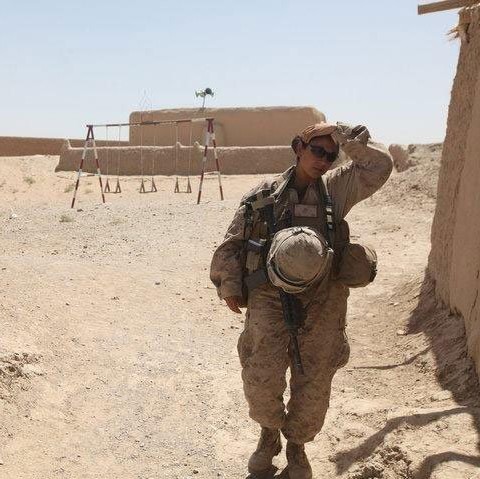
Genevieve Chase accomplishes everything she attempts. She made master sergeant in 15 years in the Army reserves... she was inducted into the Army Women’s Hall of Fame. In the military, she learned Pashto and was an intelligence soldier in Afghanistan. But, like a lot of military women, one dream eludes her: She hasn’t been able to get pregnant.
Something that I talk less about these days is how brain injury still affects me. And there are times, times like I am about to share, that brain injury still rears its ugly head, and leaves me completely bewildered and baffled.
When a service member is deployed the spouse is everything: head chef, accountant, mechanic, troubleshooter, problem solver, mother, father, good cop, and bad cop. Their job is moving from a dual parent role to a single parent role and back again, constantly. The challenge is that this takes some getting used to for both the spouse and the service member.
Brain injury has changed you. It has broken you, rebuilt you, strengthened you, and humbled you. Sometimes it does all of this in the span of one day. I don’t know that I have the words to make this journey easier for you, but I can offer this...
How do you love the man who can’t express emotions the way he did when you first fell in love with him? How long do you continue to gaze into eyes that don’t see your heart? How many times do you say, “I love you” to someone who doesn’t respond?
When to stay? When to go? When to get professional help? These are some of the hardest questions we will face in our post-TBI lives. These are gut-wrenching decisions to make. I know that not only from my own experience, but from the network of caregivers I communicate with everyday.
Immediately following a brain injury, outsiders often reiterate to survivors how grateful they are for that person’s survival and how accepting they plan to b. But when put to the test in everyday life, we quickly discover it’s tough to respond with unwavering compassion.
Here’s a question well worth exploring for caregivers: Am I reacting to daily events as if in crisis mode or am I responding? After the chaos of the first days and weeks of TBI, there’s much to be done; and a lot can be at stake if things are not properly handled as time goes by.
Since his injury, my husband and I have come to agree on one point: we will never fully understand each other’s struggle in this mess. And while we can never hope to fully appreciate the depth or complexity of each other’s experiences, we do our best to stay constantly respectful of the hard work that keeps us going.
If someone you care about has a loved one who has sustained a traumatic brain injury and they tell you all is well, don’t believe them. Look beyond the surface.
It’s called ambiguous loss. A loved one is physically present, yet transformed in countless, often subtle ways, that alter his essence. For couples coping with brain injury, it’s the elephant in the room.
The bad days suck. They suck more than we let on to most people, and they drain us emotionally for days afterward. Perhaps the best way to describe it is this...
Caregiving is a strange, beautiful, complex thing, but it's even more complicated when you're in the position of providing care for your partner or spouse.
"The truth is I was so lonely I was worried I was going crazy. At night, I would close my eyes and silently speak to the husband who no longer existed," writes caregiver Abby Maslin.
Being defined by your brain injury is different from sharing with a loved one what needs to be shared about the symptoms, says Brainline blogger David Grant.
"In hindsight, it’s probably best that we didn’t know what was coming. No one really wants to know that life is about to become difficult — very difficult."