Use the filters to browse the information we have available or to narrow your search results for a specific audience (e.g. caregivers, military, children), a preferred type of content (e.g. videos, blogs, articles), or by topics of interest (e.g. family concerns, legal issues, symptoms).
EMDR helps process and make sense of trauma. It involves calling the trauma to mind while paying attention to a back-and-forth movement or sound (like a finger waving side to side, a light, or a tone).
Prolonged Exposure (PE) teaches you to gradually approach trauma-related memories, feelings, and situations that you have been avoiding since your trauma. By confronting these challenges, you can decrease your PTSD symptoms.
Depression can sometimes be a double-whammy. While depressed, you don’t have the energy or confidence to do what you need to do to try to feel better. Here are a few strategies that people with post-TBI depression have suggested.
The prevalence of PTSD across different populations based on recent studies that have assessed the prevalence of PTSD in nationally representative samples as well as in samples of Veterans.
There are many things to consider when choosing a therapist. Some practical issues are location, cost, and what insurance the therapist accepts. Other issues include the therapist's background, training, and the way he or she works with people.
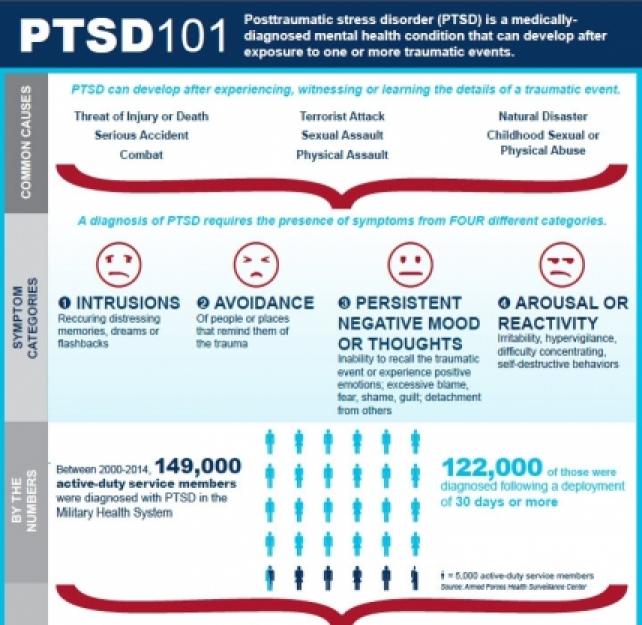
It’s easy to confuse post-traumatic stress (PTS) and post-traumatic stress disorder (PTSD). In addition to sharing similar names, there’s considerable overlap in symptoms between the two conditions.