

 Tap into Your Emotions After Brain Injury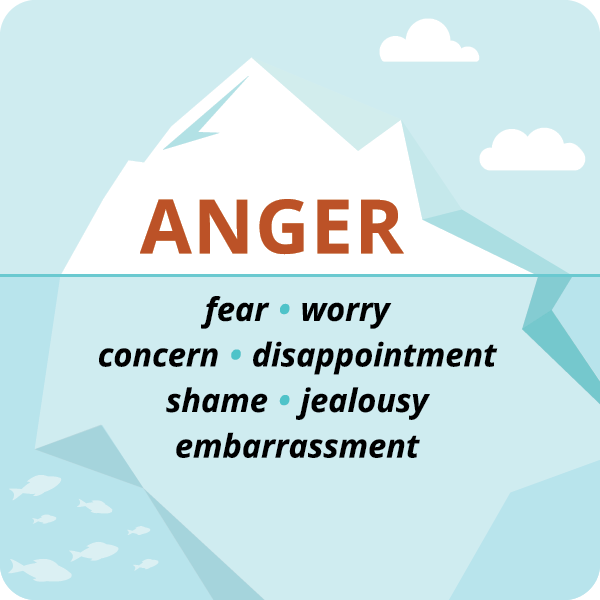
Anger is often the tip of the emotional iceberg. This means that when you’re feeling or showing anger, there are often other emotions lurking below the surface. Anger can be the face of disappointment, fear, or shame.
Imagine someone cut you off on your drive home from work and you almost hit their car. The anger could also include fear that you might have been hurt.
Unpacking these co-existing emotions can help you handle challenging situations more effectively. Realizing that you’re in fact afraid in a situation that is making you angry can defuse a situation. And naming your feelings can significantly reduce their intensity.
It’s difficult to think through complex emotions when you’re in the middle of them, so try this once an angry episode has passed and your body is regulated.
What are some reasons anger occurs?
- When an outcome goes against what we want, think, believe, or expect to happen
- When we think someone has wronged us, or someone else has interfered with our goals
- When we think we are being threatened, insulted, or disrespected
- When we think something is unfair or unjust
These same things that lead to anger, are also connected to feelings of disappointment, worry, shame, embarrassment, and other more subtle or vulnerable emotions. So when you are feeing angry, ask yourself if you are also feeling one of these other emotions.