Use the filters to browse the information we have available or to narrow your search results for a specific audience (e.g. caregivers, military, children), a preferred type of content (e.g. videos, blogs, articles), or by topics of interest (e.g. family concerns, legal issues, symptoms).
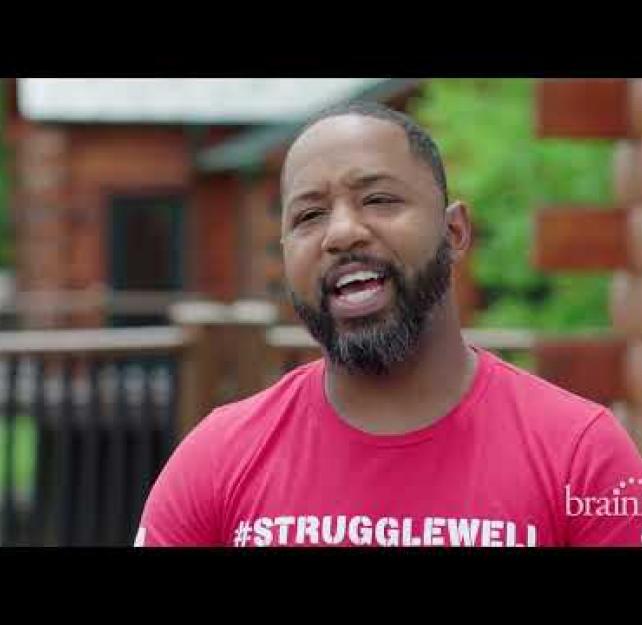
USAF Staff Sergeant Adam Watson joined the military just before 9/11 to find a sense of direction as a young adult. He was trained as a linguist and worked in intelligence. He found purpose and fulfillment in his mission to target terrorists but at a high cost. His time in service took a toll on him and, eventually, his family.
Hear how Home Base, a part of the Wounded Warrior Project's Warrior Care Network, helped Adam treat his depression and post-traumatic stress disorder (PTSD) with Prolonged Exposure Therapy (PE) and other complementary therapies in their Intensive Outpatient Program (IOP). For information about treatments for PTSD please visit The Treatment Hub: https://www.brainline.org/treatment/ Don’t forget to like and subscribe! Information about Prolonged Exposure Therapy (PE): https://www.brainline.org/treatment/pe Home Base in Boston, MA, USA: https://homebase.org/ Wounded Warrior Project's Warrior Care Network: https://www.woundedwarriorproject.org/programs/warrior-care-network Website: https://www.BrainLine.org Donate: https://tinyurl.com/BrainLineDonation Facebook: https://www.facebook.com/brainline Twitter: https://twitter.com/brainline LinkedIn: https://www.linkedin.com/company/brainline.org/
U.S. Marine Corps Reserves Veteran Nick Morrison's Humvee was hit by improvised explosive devices twice while he was deployed in Iraq. When he got home, the symptoms of post-traumatic stress disorder (PTSD) became debilitating. Nick shares how his survivor's guilt and moral injury caused his PTSD and how WWP’s Road Home Program helped him heal.
Veteran Paul Downs talks about spending time living in the present. No more, "It will be better when..." or "It will be easier when..." and the past can't be changed.
I see police brutality against black people everywhere and it seems like it’s getting worse instead of better. Some days I can barely get out of bed. It feels like too much. I’m not sure what to do.
I can’t sleep, I feel irritated and fearful. And I worry about everything. I haven’t felt like myself in who knows how long. Could all these feelings be from the pandemic?
Telling your loved one with PTSD that you cherish them, you care about them, and that you will help them if they will let you is a powerful first step toward getting that person needed treatment. You can’t take on someone else’s suffering—unproductive, anyway—but you can steer them toward the resources and providers who can help them.
TBI is a multi-faceted injury that can present physically through headaches, balance, hearing, or vision problems; psychologically through depression or post-traumatic stress; cognitively through memory and attention issues; or all or a combination of these “buckets.” Home Base is a two-week intensive program for veterans and service members that serves as part of their journey to recovery. After the two weeks, case managers help their clients set up the necessary care and services they need in their community and follow their progress.
In our country—and around the world—we are witnessing a rise in suicide, drug dependency, and poor access to physical and mental health services. Programs like Wounded Warrior Project feel it is their responsibility to translate their best practices offered to veterans and service members for treatment and rehabilitation for these conditions to the entire country and world of civilians.
Emory Healthcare Veterans Program’s two-week PTDS Treatment intensive for post-9.11 vets is a convenient and effective means for people to get needed treatment for PTSD, TBI, depression, chronic pain, and substance abuse from home. The results are the same whether accessing care via telehealth or on site.
When he returned from his first deployment Connor Martin's brother Kevin Ash wasn't the same. Even though Connor was young he recognized Kevin's increasing anger and isolation.
Connor Martin talks about donating his brother Kevin Ash's brain for study. Kevin was a veteran and an athlete who began exhibiting personality changes and his family wanted to understand what had happened, even if it was after his death.
Transitioning from military to civilian life can be jarring and can sometimes lead to suicide, but veteran Morgan Luttrell says to stick it out. Take the reins, find the help you need, and commit to it.
Veteran Jonathan Warren was very skeptical of transcranial magnetic stimulation session, but as his sessions continued his improved sleep continued and his heavy use of alcohol and marijuana reduced.
Veteran Jonathan Warren came back from service convinced he was fine -- until things started to change. Even though tests told him nothing was physically wrong, he new something wasn't right. So he took action. He dove in to finding treatments that might help -- and he started seeing results.
Kristi Kragthorpe's accident left her with a brain injury. Her TBI resulted in a loss of balance, the ability to work with numbers, executive function, and taking initiative. Now she uses apps to help her gain back some of the functionality and independence she had before her TBI.
Kristi Kragthorpe quickly learned that her energy reserves were significantly lower after her brain injury. Apps have helped her learn how to monitor herself and keep from "hitting the wall."
Cognitive-behavioral therapy (CBT), a form of talk therapy, teaches people to reroute their negative thought patterns to improve their mental health. Many Veterans have found that CBT helps them process their trauma. Learn from Veterans who found relief with CBT at VA.