Use the filters to browse the information we have available or to narrow your search results for a specific audience (e.g. caregivers, military, children), a preferred type of content (e.g. videos, blogs, articles), or by topics of interest (e.g. family concerns, legal issues, symptoms).
Dr. Van Wedeen explains that unlike a telephone switchboard where each wire is unique with no relation to the wires around it, wires in the brain have similar functions to their neighboring areas.
Dr. Van Wedeen explains that evolution of the brain must occur with small changes — from a small change in the genome to a small change in the structure to a small change, ultimately, in function.
Rosemary's sister once told her, “There’s the truth we tell others, the truth we tell ourselves, and the truth we won’t even tell ourselves” It wasn't until she was in therapy after Hugh's crash that she fully understood her sister's words.
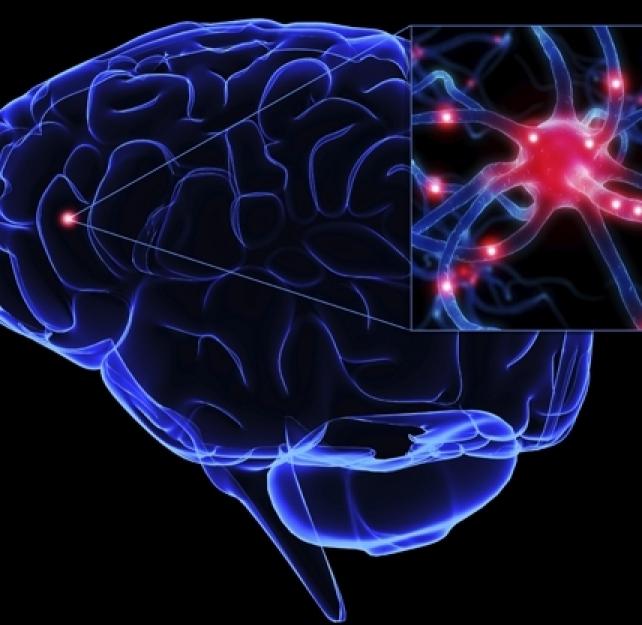
Neuroscientist Van Wedeen talks about how in diffusion spectral imaging water is used as a tracer to figure out the directions and crossings that fibers in the brain take.
"I just wanted to turn off the 600 TV sets that were going on all the time in my head." Hear Maj. Jeff Hall's story that went from thoughts of suicide to finding his way back to his family and life.
Dr. Van Wedeen explains how DSI shows the fiber architecture of the brain and how all the 3-D axes fit together as a whole to form a "highly deformed grid."
"TBI does not change the fact that we are human beings. We have feelings. We are not second class citizens. We are different, but different does not mean worse."
Often people talk about the effects of TBI or the consequences of PTSD as separate conditions — which they are. But for the person who is living with the dual diagnosis of TBI and PTSD, it can be hard to separate them.
Sally Laux has lost her three brothers — two to death, one to a severe TBI — and yet, as she walks on a landscape of new textures and colors, she somehow continues to find meaning in her life.
Rosemary talks with Debbie Bowie, a professional organizer, about how minimizing clutter during and after a crisis — like a loved one's brain injury — can significantly decrease anxiety.
Before Hugh’s injury, I loved getting mail in my mailbox. Afterward, I dreaded adding another pile to the piles of mail that permanently resided on my desk, office floor, and living room table.
Neuropathology is like looking at the last frame of a movie. You can deduce a lot from that frame but what you can't deduce is the arc of the story that culminated in that final frame.
So far, research shows that chronic traumatic encephalopathy does not occur in people who have not sustained repetitive hits to the head either in sports or in combat.
Using animal models in the lab to study the mechanisms of blast-related brain injury, researchers like Dr. Lee Goldstein are feeling optimistic that their findings will lead to viable treatments.
Researchers like Dr. Lee Goldstein are studying the effects of repetitive brain injury whether sustained over a season on the football field or in milliseconds from one combat blast.
Dr. Lee Goldstein explains how the axons, capillaries, and blood vessels in the brain are sheared when a "bobblehead" head on a rigid neck accelerates back and forth.