Use the filters to browse the information we have available or to narrow your search results for a specific audience (e.g. caregivers, military, children), a preferred type of content (e.g. videos, blogs, articles), or by topics of interest (e.g. family concerns, legal issues, symptoms).
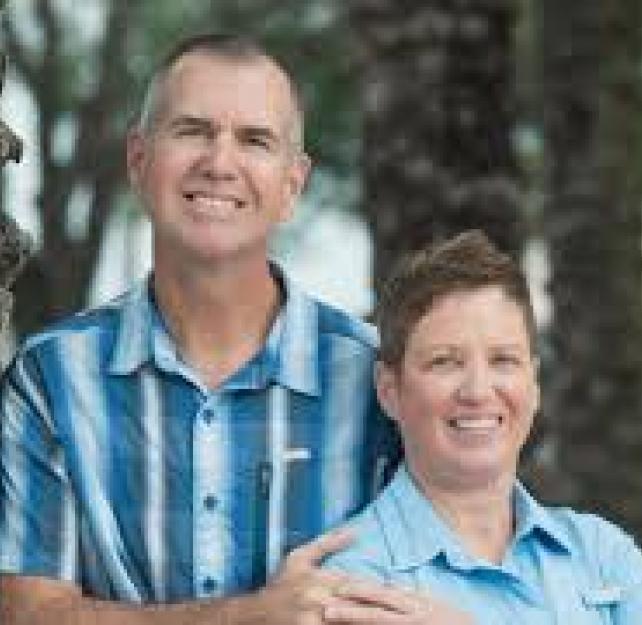
People often say that Brian and Natalie's story of injury, caregiving, and retirement from the military is a tragedy. But for them, it's more of a love story.
During their time apart on deployments, Brian and Natalie Vines stayed connected via skype, social media, and hand-written letters, which helped their love endure and burgeon.
My early year look-backs were filled with profound sadness, and a sense of loss so overwhelming that I felt smothered by it. Thankfully, that is no longer the case. It’s been long enough that I’ve all but forgotten who I was before my brain injury; that person no longer exists. The very fact that I’m no longer bothered by this is a sure sign that my soul is growing.
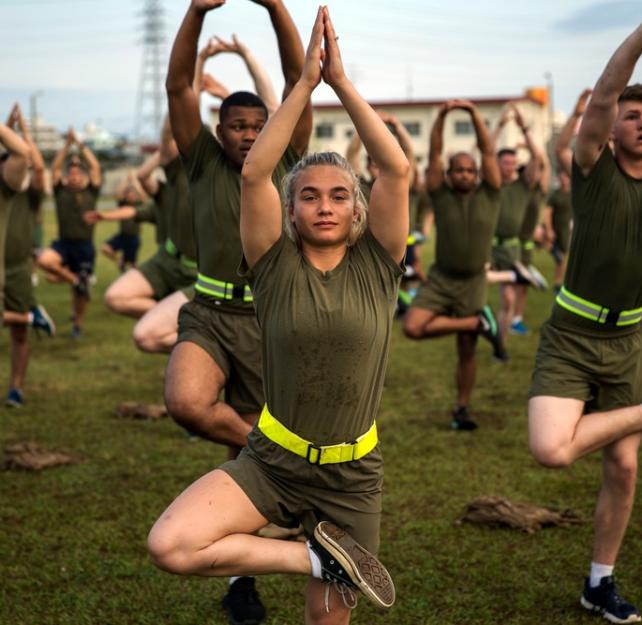
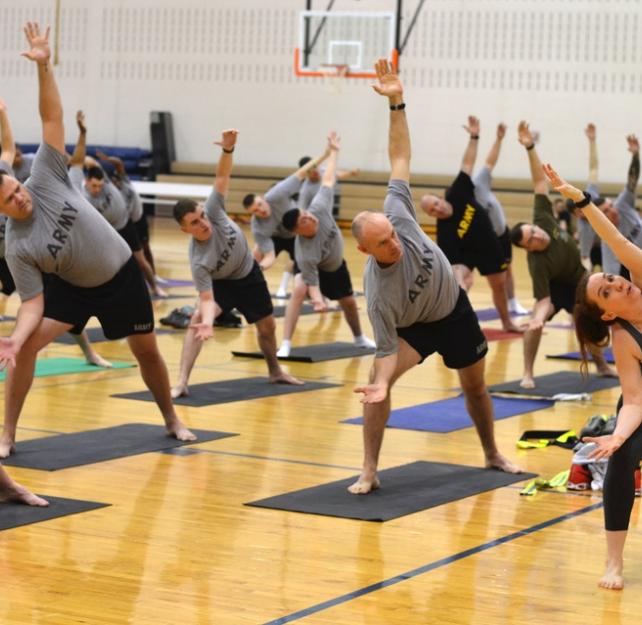
There may not be definitive quantitative data to support the efficacy of yoga for military members, especially those with PTSD, but there is a lot of research and experiential evidence that shows that yoga can make a significant difference in the healing process. Yoga helps to calm the central nervous system, so after even practicing a short time, people with PTSD may start to sleep better, feel less trauma-related physical pain, and experience a greater sense of quietude.
Though everybody is dealing with their own mind and body during a yoga class, there is something powerful about practicing in a group. When teaching veterans with PTSD in the Emory Healthcare Veterans Program, Mr. Yura brings a holistic approach to his teaching. Focusing less on traditional poses and more on somatics — a way of re-educating the way our brain senses and moves the muscles — he helps the group develop a series of movements from which they can readily feel the benefits and use post-program to contribute to their own well-being.
For veterans in the Emory Healthcare Veterans Program, Marty Yura teaches yoga with a focus on heightening the awareness of what a person is feeling in their body. With a focus on somatics — a way of re-educating the way our brain senses and moves the muscles — instead of traditional poses, he helps his students loosen their connective tissue, open neural pathways for greater energy flow to the body, and enhance their awareness of what they are feeling inside their bodies. "In some ways, this is a process of unlearning habituated movements that don't contribute to their health," he says.
Since it's inception, yoga has been an integral part of the Emory Healthcare Veterans Program. During the intensive two-week program, veterans take one hour of yoga three times a week where they learn to release physical and emotional pain. Mr. Yura says that although some students are more engaged than others, it is rewarding for him to see the extent of people's responses to the practice, including embracing what they have learned to use post-program like specific movements for lower back release, breathing techniques, and strategies for calming the nervous system during a reactive situation.
I have desiderium. There are aspects in my life I wish I could get back. There are things I miss. Things which once were true that will never be again.
I keep hearing that I need cognitive behavioral therapy—talk therapy— to treat my symptoms of PTSD like hyper-arousal, depression, avoiding life, and being irritable all the time with my friends and family. Frankly, I don’t want to talk to someone for weeks and months. My wife keeps pressuring me, but the thought of therapy makes me feel weaker than I already am. Why do I feel this way? I’m not sure what to do. Dr. Klassen answers your questions about mental health treatment.
How can we get people to talk more openly about PTSD and related symptoms of TBI? Why is there still a stigma? What can we do? Dr. Klassen answers your questions about mental health treatment.
Do yoga and meditation really help people with PTSD? I’ve tried each a few times and I cannot focus or keep my thoughts clear. How can these possibly help? And how do I know if I am doing these practices right? Dr. Klassen answers your questions about mental health treatment.
What are the primary reason veterans and service members develop PTSD? Dr. Klassen, an expert on mental health issues and treatment, says that, to date, there is no one concrete formula outlining the primary reasons why people develop PTSD, and there may never be. PTSD is a complex condition and affects each person differently based on many factors such as an individual’s genetics, early-life experiences, traumas in combat, culture, and coping mechanisms among others.
Is there still a military/civilian gap, and why does it seem to get bigger? What can we do about it? Dr. Klassen, an expert on mental health issues and treatment, talks about the fact that unlike generations ago when far more people—from all walks of life—served in the military, it being a sort of rite of passage with a shared mission, fewer people in the general population serve today. This divide can lead to a sense of isolation and not feeling understood or respected in the military communities. That said, there are currently more and more organizations focusing on bridging the military/civilian gap.
My husband is a vet with PTSD and will not stop playing video games … he stays up all hours of the night. Should I be worried? Dr. Klassen answers your questions about mental health treatment.
The weight of my experiences from what I saw and did in Afghanistan is sometimes too much to bear. People keep telling me to talk or journal about it. But what if I start sharing—even on paper—and it gets worse? The thought terrifies me. I know I need to deal with my PTSD but don’t know how. What do you suggest? Dr. Klassen answers your questions about mental health treatment.
Whether they genuinely mean it or not, I don’t know how to respond when people say, “Thank you for your service,” Sometimes I want to cry, other times I want to shout in their face—you have no idea what I have gone through! My girlfriend thinks I’m crazy. Why do I feel this way? Dr. Klassen answers your questions about mental health treatment.
My wife was a medic in Afghanistan and is suffering from PTSD, including debilitating nightmares. She does not want to share her experiences with me. She needs therapy but had an unsuccessful experience with at the VA, and other therapists have long waiting lists. I’m not sure how much longer she can hold on. How can I help her? In this video, Dr. Klassen, an expert on mental health issues and treatment, shares a list of resources for mental health therapy and discusses the challenges of moral injury.
Providers in the Road Home Program got involved with treating men and women who have suffered military sexual trauma out of necessity as the need was enormous. In the two-week intensive program, survivors of MST receive many effective treatments, in particular cognitive processing therapy where they can finally open up about their experiences in a safe place and redirect blame away from themselves. And being in a cohort of other MST survivors makes this program unique and incredibly effective.
One of the most powerful aspects of the two-week immersive Road Home program is group therapy for veterans and service members. Along with the help of clinicians like Dr. Klassen these sessions, vets and service members in these sessions can share their experiences, questions, and perspectives in a safe space. Powerful transformations and healing can occur when one veteran, for example, can shed light on the experience of another, helping that individual better understand a trauma and change the narrative.
During Road Home's two-week immersive program, clinicians see great signs of improvement in the veterans and service members they treat. These signs might include fewer nightmares, better sleep, decreased anger or irritability. They might also be more concrete like a date night with a spouse, a trip to a museum, an afternoon in the park—something an individual with PTSD may not have done in years.
Creating individualized treatment plans for veterans is crucial as they may be experiencing symptoms from PTSD, TBI or other concussive injuries as well as moral injury. Often, soldiers enter a war in their late teens or early 20s when their brain has not yet reached full maturation. Providers must consider all of a veteran’s physical and psychological factors when tailoring treatment strategies.
For many veterans and service members returning from deployment, not having their "team," their battle buddies around is very difficult. Everything seems to be about the individual. Capitalizing on this team unity mentality, providers at the Road Home Program understand that more healing will happen when people are working on individualized therapies as well as group therapies and activities. Once again, they have each other's backs.
A two-week program for veterans and services members who have PTSD and other mental health issues, Rush Medical Center's Road Home is intense, fast, and efficient. Through evidence-based studies and experience, providers have found that this two-week intensive is far more effective than traditional therapy to help with symptom remission and increases in resilience.
The Home Base program, which includes comprehensive assessments and a two-week immersion into therapies and treatments for TBI, PTSD, and other conditions, is created anew for each veteran or service member who joins. Whether engaging in physical or cognitive therapeutic interventions, learning how better to communicate with family and friends, or delving into art therapies, each individual becomes part of a strong and supportive community of people who understand their experiences, though everyone’s experiences and issues are unique and treated as such.