Use the filters to browse the information we have available or to narrow your search results for a specific audience (e.g. caregivers, military, children), a preferred type of content (e.g. videos, blogs, articles), or by topics of interest (e.g. family concerns, legal issues, symptoms).
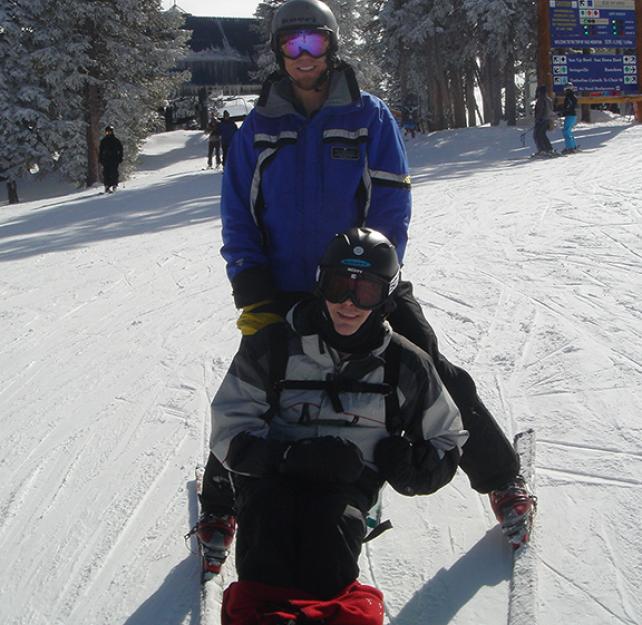
U.S. Army Veteran Jason Ehrhart and his Caregiver and mother, Pam Estes, share how adaptive sports like sit-skiing help heal traumatic brain injury (TBI).
Businesses, restaurants, and other establishments including, ironically, the VA, should become more educated about service dogs and the Americans with Disabilities Act.
Treating service members and veterans with TBI and PTSD often includes complex and unique interventions and treatments. Based on their evidence-based guidelines and experiences working with thousands of people in their two-week immersive program, Home Base also focuses intentionally and systematically on assessing what the population needs once they leave the program and return to their communities. The more Home Base can help connect their participants with clusters of experts in their areas, the more long-term healing will occur.
Changes don’t happen 0-60 mph, rather they occur incrementally. Providers know that barriers can impede improvement to healing, but by setting a series of step-by-step goals—whether treatments for better sleep, pain relief, or relationship strategies— service members and veterans can see improvements to their physical, behavioral, and emotional issues and build on them from there.
Part of Rush University Medical Center’s efforts around helping people with trauma and/or PTSD is working with the community—whether screening children more effectively during pediatric visits, working with families, or advising schools. Ongoing adverse events in inner city communities can cause young children, adolescents, and adults to experience trauma and PTSD, but these issues are treatable with professional interventions.
At Rush’s Road Home Program, providers use evidence-based cognitive processing therapies and other data-driven therapies like mindfulness to treat veterans with post-traumatic stress disorder (PTSD). This intensive treatment model effects far more cures for PTSD in veterans than the traditional, one-on-one, long-term psychotherapy model. Rush is working to offer their therapy model to other populations who may experience PTSD like police, firefighters, first responders, and emergency department staff.
In our country—and around the world—we are witnessing a rise in suicide, drug dependency, and poor access to physical and mental health services. Programs like Wounded Warrior Project feel it is their responsibility to translate their best practices offered to veterans and service members for treatment and rehabilitation for these conditions to the entire country and world of civilians.
A traumatic brain injury or repeated brain traumas can sometimes lead to chronic traumatic encephalopathy, Parkinson’s, multiple sclerosis, astrogliosis, or other neurogenerative conditions. Since researchers are still learning about the progression of these diseases, which can stem from repeated TBIs, providers are currently trying to plan and address how to change their model of care to best help veterans and their families in the long term.
Wounded Warrior Project’s Independence Program does not have a protocol to work with service members and their families when they transition home from a clinical facility, but they do have a highly successful formula for independent programing that caters to the individual needs of their clients whether those needs arise from the vet’s neurological trauma or from emotional or psychological challenges that result from that trauma.
Wounded Warrior Project wants vets to return home and thrive in their communities. With that in mind, WWP offers a continuum of supports and services for vets to address mental health, brain health, and physical health well-being. Acting collaboratively, WWP staff work to find the best program or combination of programs to fit an individual’s needs.
To help more veterans who are experiencing PTSD get the treatment they need to heal and move forward in their lives, many mental health providers have joined PSYPACT, which allows them to provide telehealth care outside the state(s) in which they have licensure. So far, 22 out of 50 states are part of the organization. Learn more here.
Treating PTSD in post-9/11 and other veterans is best undertaken with experts in prolonged exposure and cognitive processing therapy. Experts in these therapies can be found in person or via telehealth through the Warrior Care Networks. WCN providers also share their treatment models with primary care doctors and buddy system programs to expand their reach.
Emory Healthcare Veterans Program’s two-week PTDS Treatment intensive for post-9.11 vets is a convenient and effective means for people to get needed treatment for PTSD, TBI, depression, chronic pain, and substance abuse from home. The results are the same whether accessing care via telehealth or on site.
Michelle Ranae Wild is a fan of technology so she likes to have the latest gadgets. After only a short time with a precursor of the iPhone she realized how amazing a tool it could be for her students with brain Injury.
Kristi Kragthorpe hated technology before her brain injury. She didn't understand it and avoided it when possible. Since her TBI she's come to realize how valuable it can be in making life easier.
Kristi Kragthorpe uses smartphone apps as aids to help make her life easier after brain injury, but she makes sure not to overwhelm herself with too many.
Kristi Kragthorpe only used her phone for texts and phone calls until she saw how powerful smartphone apps could be in helping her manage her post-TBI life.
Dr. James Kelly discusses NICoE's major focus on helping those with brain injury become independent. To help with that goal the program helps patients learn the nature of their problem, what triggers their symptoms, and how they can address those symptoms as they arise.
Jason Cowper and Tonya Howell share their stories of coming to terms with changes in their memory, and strategies they use to compensate for these changes.
"I look back at my years in college and graduate school and think, wow, if I had just used disability services, my life would have been a lot easier," says Kelli Gary, PhD.