Use the filters to browse the information we have available or to narrow your search results for a specific audience (e.g. caregivers, military, children), a preferred type of content (e.g. videos, blogs, articles), or by topics of interest (e.g. family concerns, legal issues, symptoms).
Children have a unique experience of PTSD and TBI -- they're young, they may not fully understand what is going on, and they are usually are not provided the information they need. Dr. Stephen Cozza discusses the different ways a parent's brain injury and/or PTSD may affect children.
Neurologist and sleep medicine physician Anthony Panettiere talks about the need to get your thoughts and feelings out of the way in order to reach the imagery stage that leads to sound sleep.
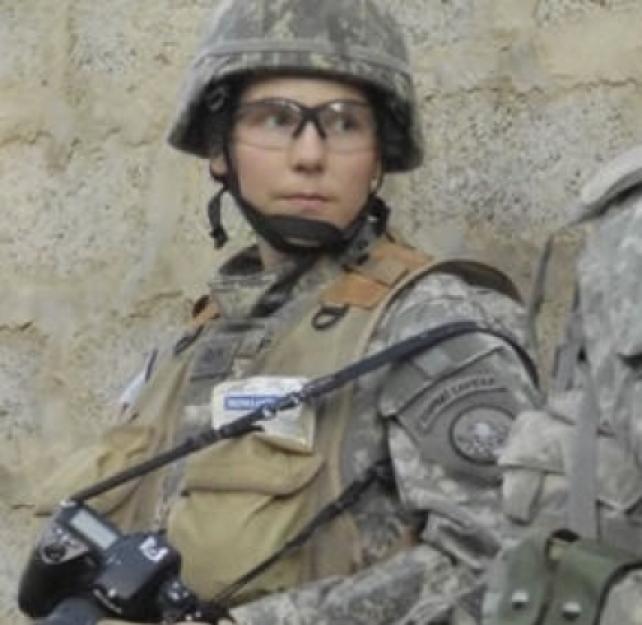
As a combat photographer, Staff Sgt. Stacy Pearsall received numerous physical injuries and experienced PTSD from the events she witnessed. With help from a friend, she found the help she needed.
Michael Roy, MD, Col. (Ret.) explains how the Virtual Iraq/Afghanistan technology uses sights, smells, and sounds to help service members and veterans deal and overcome the very intense symptoms of PTSD.
Michael Roy, MD, Col. (Ret.) talks about the various means to diagnose PTSD from evaluations and checklists, which rely totally on a person's self-report, to functional MRI imaging and psychophysiological techniques.
Cognitive Behavioral Therapy can help people with PTSD look at their behaviors and then use strategies, like relaxation techniques, to overcome the fears and anxieties related to their traumatic experiences.
"Medicines seem to help about 50% of people with PTSD," says Michael Roy, MD, Col. (Ret.). "But I see them as a band-aid; they can smooth things over but they don't deal with or help solve the underlying causes."
Exposure therapy — asking patients with PTSD to close their eyes, imagine themselves back in that traumatic situation, and retell their story — is inherently difficult for people with PTSD, but confronting fears can also be the key to the cure.
Virtual reality to treat people with PTSD can be incredibly effective because it helps trigger recalls and stimulate the senses in ways that pure talk therapy cannot.
Michael Roy, MD, Col. (Ret.) talks about the efficacy of using Virtual Iraq for treating PTSD, an experiential technology with sights, sounds, and smells that can be highly individualized for the person's experience.
Michael Roy, MD, Col. (Ret.) talks about helping service members and veterans learn ways to decrease their anxiety in therapy, which can later translate into strategies to use in life.
Like treating heart disease before a heart attack, says Michael Roy, MD, Col. (Ret.), treating symptoms like anxiety and hypervigilance before they may become part of a full PTSD diagnosis makes the most sense.
From the frontal lobe (which houses our emotions) to the amygdala (which oversees our fight or flight response), Michael Roy, MD, Col. (Ret.) explains how parts of the brain are affected when injured by brain injury or a traumatic experience.
Occupational therapist Kristen Maisano talks about therapy dogs, which are used in the clinic, and how they can help service members with mild TBI and PTDS in ways that humans cannot.