Use the filters to browse the information we have available or to narrow your search results for a specific audience (e.g. caregivers, military, children), a preferred type of content (e.g. videos, blogs, articles), or by topics of interest (e.g. family concerns, legal issues, symptoms).
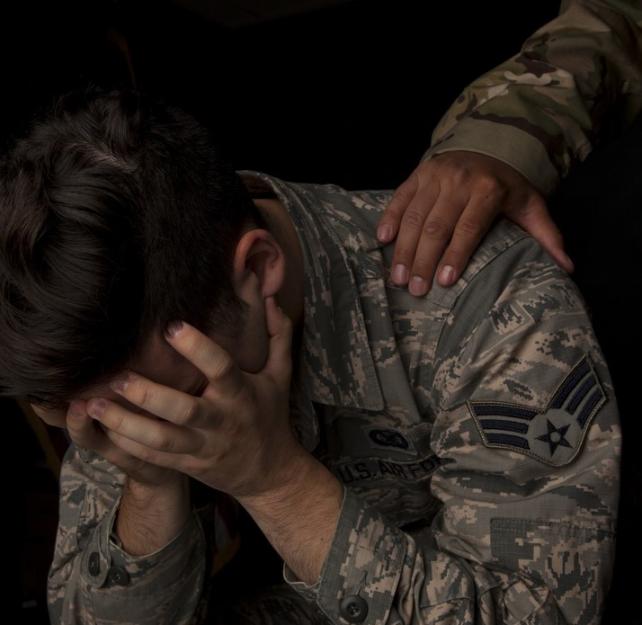
I’ve lost several battle buddies to suicide. I didn’t know it was that bad for them. How could I have helped them? What do I do when I start to feel that there is no other option?
Having a drink to unwind is not uncommon but can potentially be problematic if used in excess. Learn some strategies to help deal with increased drinking.
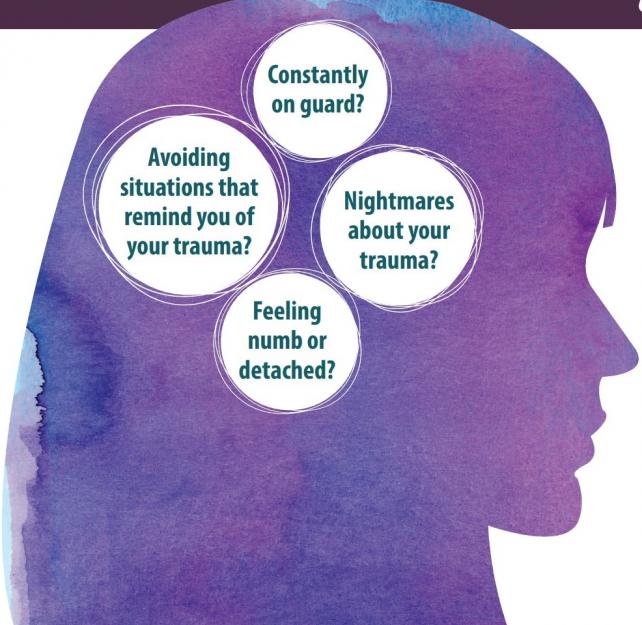
PTSD can make somebody hard to be with. Living with someone who is easily startled, has nightmares, and often avoids social situations can take a toll on the most caring family. Early research on PTSD has shown the harmful impact of PTSD on families.
Wounded Warrior Project is mounting a campaign to call and offer support to approximately 40,000 veterans of the Afghanistan War amid recent developments.
The news about the United States withdrawing military forces from Afghanistan is hard to stomach. I am angry. I am sad. And I am worried. Worried about the people left there under the Taliban regime. Worried about the possible backlash to the Muslim community here in the United States. Worried about the troops still there working with humanitarian aid. Worried about the veterans and their families who sacrificed so much. Decades of work, deployments, injuries, and death for seemingly nothing.
Barbara Rothbaum, Ph.D., ABPP, discusses PTSD signs, symptoms, and treatments, as well as the latest research on PTSD. She also discussed some of the challenges that the coronavirus (COVID-19) outbreak and pandemic has presented for individuals living with PTSD and other mental illnesses.
Dr. Balbir shares how the Wounded Warrior Project's Independence Program supports and provides additional wrap-around services for veterans after they transition home.
Duane France has a conversation with Layla Hernandez, Behavioral Health Manager for Silver Key Senior Services. In the Insight Segment, Duane looks at former service members who might be overlooked when it comes to mental health.
Trauma is common in women; five out of ten women experience a traumatic event. Women tend to experience different traumas than men. While both men and women report the same symptoms of PTSD (hyperarousal, reexperiencing, avoidance, and numbing), some symptoms are more common for women.
As my 60th birthday approaches, the internal emotions are ramping up. Over the years, I’ve heard the saying that health is one of those things you never fully appreciate until it’s gone. While this is definitely true, most often it’s used in reference to physical health. But what happens when your mental health is compromised?
Sir, I do not request an apology, explanation, or acknowledgment of my letter. As a lecturer at Texas A&M who advises future leaders, I wrote this to say that I mattered then, and I matter now. I did not deserve to be relegated to a second-class soldier.
The events taking place in the news may be triggering to many in our BrainLine community. If you need to talk, you are not alone. There are resources available now. Please reach out to these crisis lines.
This week Duane France explores the paradoxes service members face, a conversation with Eli Varney, combat veteran and mental health counselor and the resource of the week: Onward to Opportunity.
A University of Washington study finds 81% of sexual assault survivors experience significant PTSD-related symptoms just one week after the attack, 75% after a month, 53% after three months. After a full year, 41% percent met the criteria for PTSD diagnosis. Study authors discovered that many started feeling better within three months.
Because traumatic experiences are frequently unresolvable or difficult to make sense of, the stories we tell about them lack a resolution as well. I’m reminded, for example, of a story relayed to Michael Herr, a war correspondent who spent a year in Vietnam and later wrote a book titled Dispatches about his experiences there. (He also co-wrote Full Metal Jacket with Stanley Kubrick.)
How can we process traumatic events like the COVID-19 pandemic? Johns Hopkins University School of Nursing Assistant Professor Tamar Rodney, PhD, MSN, RN explains.
Heightened risk of PTSD occurred in MERS and SARS survivors. While data concerning COVID-19 is lacking, PTSD is known to occur in patient groups who undergo similar hospital courses, including ICU survivors, patients who are intubated and mechanically ventilated, and those that experience delirium. Research with patients who develop PTSD in the context of mild traumatic brain injury further suggests that PTSD may account for some or all of a patient’s subjective cognitive complaints and neuropsychological test performance. Recommendations are provided for assessing PTSD in the context of COVID-19.
Military veterans may be at elevated risk for COVID-19–associated psychiatric issues given high rates of preexisting psychiatric conditions, such as posttraumatic stress disorder (PTSD) and suicidal ideation (SI). In this survey study, we analyzed data from a national sample of US military veterans to examine (1) the prevalence of COVID-19–associated PTG among veterans with and without COVID-19–associated PTSD symptoms and (2) the incremental association between PTG and SI during the pandemic.
Duane France talks with Charlton Clarke, a licensed professional therapist and co-clinical director at the Family Care Center. Plus the reasons why service members avoid therapy and the resource segment highlighting Project Sanctuary.