

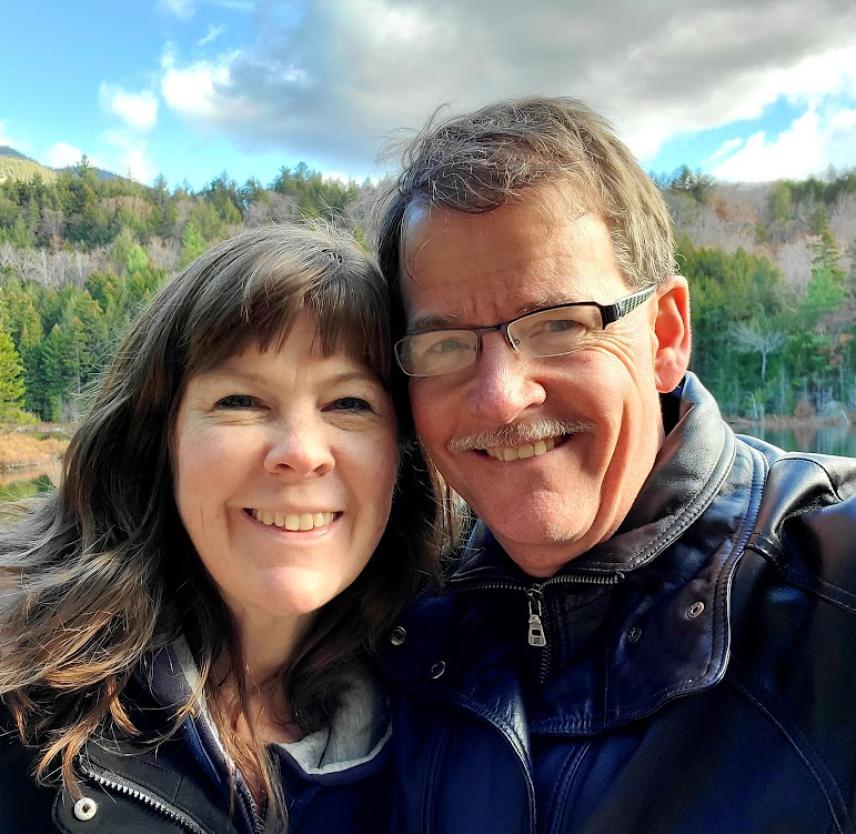
It’s hard to fathom that I am now in year sixteen as a brain injury survivor. Enough time has passed so that I no longer remember who I was before my injury. While those uninjured may not fully understand this, if you live with a brain injury, you get it. Life has two parts: before brain injury and after brain injury. In between the before and after, there was an event. Perhaps a stroke, maybe surgery, or in my case, the event that separated before and after was getting struck by a car.
The impact of my injury was immediate, it was life-changing, and it was difficult. Everything changed in two ticks of a clock. I wanted no part of this brain injury life. I wanted my old life back in its full resplendent glory. I wanted to be who I used to be, and the questions I asked the most to anyone who would listen were simple: “When will I recover, and when will I be normal again?”
Brain injury old-timers, with their sage wisdom, would say the same thing: “Recovery is lifelong.” That was NOT what I wanted to hear. I was going to be different; I was going to fully recover. I planned on defying the odds. But reality had other plans.
For the first decade, recovery gains were tangible. My word-finding became less of an issue. Vertigo that created the appearance of mild drunkenness eventually stopped. While still plagued by afternoon cognitive exhaustion, ever so slowly it lessened. I actually got to the point of being able to work a full day and not suffer for days afterward. I was indeed recovering, but during that time I stopped trying to get back to who I used to be. That ship had sailed.
Somewhere around the ten-year point, the gains that can be defined by data points stopped. There was no meaningful change in my challenges, but I was still recovering. How can that be? What I now see clearly today is that while my gains had mostly ceased, every day I added to my new record of living a post-TBI life meant more lived experience. And with that lived experience comes a relative ease of moving through life. I knew to expect weariness after a heavy cognitive load. I knew that I had to dial down the day following a bad PTSD night. I knew that pacing was an important part of living with my injury.
As the years passed, though the challenges didn’t really change, I was slowly becoming an expert at living my post-injury life. I was okay with the fact that tangible gains had stopped, but that more lived experience meant a better quality of life. Life as a brain injury survivor had become… sustainable. My recovery had become defined by acceptance of what I have, and the willingness to live within the self-defined boundaries that were healthy for me. Never did I imagine last November that I was on the cusp of the biggest breakthroughs.
Living alongside my TBI was a treatment-resistant case of PTSD. For over fifteen years, I lived with innumerable night terror events. The kitchen calendar counted the bad nights. A good month noted three or four bad nights. A tough month, like last November, came with nineteen night terror events. Last November was as bad as it gets. Life was unsustainable… until it wasn’t.
Fifteen years of seeking solutions. Psychotherapy, EMDR, talk therapy, peer support, and years of medication did nothing. This was the sensitive underbelly of my life. Years ago, I gave up on hoping it would pass. That was an exercise in futility. But very abruptly, in early December, my night terrors stopped. At the time of this writing, I am starting my seventh week without a single PTSD night terror event. To frame this with a bit of life context, I was in my forties the last time I went over a week without night terrors. I am now 64. It has been part of the very fabric of my life for a decade and a half.
And now it’s gone.
While I am hard-wired toward optimism, I am a realist. Only time will tell if this is my long game. Almost every day I share my joy with my wife, Sarah. When I wake up at midnight screaming, covered in sweat, and inconsolable, she is affected. When I sleep, we both sleep.
The big-picture takeaway is this: this is not developing skills to live with a challenge. This is the cessation of one of my biggest challenges. This is not recovery by familiarity; it is recovery that is definable and tangible. I am cautiously optimistic. Somewhere, years ago, I read that for many, PTSD nightmares become less frequent over time. Maybe this is my time for relief. Better sleep is a game changer. And right here, right now, I feel like someone should pinch me. I really can’t believe that I am sleeping again. Bring on the second half of my second decade as a survivor. Who knows what else might change!
Comments (2)
Please remember, we are not able to give medical or legal advice. If you have medical concerns, please consult your doctor. All posted comments are the views and opinions of the poster only.
Anonymous replied on Permalink
After ten years of nightmares, I tried propranolol, I think that's the name, It took away the visual aspect of the nightmares. It was a real blessing.
Anonymous replied on Permalink
I’m suffering the most I ever have. 4.5 years of abuse from my spouse , in-laws , church, and now to include even fellow veterans and police officers. I’ve moved 700 miles away only for it to continue and it is worse even.
When the VA finally acknowledged my TBI, it was 16 years after my last significant brain injury.
Always were telling me it was PTSD and a host of other mental
Illnesses . Put into psych wards .. even went willingly at times, just for acknowledgment , treatment, and benefits that earned on the battlefield both home and abroad.
Never received any of that.
Covid caused me to reach out to an eye doctor . And after about a year I finally was ok’d to see a specialist. Neuro- optometrist who diagnosed me with a post concussion syndrome.
Got into a TBI support group.. Yeah, I wasn’t crazy , I wasn’t insane, I was no longer a mentally unstable person according to those hundreds of doctors, therapists, and fellow patients even.
I took nothing for my night terrors that eventually became just as real as any event being awake . Rape, assaults, people chocking me. I can see them now in my minds eye.
Long story short :)
I was given a beta blocker , prazosin, for panic attacks which help me to sleep through the nightmares and terrors .
I take it sleeping assists with recovery than waking up through a night terror , but I’m not so sure . I still wake up punching my pillow, screaming, and ready to fight off the person who’s attacked me and is trying to kill me (dream of course)
I was prescribed several antidepressants and sleep medications, and a host of others, but then they are not currently refilling them .. been 30 days without a benzodiazepine.
I’m not well at all.
I do need help. But the help I keep being told I am refusing is more mental health. They are needing that help themselves.
I’m not refusing any help. It’s that the help that people , including , if not, more so myself (at least before) believe to be the answer is N.O.T. Never was and never will be.
I know there are Brain centers out there as I’ve been referred to one. And have sought several others. But this is way past me ranting. I came on here to tell the medicine that I worked for; only to find it’s another dead end. And has caused more harm than good.