Use the filters to browse the information we have available or to narrow your search results for a specific audience (e.g. caregivers, military, children), a preferred type of content (e.g. videos, blogs, articles), or by topics of interest (e.g. family concerns, legal issues, symptoms).
Despite the pre-conceived ideas people may have about hypnotherapy, it is actually more about awareness and control than the lack thereof ... and can help people with TBI and PTSD.
Lt. Col Jeffrey Yarvis, PhD talks about how exposure therapy can be incredibly effective for service members with TBI and PTSD because it helps undo, or lessen, the effects of response-generated traumas.
Treatments for TBI and PTSD can often overlap since symptoms can overlap. However, if drug interventions are used, it is important to make sure there is no threat of negative drug interactions.
After making sure a patient is safe, healthcare providers could start with the question, "If life were to be better for your tomorrow, what would you notice?" The answer might be simply be a good night's sleep or feeling at peace.
Lt. Col. Philip Holcombe, PhD talks about the concerns service members and veterans with PTSD have and how health providers can set a foundation for healing.
Lt. Col. Philip Holcombe, PhD talks about various treatments for PTSD including imaginal and behavioral exposure treatments as well as addressing issues of guilt and hypervigilance.
"The best time to get treatment for PTSD is now," says Lt. Col. Philip Holcombe, PhD. Now can mean soon after the trauma or now can mean 10 years later when symptoms have a delayed onset.
Lt. Col. Philip Holcombe, PhD talks about how injury to different parts of the brain like the amygdala or the frontal lobe can affect behavior and how best to approach treatment.
No one can definitively predict the future, but neuroscientist Dr. Ronald Hayes offers his thoughts on how developing research will help diagnosing and treating brain injury more effectively.
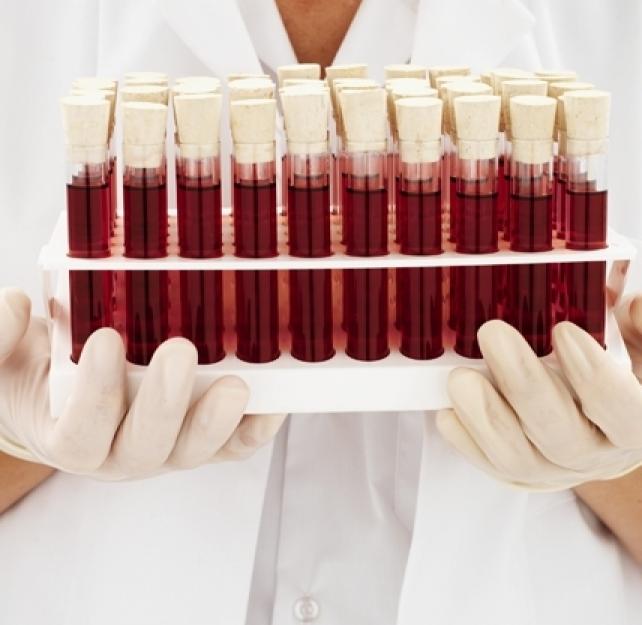
A biomarker is any measurement that provides information on a patient's specific organ or organ system. A blood biomarker test like that used to test heart attack is greatly needed for TBI.
The more developed biomarkers become through research, the more clinicians will understand the biochemical changes in the brain from injury and how to treat the effects.
Neuroscientist Dr. Ronald Hayes talks about how, in the future, doctors will be able to map a person's genome, which could help how treatments are developed for brain injury.
Getting an effective blood biomarker test for TBI from bench to bedside with FDA-approval along the way is no small feat. Dr. Ronald Hayes talks about two proteins for which researchers have high hopes.
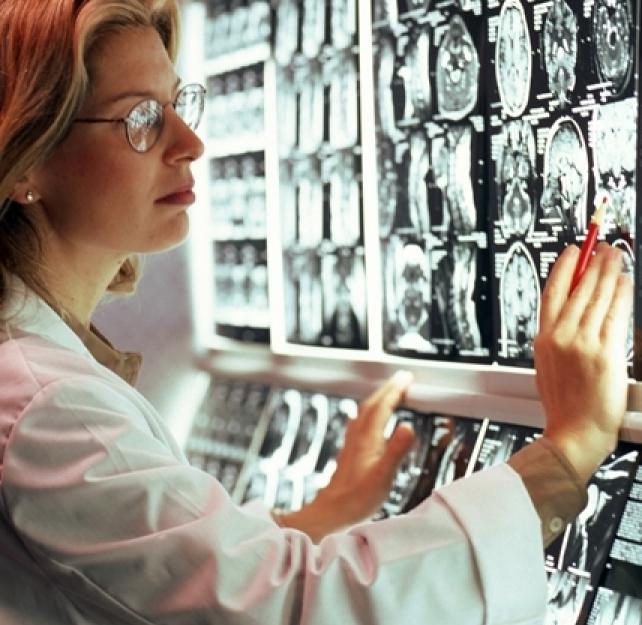
Neuroscientist Dr. Ronald Hayes talks about how a blood biomarker would be a powerful adjunct to imaging and in-person evaluations when testing someone for a brain injury.
Like the leg of a table breaking off where the leg meets the table top, cerebral fibers in the brain have sharp branches and turns, which might make them particularly vulnerable to inertial trauma.
Dr. Van Wedeen explains that unlike a telephone switchboard where each wire is unique with no relation to the wires around it, wires in the brain have similar functions to their neighboring areas.
Dr. Van Wedeen explains that evolution of the brain must occur with small changes — from a small change in the genome to a small change in the structure to a small change, ultimately, in function.
Neuroscientist Van Wedeen talks about how in diffusion spectral imaging water is used as a tracer to figure out the directions and crossings that fibers in the brain take.
Dr. Van Wedeen explains how DSI shows the fiber architecture of the brain and how all the 3-D axes fit together as a whole to form a "highly deformed grid."
Neuropathology is like looking at the last frame of a movie. You can deduce a lot from that frame but what you can't deduce is the arc of the story that culminated in that final frame.