Use the filters to browse the information we have available or to narrow your search results for a specific audience (e.g. caregivers, military, children), a preferred type of content (e.g. videos, blogs, articles), or by topics of interest (e.g. family concerns, legal issues, symptoms).
The RAND Corporation is continuing its research, looking at what programs for TBI and psychological health in soldiers and veterans are working best and how to share that knowledge.
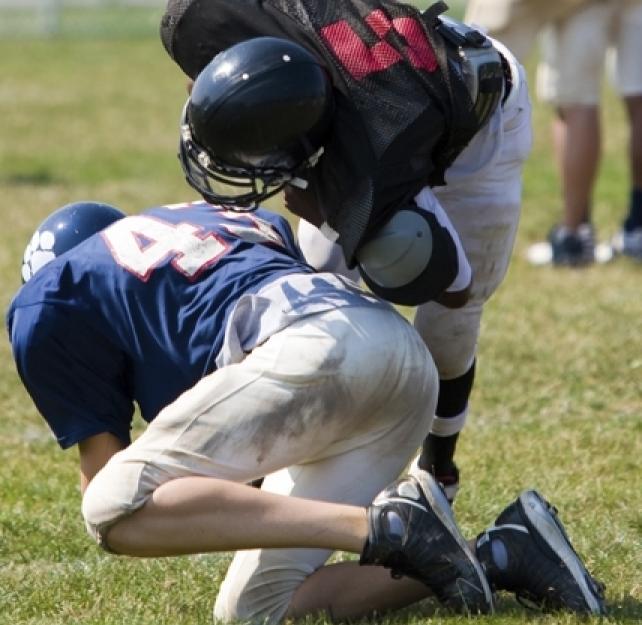
Research shows that TBI in children is far worse than in adults — with longer recovery time and greater future risk. New rules and awareness are helping but there's more work to be done.
Chris Nowinski learned the hard way that the number of hits to the head is not the same as the number of concussions. His mission is now to share what he has learned about sports and brain trauma.
Chris Nowinski and his colleagues are studying the donated brains of deceased athletes and service members to learn more about the effects of repetitive brain trauma.
It took years for athlete Chris Nowinski to overcome his many symptoms from TBI. They ranged from debilitating headaches 50% of the time, REM [sleep] behavior disorder, short-term memory problems, and more.
There are limits to how many times a baseball player can pitch before damaging his shoulder, but there are no limits to how many times an athlete can get hit in the head without permanent damage.
Until contact sports are safer, Chris Nowinski would hold off as long as possible before letting his future children play games where repetitive brain trauma is commonplace.
Christopher Nowinski explains that big concussions in sports are finally being appropriately diagnosed, but 80-95% of the "littler" ones are still going undiagnosed.
Artists may see the world differently from most people, but for artist Ginny Ruffner, especially after her brain injury, thinking about thinking, thinking about wonder and how the mind creates and is endlessly fascinating.
Artist Ginny Ruffner thinks a TBI is like the universe having a really wicked sense of humor ... but she shows that determination and humor can outmatch any challenge.
I keep making improvements partly because I go to the gym, partly because I do exercises at home, and partly because I'm so dang stubborn. I want to keep moving forward.
Blast injuries are a complex form of injury — from the effects of pressure waves on the body's tissue to the psychological trauma that can come with physical injury.
Althought incredibly important, issues of intimacy, sexuality, and even parenting after a brain injury are often overlooked in both research and practice.
Depending on the cause of a person's brain injury like an assault or a combat injury, post-traumatic stress can also play a key role in the injury — and treatment.
A full neuropsychological evaluation of a child with a mild brain injury can often tell more about the nature of the damage and its functional effects than imaging screens like CAT scans or MRIs.
Keeping a journal, taking videos, and looking back to mark progress can help families with a loved one with a severe TBI. But most importantly, families need to seek help.
It is easy for people with TBI and their families to become discouraged or depressed at what seems like a very slow rate of recovery. But a bruised brain needs time to heal.