Use the filters to browse the information we have available or to narrow your search results for a specific audience (e.g. caregivers, military, children), a preferred type of content (e.g. videos, blogs, articles), or by topics of interest (e.g. family concerns, legal issues, symptoms).
Providers in the Road Home Program got involved with treating men and women who have suffered military sexual trauma out of necessity as the need was enormous. In the two-week intensive program, survivors of MST receive many effective treatments, in particular cognitive processing therapy where they can finally open up about their experiences in a safe place and redirect blame away from themselves. And being in a cohort of other MST survivors makes this program unique and incredibly effective.
One of the most powerful aspects of the two-week immersive Road Home program is group therapy for veterans and service members. Along with the help of clinicians like Dr. Klassen these sessions, vets and service members in these sessions can share their experiences, questions, and perspectives in a safe space. Powerful transformations and healing can occur when one veteran, for example, can shed light on the experience of another, helping that individual better understand a trauma and change the narrative.
Cognitive processing therapy can be an extremely effective intervention for veterans and service members who feel stuck in their deep-seated beliefs around a traumatic experience. By gently planting seeds, by opening the door, clinicians, like Dr. Klassen, can help people take the first steps to change their self-narrative and move through that doorway towards less suffering and more healing.
Cognitive processing therapy helps veterans and service members understand how their experience of a traumatic event may have changed how they see themselves, others, and the world. CPT, in particular, targets beliefs around "what ifs" or "should haves," which are inherently toxic and can result in feelings of guilt and shame that often keep a person stuck in the symptoms of PTSD. CPT can't change what happened, but it can help that person construct a new narrative that helps change how that person feels about the trauma.
During Road Home's two-week immersive program, clinicians see great signs of improvement in the veterans and service members they treat. These signs might include fewer nightmares, better sleep, decreased anger or irritability. They might also be more concrete like a date night with a spouse, a trip to a museum, an afternoon in the park—something an individual with PTSD may not have done in years.
Midway through the two-week immersive Road Home Program when veterans and service members have told their stories of their traumas several times and more details and context emerge with each telling, sometimes the "hot spots" surface. These hot spots are the parts of the trauma that are particularly provocative and upsetting, the memories and emotions that are keeping the person stuck. By focusing on those hot spots, clinicians can help accelerate the therapy and move the person toward healing.
Starting in the first few therapy sessions in Road Home's two-week immersive program, veterans and service members with PTSD work with a clinician to share the narratives of their traumatic experiences. They repeat the story, letting it unfold, adding more context and details, feeling the associated emotions and memories. They also work with their therapist on "in vivo exposure," such as taking steps to ride public transportation or eat in a restaurant, activities that may have been impossible pre-therapy.
It is a paradox that the harder we try not to think about something, the more we think about it. Memories and emotions related to trauma can only be suppressed for so long. It's like holding a beach ball under water. It's hard. You can do it until you can no longer do it. Trauma therapy, as offered during the Road Home Program, helps veterans and service members with PTSD bring their stories of trauma to the surface in a safe and controlled way and from there move toward healing.
Starting exposure therapy for PTSD with a clinician is a bit like starting with a personal trainer in the gym or learning a new skill: repetition is key. The more service members or veterans talk about their trauma, the more the clinician can help that person synch their memories, reframe their narrative to deal with their emotions, and move towards healing.
Creating individualized treatment plans for veterans is crucial as they may be experiencing symptoms from PTSD, TBI or other concussive injuries as well as moral injury. Often, soldiers enter a war in their late teens or early 20s when their brain has not yet reached full maturation. Providers must consider all of a veteran’s physical and psychological factors when tailoring treatment strategies.
Being involved in, witnessing, or learning about an event that seriously transgresses moral beliefs is quite different from experiencing trauma that can lead to PTSD. A lot can happen in war or military service that doesn't clearly fit into the definition of a traumatic event because war brings with it moments of ambiguous situations, many of which need to be acted upon in a split second. Clinicians like Dr. Klassen want people to know that one moment does not define you as a person forever; healing can occur from moral injury.
If I could tell civilian providers working with veterans and service members with PTSD and other mental health challenges one thing, it would be that this population includes some of the most resilient people on the planet. I think we do a disservice to them by fragilizing them, treating them as if going through these intense therapies—cognitive behavioral therapy, prolonged exposure therapy, and discussions around moral injury and military sexual trauma among others—will break them. On the contrary, during Road Home's two-week intensive program, I have seen undue strength and resiliency demonstrated, which often lead to significant healing.
For many veterans and service members returning from deployment, not having their "team," their battle buddies around is very difficult. Everything seems to be about the individual. Capitalizing on this team unity mentality, providers at the Road Home Program understand that more healing will happen when people are working on individualized therapies as well as group therapies and activities. Once again, they have each other's backs.
A two-week program for veterans and services members who have PTSD and other mental health issues, Rush Medical Center's Road Home is intense, fast, and efficient. Through evidence-based studies and experience, providers have found that this two-week intensive is far more effective than traditional therapy to help with symptom remission and increases in resilience.
The use of psychedelics for PTSD is an example of a therapeutic intervention that the medical field has, until lately, put to the side. There was no funding, nor research on the topic; now, medical professionals and researchers are looking into its potential use for PTSD and believe that, with specific focus, it may have a great benefit.
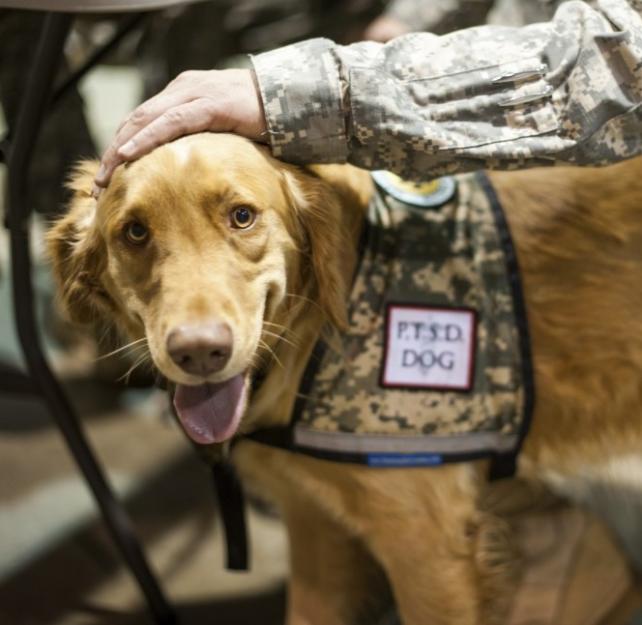
For tens of thousands of years, there has been a deep symbiosis between humans and dogs. With their superior senses—far more attuned than those of humans—dogs have come to discern human emotions, something that benefits both species. Research in the last several decades has also shown that service dogs that have been exceptionally trained and certified can help people the symptoms of PTSD like nightmares, anxiety, and sleep and behavioral disturbances.
Treating service members and veterans with TBI and PTSD often includes complex and unique interventions and treatments. Based on their evidence-based guidelines and experiences working with thousands of people in their two-week immersive program, Home Base also focuses intentionally and systematically on assessing what the population needs once they leave the program and return to their communities. The more Home Base can help connect their participants with clusters of experts in their areas, the more long-term healing will occur.
The biggest and most nefarious misconception about TBI is that it doesn’t get better. That is simply not true. The vast majority of people with TBI do well over time and can be effectively treated to live functional and fulfilling lives. However, that does not counter the risk of behavioral, medical, and cognitive problems in the long term. With more research and experience, experts in the field are focusing on learning more to mitigate risk and improve the outcome of those with TBI in both the short and long term.
Does success translate into riding a horse again, returning to your pre-military job as an accountant, or coaching your kid’s Little League team? Staff at the Home Base Program understand that what success looks like for one military member with TBI and/or PTSD may look 180-degrees different from that of another. Using evidence-based guidelines to drive their therapeutic regimens as well as applying lessons learned from helping thousands of people in the program, Home Base providers are not only fine-tuning what they do each day but also learning and creating the next generation of effective therapies.
Staff at Home Base are awed—daily, hourly—by the resilience, determination, and dedication of the veterans and service members with whom they work during the two-week immersion program. Dr. Zafonte recalls one Special Forces member who was injured multiple times but whose focus, invariably and unblinkingly, was to restore himself so as to return to theater to continue to serve. Military members like this man exemplify a dedication to protect our country; something all of us should take time to better understand and appreciate.
Home Base’s two weeks of assessments and individualized therapies focused on treating veterans and services members with TBI and PTSD seems to be the “sweet spot” of time for this kind of immersive program. Staff in the program have seen lives changed, lives saved. They understand that the veteran experience is a unique one, hard for civilians to fully comprehend. Providing these men and women with the tailored interventions and therapies they need to enhance function in their day-to-day life is often as important as the bonding aspect of being with others who have had and continue to have similar experiences, challenges, and forward steps.
One of the most powerful aspects of the Home Base Program is the way it helps veterans and service members come together again with those who may have had similar experiences in combat and now back at home with issues around TBI and PTSD. Along with the comprehensive individualized treatment plans for each person, the program includes group therapies and events, which play a large role in the healing process.
The Home Base program, which includes comprehensive assessments and a two-week immersion into therapies and treatments for TBI, PTSD, and other conditions, is created anew for each veteran or service member who joins. Whether engaging in physical or cognitive therapeutic interventions, learning how better to communicate with family and friends, or delving into art therapies, each individual becomes part of a strong and supportive community of people who understand their experiences, though everyone’s experiences and issues are unique and treated as such.
Home Base, a free Red Sox Foundation and Mass General Hospital program, started small, but then and now—as it has grown to help 1,000s of veterans and service members nationwide—it remains a passion for many. The program focuses on treating the invisible wounds of war like TBI and PTSD. With evidence-based treatments in all domains like behavioral therapy, physical therapy, health and wellness, and medications, providers help these warriors with issues that run the gamut from sleep apnea and cognitive function to depression and physical pain.
The jury is still out on the exact ways that repeated blast injuries affect the brain. Some believe that the blast waves travel through the organs, producing a change in the gray-white matter of the brain. Others believe that blast-related injuries produce a unique pathology while others still think that the pathological signals from these injuries result in behavioral disturbance. But all researchers seem to agree that repeated blast-related injuries affect a person’s brain in the short-term as well as in the long-term with the risk of neurodegenerative disease.