Use the filters to browse the information we have available or to narrow your search results for a specific audience (e.g. caregivers, military, children), a preferred type of content (e.g. videos, blogs, articles), or by topics of interest (e.g. family concerns, legal issues, symptoms).
Looking back over the years, I never expected to live a life defined largely by being a brain injury survivor. Early on, I was completely unable to see that there might be a silver lining to all that has come to pass ...
When I started treatment again for my PTSD, I said that I'd give it 90 days. No sudden or irrational decisions, just a three-month treatment test drive. Ninety days have come and gone, but here I am, still not seeing any relief. What do I do?
Time seems to pass faster every year. It feels like just yesterday that I first presented at a brain injury conference. It was 2013, and I was asked to offer the keynote address at the Brain Injury Association of Maine’s annual conference. No one was more surprised than me to receive the invitation.
If, within your own personal or professional circles, you know someone with a brain injury or PTSD who has been living the survivor life for years, please know that time does not equate to freedom from challenges. Reach out to those you know and ask how they are really doing. You might just be surprised by what you hear — and how much your asking means.
Predatory practices are common around military bases. Young servicemembers and those in transition — either moving from base to base or preparing to separate or retire from active service — are easy targets. As soon as you pass the gates off base, you see “Pay Day Loans!” and “Buy Now! Pay Later!” Like servicemembers, veterans are also targets.
Mindfulness has taught me that true and lasting peace only comes in the moment. Right here, right now. In the moment, my past carries no weight, and the future does not exist. Life is truly a succession of moments.
Creating boundaries can feel awkward or wrong when you first start setting them. You might even get pushback if you haven’t done it before. But don’t stop.
I recently heard the holiday trifecta of Thanksgiving, Christmas, and New Year's called the Bermuda Triangle of exhaustion. No one knows this better than brain injury survivors!
The holiday season is upon us and that means family time and reflection. But this year just feels off. I’m not sure if it’s the change of seasons, the upcoming holidays, our added pressures at work, or just the stress of everything going on in the world, but my husband, Russ, and I have both been stressed.
A surprising thing happened when researchers began exploring whether early-life stress compounds the effects of a childhood head injury on health and behavior later in life: In an animal study, stress changed the activation level of many more genes in the brain than were changed by a bump to the head.
Well, it finally happened. After successfully dodging COVID for over three-and-a-half years, the virus finally struck our household. Since the outbreak, my biggest fear about COVID was having a preexisting brain injury — what might the virus do to further compromise my already challenged brain?
At the end of the day, I don’t really care why playing a role at the Renaissance Festival alleviates some of my husband, Russ's symptoms of PTSD, I am just glad it does!
Many years ago, I was introduced to a phrase that, before my brain injury, had not been part of my vocabulary: “compensatory strategies.” Why? Because prior to my injury, there had been nothing to compensate for. I was a fully formed and completely functional adult. Strategies were for board games.
Triggers are weird. A seemingly innocuous thing happens or there is a tiny deviation from routine and you or your loved one loses it. From the outside, it seems like a total overreaction but for the person who has been triggered, it is a fight-or-flight response.
My life will forever be marked by that day in November of 2010 when I sustained a brain injury after being hit by a car while riding my bicycle. It was a true "before and after" scenario. However, an unexpected consequence followed: my decades-long depression disappeared. I was as stunned as anyone …
A perfect example would be the day — about a year after my injury — when I decided to go out for a bike ride … in a snowstorm. My plan made perfect sense to me...
I feel ready to move through whatever comes next. After all, I really only need to worry about making today a well-lived day. Tomorrow is none of my business.
I need to be more open about who I am. All of me. I cannot be afraid. I won’t hide anymore. Now, I will be my true self. And I’m ready to stand with anyone else who feels the same.
Over the last couple of years, I’ve discovered mindfulness and have learned the value of living life “in the moment.” It’s a learned skill that has enabled me to find peace in my life. In what amounts to almost an irony, I no longer have much of my past to recall. The future never really comes. By circumstance, rather than any virtue, I am now forced to live in the moment.
Social isolation and loneliness are increasingly becoming societal problems, as they contribute to polarization and affect our physical health. Mental health professionals, community advocates and health-care providers have been raising the alarm about this impending crisis.
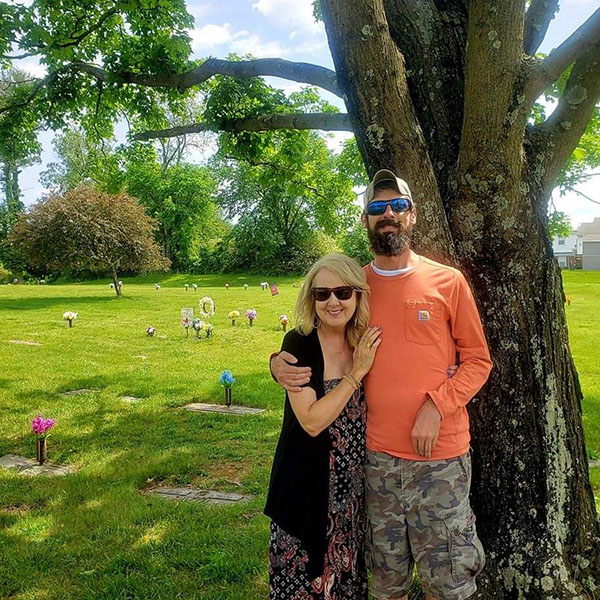
This month has been a whirlwind of pain, triggers, and generally not great behavior from both Russ and myself. Our eldest daughter, Elizabeth Shade-Ware, died unexpectedly in her sleep. Suffice it to say, I am a wreck...