

I've been hearing about bleeding in the brain after a TBI. Can you explain how this happens and why it's so dangerous? What exactly is a subdural hematoma?
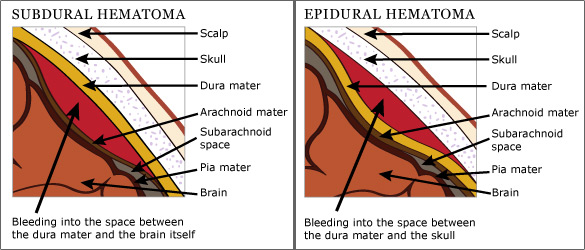
Let's start with the basics. A hematoma is a tumor-like collection of blood, usually clotted, located outside a blood vessel. The subdural space is located between the dura mater (the outermost, toughest, and most fibrous of the three membranes covering the brain and spinal cord) and the arachnoid membrane (the middle of these three membranes). The epidural space is located on or outside the dura mater.
Now, to answer your question, a subdural hematoma (illustrated below) is basically bleeding into the space between the brain cover (dura mater) and the brain itself. More specifically, there are blood vessels running through the brain and in the spaces between the outside of the brain and the inside of the skull. During a brain injury, any of these vessels can tear and bleed. Ruptured vessels running in the subdural space — typically veins — cause subdural hematomas. Ruptured vessels running through the epidural space — typically arteries — cause epidural hematomas. Both types of bleeding take up space in the skull and in so doing squeeze down on the brain. Because arteries are under pressure, epidural hematomas leak quickly and compress the brain rapidly while subdural hematomas leak much more slowly.
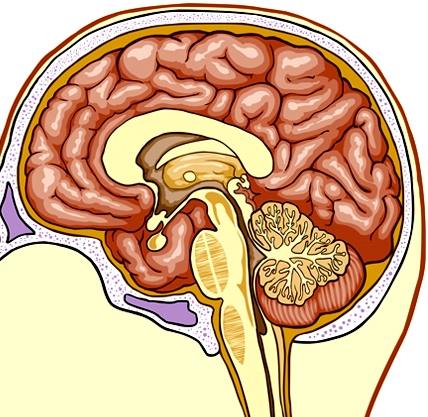
Because the brain is enclosed within the rigid skull, it gets compressed by this leaking blood. With enough bleeding, the brain gets compressed so much that oxygen-rich blood is prevented from flowing into the brain tissue. This lack of oxygen causes additional brain swelling. This brain swelling, added to the blood leaking from the torn vessel, forces the brain down through the small hole at the base of the skull called the foramen magnum. The parts of the brain that come in direct contact with the bone around this opening get so compressed that they stop working. Because these brain areas control breathing and heart rate, death can result.
Getting to the hospital quickly is the best way to diagnose and treat this bleeding, which usually requires surgery to remove the blood and relieve the pressure on the brain.
About the author: Jeffrey Bazarian, MD
Dr. Bazarian is an emergency physician with a strong research interest in traumatic brain injury. He is associate professor of Emergency Medicine, Neurology, and Neurosurgery at the Center for Neural Development and Disease, University of Rochester Medical Center.

Comments (302)
Please remember, we are not able to give medical or legal advice. If you have medical concerns, please consult your doctor. All posted comments are the views and opinions of the poster only.
Kiva replied on Permalink
May 3 this year I went to the ER because I was having dizziness and vomiting and just didn’t feel right. I was pretty sure I was having a stroke. I already knew that I have a pituitary tumor growing. ER doctor on duty was my doctor and said she would do a CTscaan to humor me but I was not having any stroke symptoms. Well my pituitary was bleeding ( nothing has been done still 9 months later as we bleed away) . Next day I was taken to a bigger hospital and kept in the ICU for a week. Nothing was done there because I also have Neurofibromatosis. The neurologist said he was afraid that he would do harm so refused to touch me. I was sent on to Hutchinson hospital for rehab because by then I had lost use of right side. I stayed there a few weeks. Since then my right side has a little more use but has swollen three times the normal size and y weight has increased big time. I went from 90 pounds to 130 in less than a month and nobody is saying anything. This should have raised red flags but it hasn’t. I am frustrated and angry.
Anonymous replied on Permalink
My wife fell in the bathroom and hit her head causing a small brain bleed. She was admitted and stayed overnight and discharged. The next morning I woke up and she was not breathing, I performed cpr and she began to breathe again and was taken to another hospital and went strait into life saving brain surgery. Her bleed was so bad she had 2 transfusions during surgery. She never regained consciousness and passed away 6 days later. I will always believe she was discharged from the hospital to soon, seems they can’t get you out the door fast enough. We were married 26 years and me, our 4 children and 8 grandchildren are devastated.
Deena replied on Permalink
I found my 87 yr old mom incapacitated on the floor, I told the paramedics I believe it is a stroke. Once I saw her in the ER she was alert and able to talk, but slurring her speech. Again I mention this seems like a stroke. They assured me it wasn’t and 8 hrs later brought her up to ICU. My mom kept saying she was hungry and the Doctor said once in her room they will bring food. I will never forget leaving that night and seeing a tear in her eye, but I told her everything would be ok, because it always was and she was the strongest woman I ever met. The next day and night they wouldn’t give me clear answers why they still haven’t brought her a meal. Day three, I call the hospital to check in on her when I woke that morning, the nurse said she was up all night and is still sleeping, she said she can’t wake her. When I got to her room I tried waking her and realized she was in a coma. Within a few hours a team of doctors came in to tell me she will pass that night. I was in shock, how is this possible. They said they did a CTScan and she had a massive brain bleed on her right side. They said she will never know who I am, where she is, and will most likely need a tracheotomy, oxygen along with a feeding tube. Then the doctor said he will not resuscitate her if she goes into cardiac arrest. I am her power of attorney and she had an advanced directive to be resuscitated. I told the doctor he WILL respect her wishes and do what she wanted. I laid in bed with her and held her lifeless hand until the morning and that’s when her vitals began failing. I have never felt so hopeless, terrified, overwhelmed, numb and pushed into a decision to give her the morphine. I will always wonder what truly happened, and if she could have come out of that coma. She was my world and it will never be the same without her. My heart breaks for all of you who have lost a loved one.
Anonymous replied on Permalink
My 46 year old son died as a result of Diabetes he died in our house from clogged arteries in his heart, I found him within I would guess 30 minutes of his passing he was still warm….he knew he was not well but we know he had accepted the Lord and we will see him again, my wife never got over his death and now has hydro encephalitis and other health issues it’s not supposed to happen this way.
Rc replied on Permalink
Just got over to brother he’s 59
Angio finished up around 9 am this morning. Nurse said they didn't find anything again. But the blood that's still there but no sign of Aneurism.
Havnt talked to the Dr but requested when he is available to talk about why he's still having these pain spikes. It’s been 9 days anyone can give advise greatly appreciated
Anonymous replied on Permalink
When a brain aneurysm occurs, is there any blood on the outside of the person or body?
Anonymous replied on Permalink
I fell and hit my head on a stump. I thought I was fine. So I went home and started to go on with my life. Only thing is I was having severe headaches for about 2 weeks off and on. My wife scheduled a apoiment with my primary doctor. The day of my appointment. I was already out of my head clearly showing signs of something being wrong. I was so out of my head I didn't even remember going to that doctor. So my wife spoke up for me when the doctor came in she told her about me hitting my head and that I had been having severe headaches for about 2 weeks. The doctor never one time check me out even though I was clearly showing signs of something was wrong with me. She never did any kind of exam on me are ask me any questions to see if I was still coherent. She sent me home without having me take a brain CT scan right then. About 5 hours later I was really out of it by then and my mother witch was a nurse ,LPN for 12 years happen to come over to see me that day. She took one look at me and emieatly started crying and told my wife that I needed to get to the emergency room very quick. So I went to a whole different emergency room to be seen. They did a brain CT scan of my head and said that I was hemmoriging in my brain. They did emergency surgery and drilled 2 hole in my head and put tubes in to drain all the blood out of my head. Now I feel like I am disabled now. My head was cut open twice and stapled my head back up to recover and finish draining all the blood out of my head. This has caused me alot of problems. Now I have 2 giant scars on my head and I have suffered while trying to heal. I don't even know if I will be able to go back to my job now. Can anyone who knows tell me if I have a case on my primary for sending me home even when I was showing signs of something wrong with me and didn't do one thing to help like send me down to the emergency room to have a CT scan. I nearly died that night. I know all those other hours I waited cause the primary sent me home so my wife took that as I would be OK I guess. If someone could give me some information about having a case that would be awesome. Thank you!
Can't say replied on Permalink
My in law was in the hospital because of a mild heart attack he was given Coumadin then they said he was bleeding on his brain
Anonymous replied on Permalink
My daughter-in-law has a moya moya In 2006 both the arteries in her head broke she had 2 brain surgeries and had him fixed now here we are 16 years later after her having 2 sons in order to beproach in her right side of her brain so now both sides are injured but I see her coming back a little bit later so I'm praying to God and our family is making sure that she is going to come back.
Anonymous replied on Permalink
So my brother here in Memphis TN has a pontine hemorrhage bleeding in brain which has stop bleeding but they want operate or doing anything for him and he’s on a ventilator since Sunday the 16 of January 2022 they say where it is located they can’t do anything for him and only gave us the option to pull the ventilator or put him in hospice with a trech in and he want be able to doing anything and be in there the rest of his life and he’s not even totally brain dead which is even harder and his opening his eyes squeezing hands but they say it’s just reflexes then they say well he can do that but where the brain bleed at he would never be able to live without hospice and we got to make this decision by Monday. We don’t know what to decide any advice. I’ve also read where people came out of this
Anonymous replied on Permalink
My 31 year old daughter had had a sever headache for about 4 days. She finally went to urgent care and they found blood on her brain. The blood came from an injury she sustained when someone hit her in the head about two weeks prior. They had her taken to St Mary's Mayo hospital for emergency brain surgery where they put two holes in her skull to relieve the pressure and drain the bleeding I believe is how it was put. She had a seizure after the surgery that night. The next day my daughter was released to go home. This was after asking her if she felt confident to go home. She told them no she didn't think that she was ready as she really didn't feel well or steady enough, nor did she feel she had enough information as to what was going on with everything she had just found out and then gone through. Nor did she understand what to look for and what complications there could be.
The nurse took her down to fill her medication before she left. They only gave her one of the 3 or 4 the Dr prescribed and one they didn't was to help prevent more seizures. She was given no information as to why. Just sent on her way. Being told that due to over crowding and that she had Medical Assistance! Now my understanding is that the Mayo clinic, raved to be one of the best, was a non-profit hospital and they also have the ability to help those who don't have money get the care they need anyway. She is with me for the moment but I have had to scour the internet for any information so I know what things to look for. But without the equipment and the knowledge I feel lacking to help her beside make sure that she is able to talk, move her arms, legs, has good tracking with her eyes and doesn't have any numbness or tingling. But really I'm clueless and sadly she is very uninformed. She has been saying she is lightheaded and this is having not taken anything yet for pain that day. She today says her arm was numb for a bit and she tried to shave her legs and didn't feel the razor on them as she did. Now this is three days ago she was released. She had the surgery the morning of the 23rd of December, was released Christmas eve morning. Is there anything anyone can tell me to help better care for her.? Or should I be contacting another hospital or provider to get some better help? I am not impressed with the Mayo clinic nor their staff. My daughter was mainly released due to having county funded medical. Nice place when they put that above patient care, especially being a not for profit hospital, but that's not how they are portrait ed to everyone else. Extremely concerned for my daughter's health and well being.
Belinda Farrell replied on Permalink
Please take her to another hospital. She needs to be seen and evaluated again. Any bleeding in the brain can be serious. I know I have had 2 brain bleeds. Please take her to another doctor..I will pray for her
.good luck sweetie.
Doctor Wallace replied on Permalink
How did it go?
Anonymous replied on Permalink
my friend has been in the hospital for a month .now he is at a acute center he has a bump on his head the size of a baseball. did the brain bleed cause this bump? will it go away? when will he wake up he is not in a coma any longer so why wont he open his eyes? I cant find his family and I cant get any answers because I am just a friend but he has nobody what can I do?
Anonymous replied on Permalink
My father just died at Riverside hospital on the 30th of April. I'm his daughter, and I had to tell the wonderful nurse's it's time!! I held his hand after they gave him M0rphine/At!van to excavate his tube. He survived at the same hospital in Ohio...rectal..colon..liver..and Covid.
He fell onto the concrete, and they did a Petscan, and said he only had less than a tablespoon of blood, so since he didn't fall again, why did he suffer from a rebelled???
Alisha replied on Permalink
I was kicked by a horse in the head and had five brain bleeds, inside and outside the brain and I’m lucky someone found me quickly or I’ll probably be dead. I’ve improved a lot thanks to therapy, but I’ve wondered am I doing well because they found me so quickly or is it because of my age? I’m 29 by the way and no they didn’t need to do surgery because I stopped bleeding
Brianna replied on Permalink
Hi, I am glad to hear you have recovered well. Just wondering what therapies you used to recover in order for the bleeding to stop?
Anonymous replied on Permalink
Hello my friend is in the hospital in ICU, she suffered a massive heart attack and cardiac arrest, shes 39! The drs said her Brain is still swollen and its been 7 days, we are all hoping shes ok and pulls through, anyone have anything or experience any thing close to this would be helpful. Im looking for direct answer no sugar coating please i can take it.
Anonymous replied on Permalink
If your brain was bleeding and it stopped but you clearly could see where the blood on the brain was does it just go away or do they have to remove the blood.
Anonymous replied on Permalink
My dad passed away mon afternoon after having a terrible headache he was took into hospital had a ct scan which showed he had a minor bleed to the brain but was fine the hospital kept him in overnight so they could do another ct scan in morning but at 9.30 that morning while doing they’re checks he was unresponsive and unconscious they then noticed he had another massive bleed to brain which killed him , why did the hospital have to do another scan why did they not operate that night when they saw the minor bleed to the brain ?
mary replied on Permalink
My Dad died of a
brain hemmorage that came out of absolutely nowhere 3 years ago. He suffered the worst kind of headache Father's Day morning.
Of course,we know now that that was the beginning of the end.
He died a horrible death a few days later. It was a horrible awful bad week,month,so forth so on.
I miss him bad.
Whoever you are,if you are dealing with now,I am sorry.
Keep the good memories alive,
Keep active in your life as much as you can,
and write down every little good memory,every detail,.this will help you later.
Chocolate is good right now,and you will find that you have memorized where the ice cream is at your local store.
Even years later,remember your dad happily.
Anonymous replied on Permalink
My dad had a operation on is brain for a bleed a few months ago at addenbrooks hospital in Cambridge and he died the 2nd of June this year is funeral is the 6th of July but I blame the hospital for it and I am thinking off during them as when they done the operation they should have found out more and sorted it out before they let him home and they was very nasty when you rang to see how he was to me my dad was my world and I miss him like mad do you think I should sue the hospital or leave it I am grieving very bad at the moment all I won't is to die and be with my dad and nobody will help me not even my doctors they just say ring 111 and option 2 and talk to them about it but I keep crying about my dad so carnt speak to anyone what should I do
Anonymous replied on Permalink
I’m so sorry to hear about your father. My mother just called me and told me she was in the hospital. She had fallen for a couple of days and finally went to the hospital. The MRI showed a minor brain bleed. That’s all I know. She feels fine and they talked about some kind of a minor procedure but she’s almost 92.
Amy replied on Permalink
Thank you so much for this wonderful comment. My dad has survived his bleed, but we are not sure whether he will survive long-term or recover. Your comment made me find joy in the pain and uncertainty. Thank you x
Pedro Segura replied on Permalink
I am sitting in my car outside the ER reading your post.thank you.
J perry replied on Permalink
Hi I had a rta in nov and then surgery for a bleed on the brain 19th January followed by two further surgeries for infection and leaking csf fluid , last Friday I was c.t scanned finding a small bleed again , the hospital have said it’s small so no need for treatment but I’m worried it will get worse not better
Anonymous replied on Permalink
Hi,
I am a 29 year old healthy woman they have told me. But for the past week I have been having a headache that resembles more of head pressure. It also comes with dizziness, rapid heart rate and and chest pain. When I am up and moving it seems to be worse than before sometimes. Never had any head injuries that I can recall. I have been to the ER twice. Two different ones. Had a head CT at both and both came back fine. Also experience some weakness or fatigue throughout the day. Should Inbe worries about a brain bleed or aneurisms if both CT scans came back clear?
Kelly replied on Permalink
Hi I had the same thing. You must have a lot on your plate.. meaning maybe stress, kids, bf, husband, school, bills etc
Please feel free to write back.. I had the exact same thing and I suffer with migraines
Linda Fredrick replied on Permalink
Please have a neurologist do a MRI /MRA to make sure yo dont have an AVM (malformed artery vein connection) which can rupture and bleed. CTs dont always pick them up, or better yet a cerebroarteriogram which show all of rhe vessels. Most ER docs aren't that skilled. I would say a neurologist or neuro surgeon would be best to start with. My hubby. now is physically disabled,and dependent, following a rupture that nearly killed him.
Anonymous replied on Permalink
Nearly 30 yrs. ago, I received a CHI/TBI due to being in an auto accident. I was 21.When the police told my mom, she called the hospital and an ER nurse, told her that there was swelling and bleeding on the brain. What kind of medications and procedures, would they have used in the ER back then, decades ago.
Anonymous replied on Permalink
Hope u r a better dr than the one's I come in contact with. This is the 2nd time I was released with a brain injury. Confused and agitated and 3 day's later I can't stand up for long and when I tried to sweep it kept smelling like blood in my nose. Also keep feeling pressure in my sinus area
Kat replied on Permalink
Can anyone who has experience with a loved one going through this after prescribed blood thinners?
Leah Rodda replied on Permalink
I had a major brain bleed due to doctors giving xarelto medicine. Will never let them do it again! Waiting for cardiologist to do watchman procedure so I can get off blood thinners permanently.
Problem is only one doctor does this procedure in the whole Upper Michigan!
So I have blood blisters all over my arms and bruises everywhere else until I get it done. I am homebound so people don't ask what is wrong with me.
Tammy Belcher replied on Permalink
Hello:
You need to go to Vanderbilt Univerdity Medical Center, in Nashville TN.
The are the best doctors and nurses in the word!
I live in a suburb outside of Nashville, born in Vanderbilt.
People come from all over the word! If Vanderbilt cannot fix it, no one can!
They also treat you kind and with dignity, have a trauma center, all kinds of specialists for different parts of the human body and some of the best specialists and trauma teams in the world! It’s with the trip!
Good luck!
God Bless
Tammy
Liv replied on Permalink
Yesterday I found my nan unconscious in her bed (must’ve happened in her sleep). Today we found out she won’t be coming home. She was on blood thinners, don’t know if it caused it but she sadly won’t be with us anymore soon. RIP to those who’ve lost loved ones.
Mary McGinn replied on Permalink
My brother is on Eliquis currently in ICU on vent with a brain bleed. Did you receive info on your question?
Susan replied on Permalink
Yes my dad had 4 blood thinners after a heart surgery last week and two days later he is in the hospital with a brain bleed stroke.
engie replied on Permalink
what happens after? can you be fully functional after recovery?
Yolanda Dukes replied on Permalink
Bilateral convexity subdural hematomas, larger on the left. The left subdural hematoma measures 9 mm in thickness and exerts mass effect on the adjacent brain parenchyma. The right subdural hematoma measures 3 mm. There is 2 to 3 mm of rightward midline shift. No downward herniation. The ventricular size is normal. Diffusion abnormality and susceptibility associated with blood products. this what they said about my MRI with contras, this showed up two months after my car crash, should I be worried since it happen so late after my accident? none of the other ct showed this before and I had 4 ct before this one. should I be worried
Erick replied on Permalink
Hi Yolanda, did you ever find a resolution to this? My dad was/is under a similar situation, where he was diagnosed with a subdural hematoma months after a car collision. He took steroids for 2 weeks and his subdural hematoma was greatly diminished in size, his midline shift has gone from 7mm to 2mm, but the slow brain-bleed has continued, so I'm curious if you're also struggling with the same. Hopefully you've been able to heal completely, and if so, I'd be curious to know what was done in your situation ~ thanks.
Violet Spence replied on Permalink
I was told, that I have bleeding vessels in the back of my brain. I have to see a neurosurgeon. What will he do?
Anonymous replied on Permalink
I have a small bleed in the brain which is causing me headaches i have had them for about 8 weeks i have to see a nerosurgeon what will he do
Carole westgart... replied on Permalink
My son 30yrs ago had a very bad fracture of the skull. Over a period of years he has suffered two brain bleeds. He can’t smell anything. Now drinks to much. Is that a worry
Nidhi replied on Permalink
Sir my mamiji fell from a bike. She has got severe head injury. Her surgery was done after 48 hours. In surgery, her front forehead bones were removed and kept in stomach so that brain can expand. After a day, in her CT scan it shows there is bleeding inside the brain and platelets less. She is unconsciousness from five days and able to breath much on ventilator. I want to know what are the chances of her survival. I am waiting for reply as she is in hospital right now fighting for life in PGI Chandigarh.
Anita E. replied on Permalink
I am praying for your family in this time of turmoil, may God give you peace, wisdom & understanding.♡
Christine Conley replied on Permalink
My sister had a brain bleed and was unconscious for a 6 hours waking a few times, she was moved to a neurology hospital where on arrival she became responsive answering the Drs questions. She had one brain scan, and the neuro team were going to give her another. Within 10 minutes of being responsive she started having seizures. She was operated on and found that another bleed had occurred and her brain had been too badly damaged and she died later on. Is this normal?
Sharon M replied on Permalink
My sister had a tumor removed from her pituitary gland. The tumor was bigger than thought, and she had a brain bleed, fluid and her brain was swelling. Now because of the location of the blood, she can't open her eyes. She has a drain in and will put in a shunt later this week. I know every one is different and our bodies are different and react different. But how long will it take for this blood to be drained so she can open her eyes?
Barbara replied on Permalink
My 2 month old grandaughter has been admitted to the hospital my daughter said she stopped breathing after a bottle and nappy change she phoned for an abulance while her husband gave cpr the paramedics came and put a tube down her throat she started breathing again she was given a scan of her brain to rule out meningitis but they were told she has a bilateral brain bleed how has this happened why has this happened
Hazel replied on Permalink
What are the symptoms?
Victoria replied on Permalink
I was admitted to Royal London hospital on Monday with a suspected bleed on the brain. They wanted to admit me for a Lumbar puncture and MRI. As the royal london is 2 hours from my home I asked if i could be transferred to a hospital near my home. They agreed, discharged me and said that I should take a letter they gave me to my GP for the referral to the hospital nearer my home. The hospital have my referral and it was sent as urgent. My scan is now scheduled for anything up to 4 weeks. Surely this is too long for a suspected brain bleed? Any advice would be appreciated.
Pages