

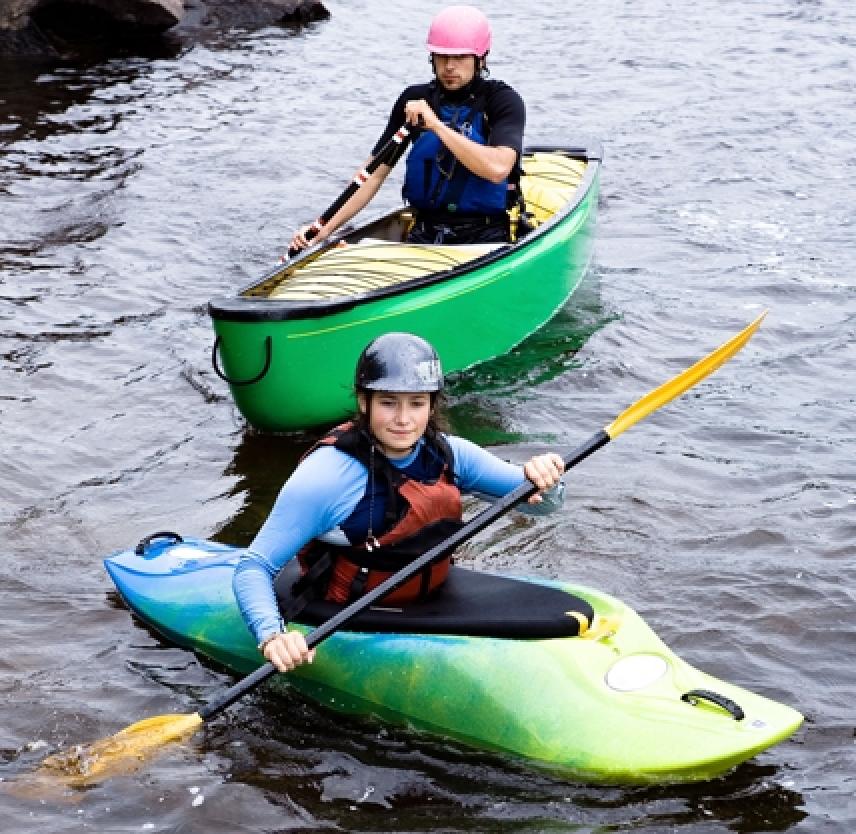
Summer is a time to be outside and get active. In fact, each year, millions of people in the United States participate in summer sports — from swimming, biking, and waterskiing to kayaking, rock climbing, and volleyball. These sports are thrilling and fun for all ages, but come with risks that sometimes lead to serious injuries. Doctors may describe concussions as "mild" because they are usually not life threatening, but the effects can be serious and you should know when to seek medical attention.
These injury prevention tips will prepare you and your loved ones to play safely.
1. Always wear a properly fitted helmet and replace it after a serious fall.
When wearing a baseball cap to keep your face shaded from the sun, make sure your helmet still fits securely on your head. And did you know that wearing a helmet while biking, skateboarding, or riding an ATV (all terrain vehicle) is one of the best ways to prevent a brain injury? It's also very important to replace your helmet after a serious crash. Some helmets are built to withstand only a single impact, while others can withstand more than one — depending on the severity. Grass may seem soft, but trees, rocks, and other people aren't.
2. Have fun, but know your limitations.
If it's your first time doing a sport like rock climbing, waterskiing, or white-water kayaking, take lessons from an expert and use the recommended safety equipment. Learn the fundamentals from a pro, start slowly, and be patient. Know your limitations and make sure children do as well.
Young children should never play in or near water or bike on rough terrain without close supervision. And remember, everyone — kids and adults — needs a life jacket when on the water.
3. Be familiar with your surroundings and stay alert.
- Be sure to scope out the terrain before you start climbing, hiking, or mountain biking.
- When boating on a river, lake, or ocean, make sure you know where you will put in and where you will be taking out. And if white-water canoeing or kayaking, make sure you know and are prepared for the level of rapids and other water conditions.
- When swimming, never dive into the shallow end of a pool. This applies to natural bodies of water, too, like lakes, rivers, and quarries. When you don’t know the depth of a body of water, go by the “Feet first, first time” rule to prevent brain, spinal cord, or other injuries. Learn more.
- Check the weather before heading out. And if you’re swimming, get out of the pool or lake the minute you hear thunder or see lightening and seek shelter.
- Try to avoid crowded areas — on land or water — as you could also be injured when someone else does something irresponsible.
- Stay alert and never wear headphones; you need to hear what's going on around you.
If you or someone you are with does take a hard spill, be sure you recognize the warning signs of a traumatic brain injury. If the individual loses consciousness or feels confused or disoriented, call 911 or seek emergency medical help as soon as possible.
Finally, if you have a concussion, give yourself a chance to heal. Experiencing a second injury before the first one heals could have long-term consequences.
Signs of Concussion: Adults
(Source: The Centers for Disease Control and Prevention. See more on TBI from the CDC.)
The signs and symptoms of a traumatic brain injury can be subtle. Symptoms of a TBI may not appear until days or weeks following the injury or may even be missed as people may look fine even though they may act or feel differently. The following are some common signs and symptoms of a TBI:
- Headaches or neck pain that do not go away;
- Difficulty remembering, concentrating, or making decisions;
- Slowness in thinking, speaking, acting, or reading;
- Getting lost or easily confused;
- Feeling tired all of the time, having no energy or motivation;
- Mood changes (feeling sad or angry for no reason);
- Changes in sleep patterns (sleeping a lot more or having a hard time sleeping);
- Light-headedness, dizziness, or loss of balance;
- Urge to vomit (nausea);
- Increased sensitivity to lights, sounds, or distractions;
- Blurred vision or eyes that tire easily;
- Loss of sense of smell or taste; and
- Ringing in the ears.
Signs of Concussion: Children
(Source: The Centers for Disease Control and Prevention.)
Children with a brain injury can have the same symptoms as adults, but it is often harder for them to let others know how they feel. Call your child's doctor if they have had a blow to the head and you notice any of these symptoms:
- Tiredness or listlessness;
- Irritability or crankiness (will not stop crying or cannot be consoled);
- Changes in eating (will not eat or nurse);
- Changes in sleep patterns;
- Changes in the way the child plays;
- Changes in performance at school;
- Lack of interest in favorite toys or activities;
- Loss of new skills, such as toilet training;
- Loss of balance or unsteady walking; or
- Vomiting.
BrainLine
Comments (4)
Please remember, we are not able to give medical or legal advice. If you have medical concerns, please consult your doctor. All posted comments are the views and opinions of the poster only.
Anonymous replied on Permalink
Thanks for the symptoms for a TBI. I took my son's friend snowboarding with us last winter, and we didn't realize he had a concussion from a fall until the next day. He kept saying he was fine, but I think he was actually in a lot of pain. Now I'm paranoid about knowing the symptoms in case that happens again.
Anonymous replied on Permalink
Hey just an update on how things are going: me and my brother have been crazy! We went hiking in southern Utah over our school break and it was awesome! We also did some mountain biking near by and he took a spill on his bike but luckily he had his helmet on and was safe. Good thing we were following those tips!
Anonymous replied on Permalink
Me and my brother made this kind of pact thing that we have to go on an adventure every other week until one of us gives. I'm not an outdoorsy guy but I want to know how to best protect myself in case something happens. Do you have any other tips for the out doors I could read up o n?
Anonymous replied on Permalink