

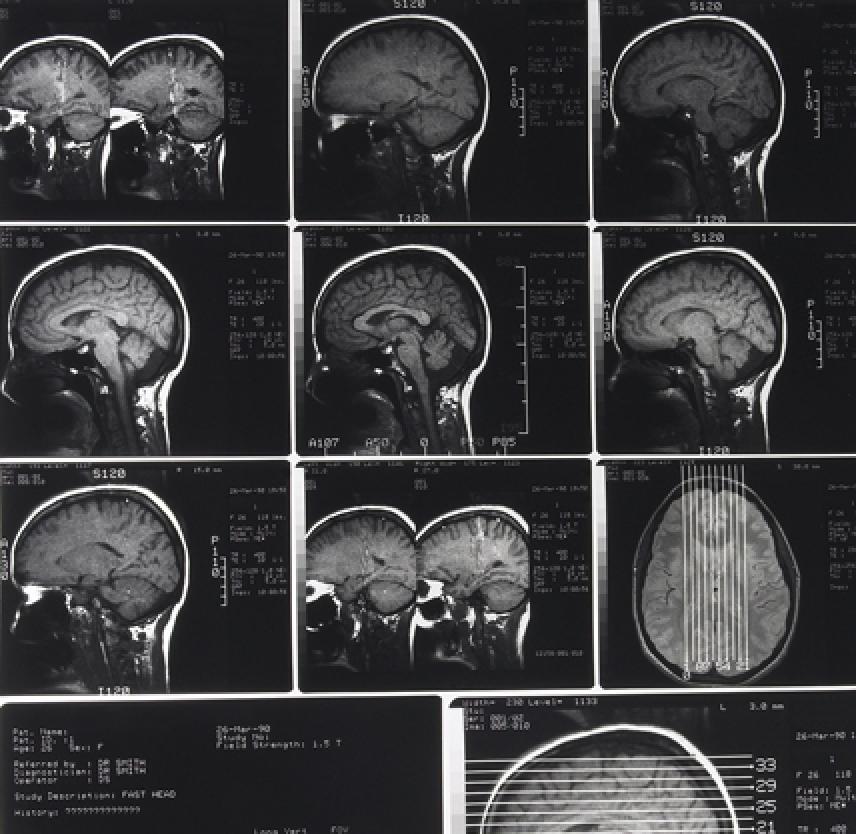
Traumatic brain injury (TBI) is a major cause of death and disability in the United States. TBIs contribute to about 30% of all injury deaths.1 Every day, 153 people in the United States die from injuries that include TBI.1 Those who survive a TBI can face effects that last a few days, or the rest of their lives. Effects of TBI can include impaired thinking or memory, movement, sensation (e.g., vision or hearing), or emotional functioning (e.g., personality changes, depression). These issues not only affect individuals but can have lasting effects on families and communities.
What is a TBI?
A TBI is caused by a bump, blow, or jolt to the head that disrupts the normal function of the brain. Not all blows or jolts to the head result in a TBI. The severity of a TBI may range from “mild” (i.e., a brief change in mental status or consciousness) to “severe” (i.e., an extended period of unconsciousness or memory loss after the injury). Most TBIs that occur each year are mild, commonly called concussions.2
How big is the problem?
- In 2013,1 about 2.8 million TBI-related emergency department (ED) visits, hospitalizations, and deaths occurred in the United States.
- TBI contributed to the deaths of nearly 50,000 people.
- TBI was a diagnosis in more than 282,000 hospitalizations and 2.5 million ED visits. These consisted of TBI alone or TBI in combination with other injuries.
- Over the span of six years (2007–2013), while rates of TBI-related ED visits increased by 47%, hospitalization rates decreased by 2.5% and death rates decreased by 5%.
- In 2012, an estimated 329,290 children (age 19 or younger) were treated in U.S. EDs for sports and recreation-related injuries that included a diagnosis of concussion or TBI.3
- From 2001 to 2012, the rate of ED visits for sports and recreation-related injuries with a diagnosis of concussion or TBI, alone or in combination with other injuries, more than doubled among children (age 19 or younger).3
What are the leading causes of TBI?
- In 2013,1 falls were the leading cause of TBI. Falls accounted for 47% of all TBI-related ED visits, hospitalizations, and deaths in the United States. Falls disproportionately affect the youngest and oldest age groups:
- More than half (54%) of TBI-related ED visits hospitalizations, and deaths among children 0 to 14 years were caused by falls.
- Nearly 4 in 5 (79%) TBI-related ED visits, hospitalizations, and deaths in adults aged 65 and older were caused by falls.
- Being struck by or against an object was the second leading cause of TBI, accounting for about 15% of TBI-related ED visits, hospitalizations, and deaths in the United States in 2013.
- Over 1 in 5 (22%) TBI-related ED visits, hospitalizations, and deaths in children less than 15 years of age were caused by being struck by or against an object.
- Among all age groups, motor vehicle crashes were the third overall leading cause of TBI-related ED visits, hospitalizations, and deaths (14%). When looking at just TBI-related deaths, motor vehicle crashes were the third leading cause (19%) in 2013.
- Intentional self-harm was the second leading cause of TBI-related deaths (33%) in 2013.
Risk factors for TBI
Among TBI-related deaths in 2013:1
- Rates were highest for persons 75 years of age and older.
- The leading cause of TBI-related death varied by age.
- Falls were the leading cause of death for persons 65 years of age or older.
- Intentional self-harm was the leading cause of death for persons 25-64 years of age.
- Motor vehicle crashes were the leading cause of death for persons 5-24 years of age.
- Assaults were the leading cause of death for children ages 0-4 years.
Among non-fatal TBI-related injuries in 2013:1
- Hospitalization rates were highest among persons 75 years of age and older.
- Rates of ED visits were highest for persons 75 years of age and older and children 0-4 years of age.
- Falls were the leading cause of TBI-related ED visits for all but one age group.
- Being struck by or against an object was the leading cause of TBI-related ED visits for persons 15 to 24 years of age.
- The leading cause of TBI-related hospitalizations varied by age:
- Falls were the leading cause among children 0-14 years of age and adults 45 years of age and older.
- Motor vehicle crashes were the leading cause of hospitalizations for adolescents and persons 15-44 years of age.
References
- Taylor CA, Bell JM, Breiding MJ, Xu L. Traumatic Brain Injury–Related Emergency Department Visits, Hospitalizations, and Deaths — United States, 2007 and 2013. MMWR Surveill Summ 2017;66(No. SS-9):1–16. DOI: http://dx.doi.org/10.15585/mmwr.ss6609a1
- Centers for Disease Control and Prevention (CDC), National Center for Injury Prevention and Control. Report to Congress on mild traumatic brain injury in the United States: steps to prevent a serious public health problem. Atlanta (GA): Centers for Disease Control and Prevention; 2003.
- Coronado VG, Haileyesus T, Cheng TA, Bell JM, Haarbauer-Krupa J, Lionbarger MR, Flores-Herrera J, McGuire LC, Gilchrist J. Trends in sports- and recreation-related traumatic brain injuries treated in US emergency departments: The National Electronic Injury Surveillance System-All Injury Program (NEISS-AIP) 2001-2012. J Head Trauma Rehabil 2015; 30 (3): 185–197.
From the Centers for Disease Control and Prevention. www.cdc.gov.
Comments (84)
Please remember, we are not able to give medical or legal advice. If you have medical concerns, please consult your doctor. All posted comments are the views and opinions of the poster only.
Anonymous replied on Permalink
You got my attention when you said that TBI could cause impairments and disabilities that could lead to lasting effects on families and communities. This is something that I will share with a friend because her sister suffered from a traumatic brain injury due to a motorcycle accident last month. I could imagine the need for her to find a support group that could better help her since she lost the functionalities of both of her legs. https://enochtbicenter.org/
Steve J replied on Permalink
My girlfriend is in the ICU with an acute TBI as I type this. We were riding our motorcycle doing about 30 mph when a car pulled directly in front of us and stopped directly in our lane. I do not remember anything after the hit, but woke up when I was standing up. I walked away with minor injuries. She is in the ICU in an induced coma.
At first, after the craniotomy (left side about 2-3 hours after the accident) she responded to the Dr's yelling at her to raise 2 fingers. But now, during her sedation vacation (taken off high sedation) the only thing they see is her eyes moving, but she will not open her eyes. Her legs move when they test her, and her hands and arms move also.
Now they say she has a hemorrhage or bruising on her right side of her brain. That when the brain was pulled away from the skull, it causing bleeding. I saw 4 of the CAT scans. I am not a doctor, but it is clear what they are saying. They told me she has gotten worse. This was 2 days ago they told me this. As of me typing this she has not gotten better or worse. She is remaining the same.
We, as a family, are having a meeting with the doctor tomorrow. I don't know what to ask. I know we will be asking for a second or third opinion. Or a review of her files with another Dr. But we are just in the start of all of this. I just want the love of my life back.
I don't know if anyone reads these. But I just wanted to type my thoughts.
smolny replied on Permalink
It's been almost a month. Any good news? How is she, how are you doing?
Anonymous replied on Permalink
Please amend this article to include the TBI's from tumors. Brain Tumors also a cause of TBI's...they do just the same amount of damage to the individual, the families and the communities.
Anonymous replied on Permalink
On December 3,2013 I was leaving my cousin's house from a long night of drinking so me n my girlfriend at the time driving home like I said I was in the passengers seat when it became apparent that I hadn't closed my door all the way because I leaned on the door and the next thing I know I fell out of my truck onto the back of my head so my girlfriend pulls over n goes and tries to pick me up but I was completely unconscious so then just a little bit later one of my childhood friend of the family's actually was driving by n she stopped n tried to help my girlfriend pick me up but they couldn't so then after a while the ambulance showed up which by the time they showed up I was fighting with everyone trying to get back into my truck which the whole time I was having difficulty walking so then somehow they got into the back of the ambulance so then I guess they gave me way too much paraplegics that I was unconscious again by the time I got to the hospital so while at the hospital I underwent 3 major brain surgeries having a stroke between the first and second surgery n after the second surgery the doctor told my family to not to be surprised if I ever walk or talk again since the accident I've gotten married and me n my wife now have had two beautiful children and I continue on my path to try to better myself n raise my children to the best of my abilities
Colleen replied on Permalink
Fall 2015, I went to dinner and rode as a passenger on a motorcycle. Unfortunately I flew off motorcycle and hit head on into a telephone pole. I was flown out to Shock Trauma, in a coma for two weeks. I had a “ hemispherectomy” left side of brain removed for six months. I’m a severe TBI, speech therapy I took for nine months. I remember a great deal of everything. Neurology Group called me “ miracle child”. I’m grateful for where I’m at. Scar side area I have deafness in that ear due to the nerve damage. I can be deaf for two days or hear everything times 10. Honestly I’m ok with that, not an issue.
Ashley replied on Permalink
I got my TBI from being a cheerleader. I was a flyer and was being thrown up into a basket toss around ten feet high and nobody caught me it was like diving into a swimming pool but backward and landing on the hard mat.
Anonymous replied on Permalink
I am a survivor of pretty severe domestic violence. In the final year of the relationship I suffered about a dozen concussions from being hit in the back of the head. The final blow was being stuck across the top of my head with the handle of a garden tool. That required 7 staples to close, but they never did any scans of my brain for any of these. I had vertigo very bad for some time after that. I also had a mot of memory problems... Over the years since getting out of that hell many of my brain fog and memory issues have improved, but I still get frequent head aches and when things get stressful I get very foggy. I was never actually diagnosed with a brain injury, but I believe that my brain was effected. I have worked very hard to heal myself emotionally but I feel very helpless at healing my physical brain. I often wonder if there has been much research on TBI and domestic violence. I hope to live a long and healthy life, but when I do pass I hope to donate my brain for research.
anonymous replied on Permalink
Well, here it is. On 9-29-90 I suffered a severe TBI. I was thrown out the back of a car winshield and landed on a big stepping stone, like 12-16 inches in diameter and around 6" thick. I was airlifted to UNCH. My parents were notified about what happened but the doctors said not to leave to come up here ( they lived several states away) because they gave me a 50/50 chance of getting thru surgery. The damage was at the front left 4" above the temple and my skull was cracked about 5-6" went thru my middle ear. Now deaf in the left ear. The dr. told me they had to wire my skull back together as best they could. i was sent to a rehabiliation place for head injured people. Short term memory was shot. I was hired at a machine shop after the accident, not sure how long after it thou. i took notes and rewrote them when i got home. i knew the only way for me to increase my pay was i had to remember no matter what kind of job i did. Now what I suffer from as a result: I have epilepsy, get angered easily, high pitched sounds cant stand, have trouble remembering what I did last week, get mood swings especially if I dont take my meds as I should, I get depressed at times, ringing in the deaf ear, I get frustrated easily, I'll lose my balance sometimes. i think that im a walking merical to survive the accident much less not to have sever brain damage but i know i do just dont know how much. i think that if i wasnt so close to to of the best hospitals duke/chapel hill i would not be hear. There are days that I wonder why I didnt die. After reading some of the comments, I am extremely lucky. I enjoy puzzles and mind games and feel they sharpen the mind. The two guys that were in the car with me was supposed to be my friends but they had other ideas and tried to say I was driving. i took them to court because their car insur. Said he didnt have a license so we are not paying a dime and I didn't get a dime. However, both of them gave two different sets of depositions one conterdicating the other. Well, they both lied under oath on the stand. YOU DONT DO THAT, never. It was 30 days to the day after the accident that the driver dies and the other got cancer several years later and he also died. I had huge trust issues a little after that and still have some but not as bad and thats not very healthy in a relationship. i encourage people that have had tbi to push them selfs to get better at remebering if they have trouble with that. You must work your brain so that it can fix itself or at least get a little better. i do not remember nothing about the accident and only bits and pieces after it. The friends I have, I do not talk to them about how I feel or go thru no a daily basis. i do talk to my theropist thou. Keep plugging away, and I know its hard. They told me that it would take 5 or 10 years to get my brain healed, I guess because of so much damage done to it. Hang in there and dont give up even thou I wanted to. i wish you all the best and God bless each one of you and take care.
Anonymous replied on Permalink
God bless u did u recover completely?
Spike replied on Permalink
My accident happened 28 years ago coming home from drinking most of the night and flipped my Jeep several times with me flying out of drivers door landing my head on the pavement. This was the report of person driving behind me when the accident occurred. He called 911 to get me to trauma care. I was only minutes away to getting home. Only 20 minutes away to the best head trauma hospital. The hospital called my parents and told them by the time they would get to Atlanta I would most likely be dead. To start arrangements for my funeral. My parents lived in Virginia. Nine months later I was released to go home with out patient therapy. I have had severe depression since then with different meds and therapy throughout the decades. The older I get the worst my depression has become. I am now 62 years old. No therapist or doctors know how to treat this type of depression. This depression is the least studied. Only since the Gulf War and Middle East conflict has TBI been taken seriously. There is still not much understanding how to treat people with severe TBI. I have a plan to end my life when I get the courage to do so. I have no family to morn me. It will be just another death. I am so happy that some TBI victims have done somewhat well to continue on. For me I’m exhausted fighting everyday with my depression. Twenty eight years later I wished I had died. With all the cost, time, suffering, hoping, constant discouragement I wish I had died. That’s the other extreme of TBI depression which I have. Please do not pity me for I am tired of fighting for nothing. That’s how severe TBI has effected my life.
Lost replied on Permalink
I too feel how you have described. My TBI is from 2006 yet it still effects me and also those around me. I often feel like I never should have survived because my life has been one nightmare after the next it seems. I cannot hold a job for my mental state won't allow me to do so. It's as if I died and I remember my past life. ( before my accident ) I am no longer motivated in life. I have no purpose even tho I am a mother of 4 and a new grandma ( at 43). I am so lost in this life.
Roz replied on Permalink
My son had a TBI 35 years ago. He is in prison for life after a road rage incident where he killed the other driver. I read your story and want to pray for you. I am not a religious fanatic, but I believe prayer can heal. Have you been to support groups? If not, please find one. The hospital and/or internet can help. Have you had an MRI to make sure there isn't physical cause for your depression? I read recently of someone who struggled for years with depression and only recently had an MRI which showed a brain tumor. She struggled for years with psychiatrists giving her stronger drugs which didn't help. Please let go of your thoughts of suicide. Pray, pray, and then listen for the answer. It will come. Get to a support meeting and hang in there. Remember, everyone has problems, we don't know why some loads are harder to bear than others. I will pray for you Spike.
kh replied on Permalink
Dear Spike - I don't know you, but I ache for you. You sound like you have enormous courage, to cope with your brain injury the way you have. You MUST keep trying to find help for your depression.
The other lady suggested transcranial magnetic stimulation. Ask your doctor about it - it's pretty new. It's not a drug, and it's painless (it's related to MRI). It is working miracles for a cousin of mine who has struggled for decades with depression.
My nephew had a horrible accident last week - car flipped, he went through windshield and is still in a coma. If he recovers, he will be facing huge challenges, and I hope and pray he faces them the way you have.
You sound like a special person. There are people who will love you and care about you. Keep trying!!!! And call the crisis hotline if you need it.
Meanwhile, I'm sending love and prayers to you.
mum of TBI surv... replied on Permalink
Spike. I ache for you. I cannot imagine your pain and frustration. I hear how exhausted you are.
You are stronger than you know. There are alternative things for TBI . I have been searching for 24 years for my son. He had TBI @ 17 from car accident. He was in a vegetative COMA 8 months. Cannot speak walk or do anything for himself now after 24 years. really and I ache watching him.
But He is still trying. So I must try to find anything for him. I have just found: TMS Stimulation for depression and brain activation. LENS Low frequency brain Stimulation. Check "AMEN clinics, Check Hyperbaric Oxygen for depression and brain activation. I believe there are things that can really help you.. He has not tried these things but there is research showing improvement. My son has tried Suicide but he is so disabled he cannot do even .. he gets seizures and keeps trying to say "I should not be here" ....So I hear you, but deep inside there is SOME reason you are here. WE have things to learn from you!
BrainLine replied on Permalink
Dear Spike,
I'm so sorry that you're going through this and that you don't feel understood. You may think no one has ever experienced what you’re going through and that no one can help you. I'm here to say that you can get through this.
Have you expressed what you’re struggling with to a friend? If you’re not comfortable talking with them or feel they're unable to understand, please consider reaching out to one of these confidential resources:
National Suicide Crisis Line (24/7)
https://suicidepreventionlifeline.org/
1-800-273-8255
When you call you will hear a message that you’ve reached the crisis line, there will be brief hold music while you’re connected. Then a skilled, trained crisis worker who works at the Lifeline network crisis center will answer the phone. This person will listen to you, understand how your problem is affecting you, provide support, and share any resources that may be helpful.
Crisis Text Line (NAMI)
Text HOME to 741-741 to connect with a trained crisis counselor to talk via text message.
When you text HOME to 741-741 the first two responses are automated. They tell you that you're being connected with a Crisis Counselor, and invite you to share a bit more. It usually takes less than five minutes to connect you with a Crisis Counselor. When you’ve reached a Crisis Counselor, they’ll introduce themselves, reflect on what you’ve said, and invite you to share at your own pace. You’ll then text back and forth with the Crisis Counselor. You never have to share anything you don’t want to.
Krisp replied on Permalink
Got my tbi in Highschool playing football. I’ve had plenty of concussions but this one took the cake. 5 years later I still have the same headache. Sometimes it’s worse, way worse. If your like me, we all thought of ending it. I just couldn’t do that to my friends or family. When I went to the doctor, they would put me on meds that would just mess with me more. At first I couldn’t sleep at night, until I imagined I was in my own head surrounded by white walls, still today the only way I can fall asleep. I’ll be honest I’m broken, but on the outside I seem fine. I try to keep to myself and my life has change more than anything. Is there anything out there that You guys have tried that makes it a little better??
john la berge replied on Permalink
i have somewhere near 15 open / closed brain injuries. when did i stop living as a owner of them and become according to the legal medical insurance self help associations etc mumbo jumso doublespeak a person living with the results of owning them? any answers ? love to hear from anyone.
Pete Simpkin replied on Permalink
When I was a teenager, I suffered a TBI (concussion) after being knocked out for 40 minutes in a bike accident in a collision with a car. I woke up later in a hospital bed. Nothing at that age can prepare you for the immediate and long-term effects of a TBI (concussion), and the effects it can have on your work, your family and friends, some of which can be life-changing.
Something not often said about a TBI, in my case particularly is that as a result of me being knocked out at the accident scene and therefore unconscious, I have never met the person who knocked me off my bike. Although I was compensated well financially from their insurance company (police handled the details days after the accident), I have never received a single word of apology, never visited me at home when I was better, telephoned me or written to me to say sorry. Nothing. This stays with you for the rest of your life and is sometimes difficult to accept. I accept life goes on, but somehow I never got closure. This is how traumatic brain injury (TBI) can be.
Belleyes replied on Permalink
My husband had a very similar situation. He has never seen the people but they had the nerve to sue his parents for damages to their car. People are unbelievable.
Pete Simpkin replied on Permalink
Sorry to hear about your husbands ordeal Belleyes. Even though I was Knocked Unconscious at the accident scene I was lucky the police attended the scene, the driver owning up to his mistake and he was Consequently charged with the offence. It took weeks to sort out all the legalities of the accident and I employed an attorney to sort out all the legal side with the insurance claim. Fortunately in my case there was overwhelming evidence to support my claim.
Because I was Knocked Out I never got to see or talk to the driver at the accident scene and was therefore unable to make a judgement of their character.
Accidents seem to bring out the worst in people, like your husband found out, when they feel they have got something to lose.
I feel if I hadn’t got the attorney the accident claim could have been more difficult.
All the very best
Lesia Leskiw replied on Permalink
I understand that it’s hard to accept the fact that the callous person that injured you never contacted you to see how you are doing and apologize to you. But just thank God that you have recovered, keep moving forward and don’t look back. I have an adult son who was married for 14 years, stood by his wife when she had cancer. She eventually went into remission and few months after that she walked out on him. He wasn’t strong enough to go on alone, had a seizure followed by a heart attack. That was 4 years ago. I found him unresponse, did CPR but he is left with short term memory loss and myoclonus ( tremors). He is not the same boy he was but he has made good progress. My point is, thank God for your recovery and keep moving forward, don’t look back!
I wish you well!!
Pete Simpkin replied on Permalink
Though I was left lying Knocked Unconscious in the road I was lucky the people around me, the police, the paramedics and passers by were quick to be able attend to me. To them I am truly Grateful and therefore I am not bitter at all Lesia . At the accident scene I never knew anything about any of them. I could have been run over easily but I was deeply unconscious at the roadside and probably would not have known. I guess the driver who knocked me off my bike felt very ashamed of his actions. At the accident scene I was Knocked Out so it was impossible for him to communicate across to me but would have otherwise. I have a permanent partial disability in my right leg as a result of the accident. You have to adapt to it.
I try to move on and thoughts in the immediate weeks and months after the accident are not always permanent for ever.
I said I never got closure, a bit like reading a book to the last page and then never finishing it. Difficult to sometimes put things behind you but Life moves on too fast these days but our memories can last forever.
All the best.
Frank Glass replied on Permalink
Thank you for this informative article on TBI, I appreciate the education.
-Frank
joseph replied on Permalink
I've had TBI since I was 10, and I must inform you that my life sucks, I could end it today... Sometimes I feel that I can not go on with my life without having friends about at the age of 10, or a family that cares. Plus it's the fact that I get discriminated against by mostly EVERYTHING! I feel that NO job will hire me due to my fourth-grade education.
Kayla Rogers replied on Permalink
My sister bumped her head while she was driving the other night and was brought to the hospital right away. It was mentioned here that about 30% of people in the US die because of traumatic brain injury. Having said that, my parents are now thinking of letting my sister go under brain injury rehabilitation to fully recover.
michael replied on Permalink
i am a traumatic brain injury survivor. 10 years ago i was in an four wheeler accident which left me with my injury. i could not move any part of my body. all i could do was lay in a bed. i had to learn to do everything from feeding myself to walking again. and now thanks to the rehab i had after the surgery here i am typing this comment.
Anthony Cain replied on Permalink
That's great to hear. Last year I was in a very bad ATV accident also. I got a TBI, broke my left arm, and 3 ribs on my left side. I've had to relearn everything as well -- from tieing my shoe to dressing my self. Thanks to physical therapy I'm truly amazed how far I've come. But I do battle with depression. The doctors are trying to find a med that will help me out. So if you know of any I'd be happy to hear.
Anonymous replied on Permalink
All I can say is if you're a veteran try to get to DVBIC. The folks are awesome >
Anonymous replied on Permalink
I had a concussion and symptom's were the same and even worse! I couldn't see any light. Now over two years later with lots of therapy and work slowly recovering.
Anonymous replied on Permalink
My 38 year old son had a work comp injury August of 2015. A big pipe hit him in the head. The side of his head swelled up really bad. They didn't send him to a doctor until a month later when I told him to get to the emergency room that he had a concussion but he ended up throwing up, getting headaches, then two months later he had a seizure and he couldn't remember what happened for 10 minutes. Now they had an EEG done with all the wires on his head. There's abnormal T on the left side of the brain, he's lost his memory off and on, and has anger issues now. Because he seen a psychiatrist and neurologist and they have him on all this medication because he's in depression and diagnosed him with a "neurological disorder" they called it. My son is changed. I don't know what happened to him. Can someone here give me any light that this concussion can do this to your brain like this? I think it's the medication because of anger issues but he also has severe headaches all the time. He's on medication for that. He couldn't sleep at night so now they have him on Ambien to sleep, Klonopin, and some other brain medicine for serotonin balance. I just don't know who my son is anymore. They've diagnosed him with post-concussion syndrome. We do have an attorney but I'm wondering will he ever get his memory back? They have him going for cognitive therapy and psychotherapy counseling. I just can't believe a concussion can cause a brain injury like this and he's only 38 years old. Please if anybody's had anything like this is there hope? Is there light at the tunnel? Will we be able to be normal again?
Tracy replied on Permalink
I wish i had "positive" things to tell you, things you want to hear..but I don't. I would focus and put energy more on helping him with who he is now...what you knew him as before the accident is most likely gone forever and I know personally how sad that is for you...but especially him. I'm shocked at what a TBI..even a mild one..can do to a person. It all depends on the area(s) of the brain that suffered the injury as to what symptoms the person is gonna have. I was in an accident..but NOTHING like what others on this post have been through. I was sitting at a red light..waiting for it when I was slammed into from behind...no breaks, no slowing down..just rear ended with the person going an est. 45 mph..totaled my car. I didnt lose consciousness, I didnt hit my head on anything but the head rest but my car was forced 30 feet from its stopped position WITH my foot on the brake. I was simply "dazed" and it took me a few moments to figure out what the hell happened but I walked away thinking I was lucky..nothing broken, no cuts, no bruising..just knocked coo coo so to speak. My symptoms didnt start for 3 weeks after and have gotten progressively worse. It was later determined through a DTI scan (i believe the guy above me said DWI but its DTI) which is the ONLY thing that will show TBI's and the areas of the brain affected. My life, although my accident wasn't nearly as bad as some folks here and I feel awful for them bc I know what Im experiencing sucks has gone to shit. Deep depression, debilitating daily headaches, serious anger issues, bladder incontinence, constant ringing in my ears sometimes at such a high pitch its painful, memory issues..bad memory issues, concentration issues, constant everyday fatigue no matter how much sleep I get, whats called expressive aphasia, and others has changed who I am. My wife of 32 years said she doesnt know me, my kids are afraid to upset me, lost my job but have another and with my memory issues I know its just a matter of time before I lose this one but Im trying HARD. My personality has done a complete 180 and I hate who I am now, I have zero desire in anything..and that deepens my depression..all I want to do is sleep. I dont like being around people anymore...chills go down my spine when a co worker asks me anything and I feel anger growing bc they're bothering me and I have to try to keep reminding myself this isnt me...this is the injuries and I will go back to normal one day...but from everything Ive read, I wont and My only hope is making my future self better. But I experience something that Ive yet to hear from anyone else with TBI's..the've been termed "episodes" almost stroke like. They start with my headache getting worse, then I get a tingling in my lips and mouth..and shortly thereafter the best way I can explain it...is i feel extremely inebriated...extreme dizzyness, slurred speech, double vision, nausea and I cannot maintain consciousness...just like someone who had way too much to drink...and Ill go to sleep and sleep for 24 hrs straight minimum!!! Ive had these episodes at least once a week since the accident and no one can tell me why. All Ive been told is DR's think when my brain is overtaxed, tired or over stressed, it shuts down to protect itself from further injury. There are a multitude of other irritating symptoms all of which make me look like an imbecile. Im still going through tests and still trying to figure out a recovery plan. Dr's wont tell me if this is permanent but I have been going through TBI protocols twice a week. So try to help him remember who he is and that the anger hes going through isnt him, nor the depression and that he will get better...I try to tell myself that but sometimes the anger is too strong and I lash out. I hope you find what your need for him.
Best wishes and God Bless.
Tracy
Warren replied on Permalink
I got a tbi in a oilfield accident 7yrs ago,I fell in a backwrds dive and hit hard on my head,My whole life changed that day,not just for me,but also my family, yes,unfortunately extreme anger,depression ,if I don't medicate,I can't sleep, don't like to be around crowds,or meet new people, as I always have this awful screeching in my ears,that by itself is enough to make anyone loose it.If your sons injury happened in Texas,on the job pray,because you will be screwed, this is another issue that keeps playing in my head ,I have lost everything, in my life,and im left holding on in not so quiet desperation, my career gone,my ability to change my situation, gone,forced into a life of mediocrity all while the insurance company continues to thrive and the company that I worked for goes on with absolutely no responsibility,because of our messed up laws that make it so.Im in a legal cannabis state,and I medicate with fewer side effects than all of the pills they had me on.With all this having been said, it doesn't get better,it sucks, my life sucks .Am I bitter,very.But im still alive,wooohoo.
Tiffany M replied on Permalink
I know this is not western medicine, but I encourage you to research acupuncture and chiropractic (especially torque release technique) if you have not. I wholeheartedly believe these two methods of treatment will show a HUGE improvement.
My best for your journey-
Tiffany
Anonymous replied on Permalink
It definitely can affect his personality. I would recommend you read, "stroke of insight." This is a fabulous book to describe the different parts of the brain & what role each part plays in our everyday lives. I also suffered a tbi, not as severe as your sons but I try to read as much as possible to help me understand. The lady in the book had a stroke but was a doctor who taught about the brain. She explains things very well.The Drs often give medications & I recommend you ask questions & look up side affects too. Knowledge is going to help you understand a little more. I go to the library or use the internet. Maybe you can find a private Facebook group for support. I can't imagine how difficult it must be for you, let alone your son.
Mike replied on Permalink
Hi, I'm a moderate TBI survivor. I suffered a severe closed head. Moderate diffuse axonal injury. Your son sounds exactly like me after my accident. If the brain bounces against the skull too hard, it can cause major damage. I have experienced things with my bro I never have before seizures, panic attacks, night sweats, ringing in ears, you name it. I'm currently on disability for cognitive disorders, memory problems and a few more. My TBI is 3 yrs post injury now. I didn't receive the proper rehabilitation after the accident and now I have some permanent deficits. But it's a miracle in alive. So yes what is happening to your son is possible for sure. My age at the time of the accident was 42 and otherwise perfectly healthy be for the accident. But please your son needs rehabilitation outpatient or in-patient maybe see what his neurologist says also I had a special me I done called dwi MRI t-2. And it showed my brain lesions 6 months post-injury. So I advise this. Also if your son has been diagnosed with cognitive disorder he would be eligible for disability. So I greatly encourage this. Don't give up I took me 2 years to get disability even with evidence. But you will get back pay. I currently haven't been able to return to work and its been 3 years. The main thing here is he gets help now. I can't stress that enough. The brain does 98% of its healing in the first 2 years after injury after that it doesn't heal much at all. I wish you and your son all the best. Kind regards, Mike
Anonymous replied on Permalink
I'm 47. Suffered a TBI 18 months ago. I haven't had any help from any organization. In my opinion it's been thrown under the carpet and and I've been left in a black hole to get on with it by myself.
OO OO replied on Permalink
I KNOW WHAT U R TALK ABOUT JUST DON'T QUIT KEEP ON KEEP ON, the OO OO,29YR. TBI, SURVIVOR FROM MAY29TH. 1988, HANG IN THERE TRUST IN JESUS CHRIST HE OPEN DOORS FOR YOU DIDN'T KNOW EXISTED THAT WERE CLOSE
Anonymous replied on Permalink
Hello everyone, I suffered a TBI about 5 years ago, doctors gave me a 5% chance of survival. I find a few complications now but am mostly recovered. After reading through the comments I think I'm doing better than most people who have one, thanks to all the help from the people at Clearview brain injury center and the doctors from UW Wisconsin in Madison. All I can say to anyone out there with a TBI is hang in there, there is help and support groups to assist you.
Anonymous replied on Permalink
My daughter sustained a TBI in a car accident almost a year ago. Please look up Functional chiropractic. Otherwise known as neurological chiropractor. I found 32 in the state of Iowa, thank God! Also youtube Dr Ted Carrick, at Carrick institute. You will find hope I'm the midst of your darkest days. Best wishes!
Anonymous replied on Permalink
Can anyone give me recovery statistics or expectations for someone who gets a severe TBI at 57 years old? That is my husband, and he is in residential rehab. He cannot remember anything day to day, and the rehabilitation facility has decided he has dementia - and cannot be rehabbed any further. He is 16 months out from the accident. I'm just trying to find something on the odds of him making more of a recovery than he is at now so I know how hard to fight. They want me to put him in a nursing home. Thanks for any information.
Anonymous replied on Permalink
I can relate as well....I take a rubber band, put it around my wrist, when I get the urge to cry, I give it a lil snap....and I can do it where no one even notices, and it "snaps" me out of it... literally changes me in a FLASH
Anonymous replied on Permalink
I have had approximately 6 TBI's where I was unconscious for more than 5 minutes. The last one I was paralyzed, in and out of consciousness for 3-4 hours or so. Back in 2000 I showed symptoms mocking schizophrenia. I was under a lot of stress, I was taken off birth control cold turkey which will show psychotic type symptoms, and my spouse was going out with friends from college ( all females). The next thing I know SSA sent me an appt. to be evaluated. I showed all symptoms of head injury. I was crying and laughing at the same time uncontrollably, started accusing and blaming everything on my spouse, became insecure and went through a personality change again. My spouse has never tried to sit me down and talk to me because he doesn't believe I've had that many brain injuries. He is satisfied with the diagnosis of paranoid schizophrenia without any tests with medical equipment. Well, they are just now wanting to send me to a neurologist for testing. I was finally told that having olfactory hallucinations alone I have brain damage. Go easy on yourself and remember, you bot alone when you say you can't control your emotions and there is help it there but, I know it's hard to find. I have finally broke and am going to try seeing a psychologist to talk about every thing I have experienced. From delusions and hallucinations to emotional loss. Hang in there. You will eventually Find something that works for you. It does help to talk to someone that is a licensed professional on head trauma. Good luck. If you have a hard time with uncontrollable crying do this - when you feel like crying is about to happen move your bottom teeth and protrude them beyond your upper teeth and hold it there, It sounds impossible but it works!!! I find myself in public doing this often.
Anonymous replied on Permalink
Has anyone used mild hyperbaric oxygen therapy to treat their PPCS/TBI's?
Anonymous replied on Permalink
I have only had like 3 or four documented concussions, only one severe enough to cause temporary amnesia, but 3 months ago I wrecked my motorcycle and took a fall straight to the helmet at around 95 or 100 mph. Because i was riding without insurance I didn't go to the hospital, (because I knew they would call the cops) life has been hell ever since. I can't remember any thing, I get angry over nothing, I cry uncontrollably and worse than any thing I can't remember anything. My memory loss is seriously jeopardizing my career, I lost the keys to the front door of where i work and even didn't show up to work thinking it was my day off and it wasn't. I finally went to a doctor who referred me to a neurologist. I am so scared rite now, my life is centered around extreme sports and fitness. What if the neurologist can't figure out what is wrong with me, then what, am i just screwed now? Do you think these doctors can even help? Please leave a comment because I just want to hide and never come out.
Anonymous replied on Permalink
Where was all this information was back in 1976 when I enter in a state of coma for about two weeks?, I guess there was none in that year. I am glad TBI and PTSD patients have been researched more.
I'll be 45 years old tomorrow 27th, and on September 18th it'll be 40 years of my head trauma car accident, I was five years old then, what came after that incident was completely unexpected and difficult still in today's days, I guess as an adult now, with less suffering and more acceptance, but the pain remains. On day at a time I guess...
Thanks for posting this sort of information.
Anonymous replied on Permalink
Your site is informational indeed. I survived from TBI in 1994. With less than a percent chance of survival, recovering and re-entry into society is a miracle indeed.
You can google-search for 'Takalah Tan' to read articles and see documentary clips on my pre & post TBI episodes. Society need be inclusive of and help enable all Post-Acquired Brain Injury Survivors and their respective carers!
PABIS Takalah Tan
takalahtkl@yahoo.com.sg
Anonymous replied on Permalink
I got attacked and was that part of my brain that got it, had fractured skull with fragment of skull pushing on my speech and language part which caused bleeding in the brain. Had slurry speech and couldn't move my right arm, got operated on and after it my full right side went paralysis. Now I'm researching and wanting to find out if any one has experienced the same ? Awful experience I have had. 5 years ago now I have just come terms with it ? ?
Anonymous replied on Permalink
I had septicemia with a brain abscess. They put in a VP shunt for the resulting hydrocephalus.
Anonymous replied on Permalink
Has anyone had experience with a TBI (left frontal lobe) after age 60? My brother was injured on 3/11/16. So far we have no response other than pain reflex. Looking for anything, positive or negative. Thanks in advance.
Pages