

 Children with TBI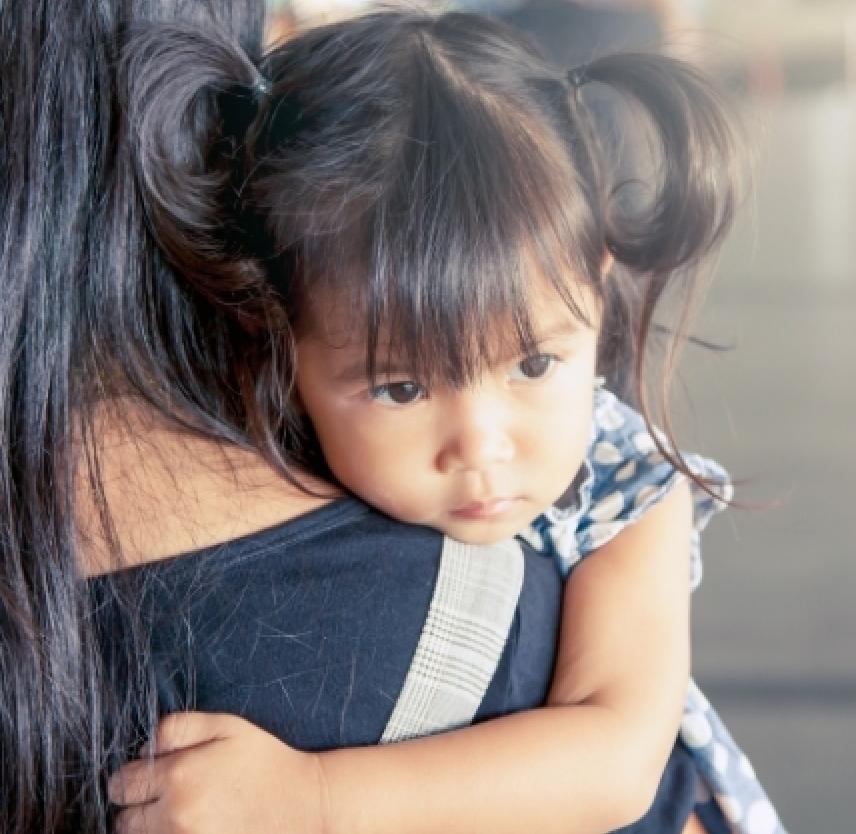
Infants, toddlers, and young children are not immune to brain injuries. Concussions can be especially dangerous for young children because they may not be able to let others know how they are feeling.
Below is information on the common symptoms of concussion in babies, signs of brain injury in toddlers, what to do if your child has hit their head, when to go to the emergency room, and treatment advice.
Things to Look For If Your Baby, Toddler, or Child Hit Their Head
Concussion symptoms in children may include:
- Listlessness and tiring easily
- Irritability or crankiness
- Change in eating or sleeping patterns
- Change in the way they play
- Change in the way they perform or act at school
- Lack of interest in favorite toys
- Loss of new skills, such as toilet training
- Loss of balance, such as unsteady walking
- Confusion, distraction, or if your child is easily distracted and cannot do normal activities
- Staring blankly
- Delayed answering of questions
- Slurred speech
- Stumbling or clumsiness, uncoordinated or cannot walk a straight line
- Exhibiting extreme emotions, such as crying very easily or angering easily
- Problem with memory
- Inability to recall words or objects
- Repeatedly asking the same questions
- Loss of consciousness
Additional signs of concussions in infants & babies:
- Any of the signs and symptoms listed above
- Will not stop crying and cannot be consoled
- Will not nurse or eat
Concussion Signs That Require Immediate Medical Attention
If your infant or toddler exhibits any of these signs, call the doctor or EMT immediately:
- A severe headache that will not go away
- Inability to wake up or extreme sleepiness
- Seizures
- Repeated vomiting
- Personality change
- Loss of coordination
- Weakness in arms or legs
- Ringing in ears
- Blurred vision
- Sensitivity to loud noises or bright lights
When in doubt, it's always better to seek the advice of an experienced medical professional who understands traumatic brain injury. Our article on when to go to the hospital gives good advice for when it's appropriate to seek medical advice.
What to Do If You Suspect Your Baby or Toddler Has a Concussion
If your infant or young child exhibits any of the severe symptoms of a brain injury listed above, seek immediate medical help.
But what if you’re not sure if your child is exhibiting signs of a concussion? Two questions parents often ask are: Should you let your baby sleep after hitting its head? How long do you need to keep them awake if you suspect a concussion?
- Call your doctor or medical provider
- Rest is the best medicine, for both body and mind
- Refrain from physical activity and sports
- Avoid any activity that could result in another fall or injury
- Rest the brain, limit or refrain from screen time, including TV, phones, tablets, video games, and/or computers
- Children may experience disturbed sleep, either sleeping more than usual, finding it hard to fall asleep, or sleep through the night. Remove any distractions from the bedroom and encourage regular sleep routines
Learn about how to formally diagnose traumatic brain injuries in kids.
Treatments for Concussions in Young Children
Parents and caretakers of children who have had a concussion can help them heal by:
- Following the doctor’s instructions carefully
- Making sure your child gets plenty of rest.
- Avoiding activities that could result in a second blow or jolt to the head, until cleared by the doctor.
- Giving your child only those drugs that the doctor has approved
- Talking with the doctor about when your child should return to school and other activities and how to deal with the challenges your child may face.
- Sharing information about the concussion with teachers, counselors, babysitters, coaches, and others who interact with your child so they can understand what has happened and help meet your child’s needs.
Learn more about caring for your child after a concussion.
Comments (10)
Please remember, we are not able to give medical or legal advice. If you have medical concerns, please consult your doctor. All posted comments are the views and opinions of the poster only.
Anonymous replied on Permalink
I got a concussion at 3 months old. As of writing this I'm only 15 and I'm worried about my future. I already experience mood swings and trouble making friends. I also feel like I have a split personality. Are there any severe things I should be worried about in the future.
David Bruce replied on Permalink
I Know firsthand about concussions in children. At the age of 12, i had a bad fall and very bad injury to the head. After recovery, i led a semi normal life until the age of 18. For 23 Years, i had onset absence seizures, which were controlled on and off by medications. It wasn't until 2007 that i was sent to Augusta, Ga. To the Medical College, that the hit and seizures were finally diagnosed as related. After a Right Temporal Lobectomy, Brain Surgery, i was Finally Healed after All the Years of Heartache and Pain. I was advised Not to have children of my own due to possible Birth defects because of the medications, so after surgery, i made the Childrens Hospital of Georgia, my Heir, as they do Remarkable Work for Children, and will be able to continue so Children will Not have to suffer as long as i did. Parents, PLEASE Watch Your Children Carefully.
Kristine replied on Permalink
Speaking from experience there are better options than a lobectomy after traumatic brain injury and new onset of seizures related to it neuro rehab programs like synapse and revive treatment centers offer integrative care in recovery from TBI and concussion
Krisan replied on Permalink
I hit my forehead when I was two and had to get stitches on my eyebrow. My whole life I've had social problems and it's hard to express myself in the way I want to. Do you think that's a symptom or am I just thinking too much?
penny replied on Permalink
i hit the back of my head when i was two. my skull bones became distorted and i have had much illness from it although i have only just put it all together. i am 69.
go see a good cranio-sacral osteopath and get information. see if you can get a skull xray and look at it yourself. get an anatomy book (the anatomy colouring book by Kapit and Elson)- good one with pictures of the skull bones - the skull bone sutures are not fixed and bones are made by the tension on them from muscles. so if there was damage there are many complimentary therapies that can help - acupuncture. but find good therapists that you get on with and trust. there are many therapists who think they are good - just like doctors and dentists - some are rubbish. find people you can get on with. get an article published in private dentistry called temperomandibular joint dysfunction and systemic distress by glaister published 2010. may not relate...but check your skull mate - the fact that you aren't living in the moment and feel distress sounds like there is summit goin on. good luck mate
Scott replied on Permalink
I hit my head when I was 3 by sprinting into a pole while getting chased and looking backwards. I have anxiety issues, had irritability/anger issues when I was younger, and many more of the signs I wont get into. I think they mess you up bad when you get them that young, I didn’t realize it until recently though. I’ve just been resting off the tones of other concussions ive gotten through the years of sports maybe thats why. My mom has always said I was off and never the same since we moved, which was right after that hit. I also have pretty bad memory blanks of my childhood, like whole trips just gone, a house I was in for years the whole layout just forgotten. Overall though If your kid gets a concussion or just hits there head get them checked out and treated, you can’t tough out brain damage.
Demo girl replied on Permalink
I hit my head REALLY HARD when i was younger and eve since then i have had trouble making and keeping friends. I hit my head right by my head and it was bleeding like crazy but that was 7 years ago. Could that be because of hitting my head that its hard to make friends?
Shannon McMayoo... replied on Permalink
my child is 12 years old and he has a concussion. Will it go away if I give him an ice bag?
J replied on Permalink
No
Anonymous replied on Permalink
Concussions are not just bumps on the head that goes away. They can take months or years to go away. Idk if you follow any professional sports such as American football but concussions are caused by when your head is hit extremely hard or the impact from falling and landing on your head. It then causes your brain to shake a bit inside your skull, and causes brain damage in varying degrees. Sometimes it's minor and just causes headaches for a few weeks or sever and it last for months years or is permanent and damages your brain to the point of causing memory loss, confusion, dizziness, migraines for longer periods of time