Brain Injury X-Posed: The Survivor's View
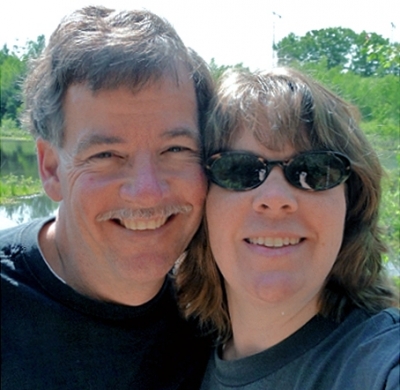
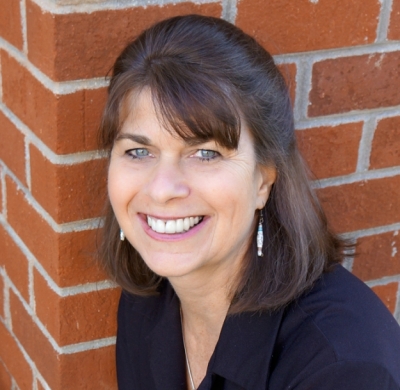
Laura Lorenz, Barbara Webster and eight members of the Brain Injury Association of Massachusetts Framingham Support Group
Maybe there will be a good view
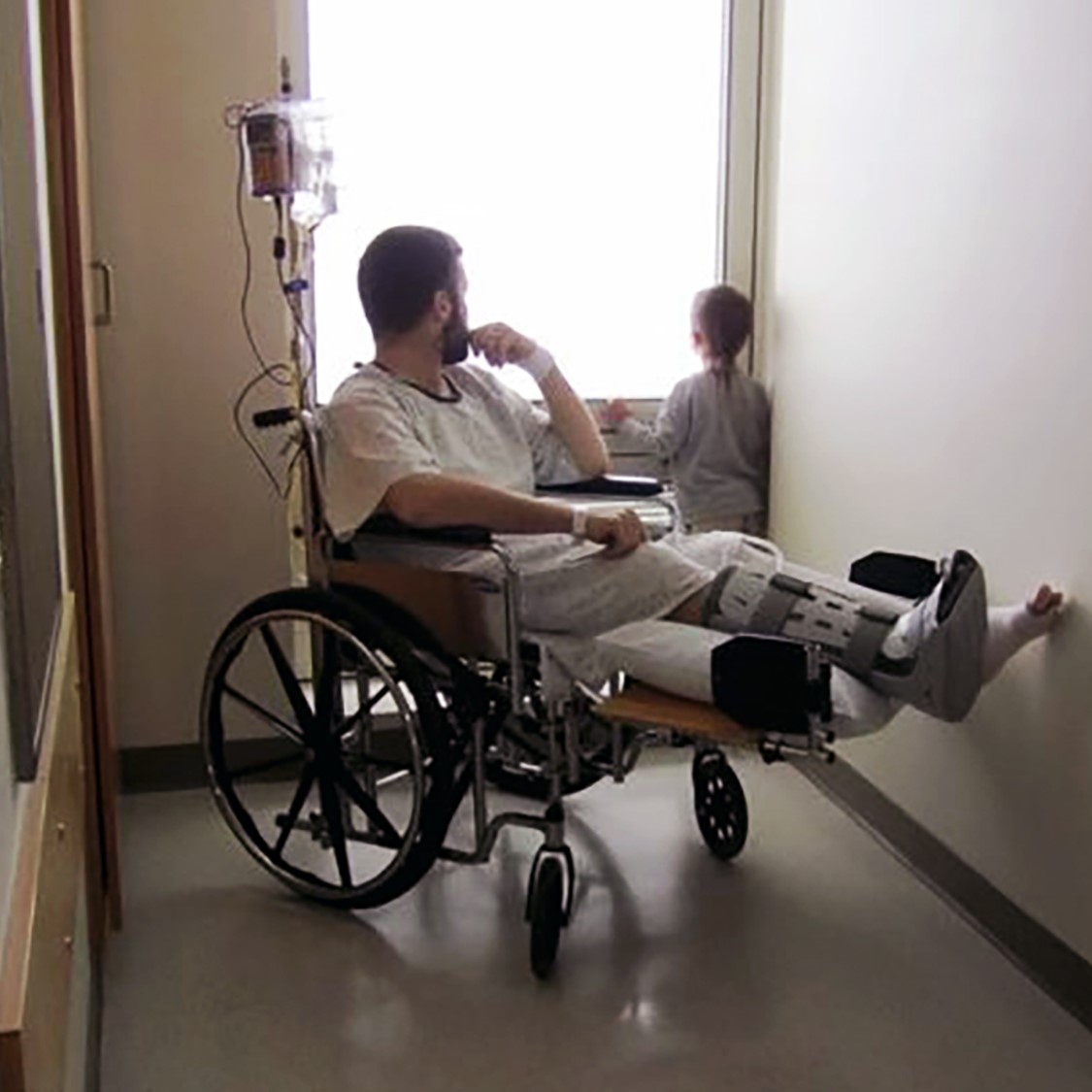
It's a muddy, rutty, hands-and-knees crawl up to the first rung of the ladder that begins to make some semblance of sense—and then you get to begin to really struggle. The climb does not and will not end. There is no final healed bone or mended tear of the skin to get over. Sometimes weekly, and sometimes daily there is a new step to attempt to get to your "new self". You can't even ever hope to get back to your "old self". Oh well! Maybe there will be a good view on this journey that I hadn't expected.........
(click on the above photo to view Brain Injury X-Posed: The Survivor's View)
Brain Injury X-Posed: The Survivor’s View
What does it feel like to live with a brain injury? What are the issues and concerns of survivors? How do they cope? Where do they find comfort, support, and hope?
Brain Injury X-Posed: The Survivor’s View is a photographic exhibit created by eight members of the Brain Injury Association of Massachusetts Framingham support group. Each participant in the project took photographs and wrote personal narratives that reflect their experience living with brain injury. The exhibit was on display during March 2009 at the Massachusetts State House in Boston.
“Taking photos and talking about them helped to peel away the layers of issues and emotions like the layers of an onion,” says Barbara Webster, facilitator of the Framingham group, who also sustained a TBI.
The project was intended to provide an opportunity for support group members to:
- reflect on living with brain injury, their progress in dealing with this major life change, and moving on;
- use their brain in new ways and employ a variety of cognitive skills;
- raise awareness about brain injury; and
- help health providers understand ways to support healing from brain injury.
For the exhibit, participants grouped their photographs into nine themes:
- Waiting for a better flight
O'Hare Airport in Chicago – People in their own worlds waiting for their planes. We are all waiting for a better flight and good times.
- Make the best of what and when you find it
On a road to the unsure, it is wide open and space unknown. I am going on an unknown trip. I don't now exactly where I'm headed or where I'll end up, whether happily, tensely or scared. We face trials and errors. It makes us take the leap or plunge, hoping to make the best of what and when you find it. There is uncertainty.
- What a long, strange trip it's been
Long have I thought about my book, the one that will never be written… I already have the title, What a long, strange trip it's been… from the Grateful Dead song ‘Truckin', on the "American Beauty" album. This picture reflects the nature of good brain days versus bad. The difficulty in discerning the word "Beauty" on the album cover reflects a lack of clarity, as in:
- where you've been and/or where you're going,
- the need to step back from something with detailed information, to think it through, to try to make sure you understand the elements and how they fit together, often getting lost in their interrelationships, at times forgetting just what it is you're trying to figure out,
- the unceasing difficulty with travel directions, especially to or in an area that is totally foreign to you,
- the occasional erasure of specific conscious thought, hopefully temporary but in its totality nonetheless,
- including the particular topic of which you may be in discussion, and/or the names of those with whom you may be speaking,
- personal plans and To Dos versus things accomplished and To Dos done, and
- asking, "What was I just going to say?" probably far more frequently than those without TBI, including the repetitive planning of how to word a particular point in anticipation of a certain discussion, before having a "Marcus Aurelius" moment (from the TV commercial for I don't know what) when the time comes to make it.
- Maybe there will be a good view
It's a muddy, rutty, hands-and-knees crawl up to the first rung of the ladder that begins to make some semblance of sense—and then you get to begin to really struggle. The climb does not and will not end. There is no final healed bone or mended tear of the skin to get over. Sometimes weekly, and sometimes daily there is a new step to attempt to get to your "new self". You can't even ever hope to get back to your "old self". Oh well! Maybe there will be a good view on this journey that I hadn't expected.........
- A light at the end of the tunnel?
A light at the end of the tunnel?
Upon reflection, this picture symbolizes what living with brain injury can be like. On an overcast day and laying flat on my back (now THERE's a metaphor!), I gazed up at the sky and took this picture through a tube. The clouds represented to me the sort of gloom that held a noticeable place in my life for a long time after my injury. Behind the clouds there is an inkling of a brightening sky, an encouraging prophesy of the possible and potential realization of bigger and better things. The scene being out beyond the end of a tunnel gives it the sense of the never-ending pursuit of the elusive self-satisfaction of being me. In the minds of many of us there are thoughts that we will never achieve some of the dreams we once held so dear...
- Identity lost
Identity lost
My work as a chef ended with a brain tumor, but I also lost my "who I was."
- A slumbering giant
A slumbering giantThis is an unplanned photograph, but I guess it could be looked at in a few ways:
- as a photo of a TBI survivor who has accepted and become comfortable in his current reality,
- as one of a man dreaming of future accomplishment and the satisfaction that will come with it,
- as one of a man in denial or oblivious to his current situation, and appearing to be content (with WHAT?)
I believe the true reality of my circumstances ranks in this same order.
- After brain injury
After brain injury
Before brain injury, I was a busy doctor. Now I am a retired, handicapped doctor who goes to Spaulding Rehabilitation Hospital in Boston for weekly support groups and therapies.
- I am not where I thought I would be
I am not where I thought I would be
It's a beautiful day, but we ARE in a graveyard. My life now has great moments of beauty and peace, BUT I am not where I thought I would be. I feel both grateful and cheated by this turn of events.
- Disarranged thoughts
Disarranged thoughts
This web of tangled strands of leaves represents the state of disarranged thoughts that create chaos to my thinking.
- My life, my mind, my existence...
My life, my mind, my existence...
My life, my mind, my existence… Ever since I can remember, and especially after approval of my disability status (about twenty-five years after my injury and at which point I stopped working), I've been disorganized. For too long I've had not "a place for my stuff", but "a pile of my stuff," with apologies to George Carlin. Having few, if any, scheduling commitments has somehow left me without the time to do or finish the things I've planned, not because time is short and there isn't enough of it but because motivation, follow-through and efficient use of my time has been virtually non-existent for quite some time.
- Inside my head is scrambled
Inside my head is scrambled
The shell of my life became broken. Inside my head is scrambled with strands of my life no longer blended.
- A stranger
A stranger
After my brain injury, a stranger entered my life. I'll call him CHAOS.
Confusion
Helplessness
Anger
Oblivious
Sad
- Chaos anyone?
Chaos anyone?
With the care and love of Barbara Webster, we reclaimed my living room and, of course, we found Betty Marie Boop aka Jane Russell Terrier under the rubble.
- I feel chaos
I feel chaos
I feel chaos. I leave the dishes to be done later. I procrastinate, hoping it will get done by itself. I make no time for completing my tasks. I always leave newspapers on the table, wanting to return to them so a new place can be found for them. I need to be motivated. I watch cable television or daydream so I don't have to deal with what I should be doing. This is the piano that I should and would love to learn how to play. I must practice.
- Can you find the couch?
Can you find the couch?
My life before brain injury was organized and free flowing. Now it only takes a few days to become overwhelmed by projects started then stopped midstream.
- Trying to run on ice
Trying to run on ice
Imagine your automobile stuck in a snow bank. You hit the gas pedal and all the tire does is spin. Now imagine yourself trying to run on ice (without wearing a pair of skates). The faster you run, the more you get nowhere. These images parallel how each and every day of my life begins since I suffered my brain injury. I seem to spend a whole lot of time getting nothing accomplished.
- I walked without falling
I walked without falling
I walked over these broken stones through the water without falling in the brook. This was a challenge.
- Thank God there's a handrail
Thank God there's a handrail
This is the front steps of where I'm living. There are three stone steps. It makes it difficult to walk up them. Thank God there's a handrail.
- What do you do at a stop sign?
What do you do at a stop sign?
What do you do at a stop sign? My first reaction is to stop. No wait, my first reaction is to move forward by:
Spinning
Tires
On
Pavement
Oh crap, I seem to be stuck again. Since my brain injury, this seems to be the story of my life.
- Keys in the freezer
Chaos anyone?
My thoughts no longer correspond to action. Thus, putting things in places that have no meaning: like keys in the freezer.
- Determined to remake my life
Determined to remake my life
I was depressed after two brain surgeries: one to put in a shunt and one to clean up the blood on my brain. I was unable to walk. That's why I'm in the wheelchair. It took me a year and a half to learn how to walk. When I was learning how to walk, I was determined to remake my life; ergo my advocacy story. Perseverance has helped me reach my goals: an apartment and a job.
- Fitting the pieces into my life
Fitting the pieces into my life
What is photo of? Every week there is something in my life that was once obvious and easy to me, that is now confusing and almost unfathomable. How does it fit into my life now? Why is it so hard to understand? I need to stop asking these questions and move on to fitting the pieces into my life without answering all the questions. There is no good answer. It just is as it is—now.
- Walking around with my head in the clouds
Walking around with my head in the clouds
Since my brain injury, my life has been turned upside down. I have tremendous difficulty staying focused. Confusion is now my middle name. Furthermore, I am easily distracted. How do you think it feels to go through life when you are constantly: losing focus, easily confused, and easily distracted? For me, it is like walking around with my head in the clouds.
- Living with chronic headaches
Living with chronic headaches
I often feel as if my head is laden with bricks, making my head heavy without room for thoughts.
- Getting through the maze
Getting through the maze
Getting through the maze of daily medications is a challenge fraught with missed dosages or incorrect timing.
- In a glass booth in the middle of the room
In a glass booth in the middle of the room
Remember what it was like at a New Year's Eve party. You are in a room full of people eating, drinking, dancing, talking, laughing—just having a good time. Ever since my brain injury, I never felt more alone than when I was in a crowded room full of people. It was as if I was all alone in a glass booth in the middle of the room. People would be all around me talking; however, I couldn't remember what was being said. The more I tried to remember what was just said, everyone else in the room was now talking about something else. Thus, I was always one or two conversations behind. If someone told a joke and everyone laughed, I too would laugh. However, I was not laughing at the joke because I couldn't understand the joke. I laughed along with everyone so as not to feel out of place. Yet, this made me feel even more alone and out of place.
- Life as a duck
Life as a duck
I took a picture of this (these) ducks because it occurred to me when I saw them that there really might be something to being a duck. They likely don’t have things they can’t do that they could do before and, if they do, they probably don’t have near-constant thoughts about them, either consciously or in the back of their minds. How they are different from what they were, how other ducks might perceive their weaknesses, the lack of confidence it has engendered in their lives. Suffice to say, the photographer has experienced all of these.
- To compensate for my poor memory and organizational skills
To compensate for my poor memory and organizational skills
To compensate for my poor memory and organizational skills, I need to put labels on everything in my home. Where are my socks? Which of these is my schedule book? On which shelf did I put my Bible? These labels are necessary 3 years after my accident and probably for many years to come. It is painful to remind myself about all of the brain power which I lost at the time of my car accident.
- How to remember?
How to remember?
How to remember which button I push in this building?!?
- A way to remember
A way to remember
Now I have the need to block the front door with items needed to be taken. I will even walk over them if I can and they will be left behind.
- Relearning old roads
Relearning old roads
Now I drive back roads to avoid busy streets and intersections. In the early years, I would find myself suddenly not knowing where I was or where I was going. The quickest way of remembering came from relaxing in the moment.
- Most people complain about time
Most people complain about time
Ever since my brain injury, I often complain "I have too much time." Can this be true? Most people complain that they never have enough time.
"Time is precious"
"Time is money"
"The rich have enough money to have others do their work so they get more time, the most valuable commodity"
When we die (our worst fear), we have "run out of time."
"Time runs fast when you're having fun."
- Brain Gym
Brain Gym
Using crossword and word searches to reconnect pathways in the brain.
- Physical therapy
Physical therapy
Physical therapy and cranial sacral therapy done to keep my neck and shoulders strong and limber. Work on balance issues.
- They helped me
They helped me
These are my counselors at Metro West Independent Living Center. They helped me to focus by bringing me to the statehouse to talk to my Senator and Representative.
- These are the letters I sent
These are the letters I sent
These are letters I sent to my Senator and Representative about the housing situation.
- These are the responses
These are the responses
These are the responses I received from Karen Spilka and David Lindsky.
- There was an apartment for me
There was an apartment for me
This is Connie O'Hara. She works at Sherwood Village. I submitted by application in March of 2003. I received word that I'd been accepted and that there was an apartment for me in October 2006. I can move in November 3, 2006.
- Living with brain injury without Mark is unthinkable
Living with brain injury without Mark is unthinkable
This is my partner and constant companion, Mark. I need him. He is my "minder", my "personal assistant", my "organizer", my "babysitter" and my best helper. Here is a picture of Mark writing my bills. He does this every week, because my arithmetic is faulty. Having Mark in my life helps me to avoid "meltdowns"---episodes lasting hours during which I get severely confused, depressed and irrational. I can't talk coherently, I take off some of my clothes in public, I feel like I want to die, etc. Mark can minimize my meltdowns by constantly and carefully observing my behavior and coaxing me back into reality whenever necessary---often several times a day. What Mark communicates to me at these times is honest and comforting: "Your brain was damaged in a car accident. It's not your fault. You are still a good person. And I love you very much." Living with brain injury without Mark is unthinkable.
- They make my heart sing
They make my heart sing
With TBI certain parts of my life have added much comfort and support. God has blessed me with Teddy (part Corgi) and Betty Marie (full bred, Jane Russell Terrier).
They welcome me home with hugs and slurps, we eat together, they sleep beside me and muzzle their noses into my neck and face to gently wake me in the morning.
They delight me with their personalities and antics. They warm my heart and comfort me. They make me smile and laugh. God has Blessed me with a little glimpse of heaven.
- Lightness and darkness in my life
Lightness and darkness in my life
Sunsets are peaceful to me. Pastel colors for calmness.
Beauty is needed. Clouds in the distance.
Lightness and Darkness in my life
- A prayer to God
A prayer to God
A prayer to God.
Sing to God.
God is my life.
Why was I saved?
- We are all proud of Judy
We are all proud of Judy
TBI group on Tuesday, September 26. Judy, in yellow sweater stating how she is not going to keep growing her hair to cover up the scar on the back of her head. We are all proud of you, Judy!
- From passing time to generating new pathways
From passing time to generating new pathways
After my automobile accident, I was laid up for along time healing from some serious physical injuries along with my brain injury. During this time, I used to spend hours looking out my window staring at this one tree in my backyard. I would marvel at its beauty and strength.
To pass time, I began counting its leaves as they fell to the ground. When it shed all its leaves, I saw branches branching off in all directions.
Today, when I look at a bare tree, I no longer see these branches. Rather, I envision my brain trying to generate new pathways.
- Now let's put this in perspective
Now let's put this in perspective
This picture is a metaphor for Chris R. with her lights out (which happens more frequently than she'd like to admit—my neurotransmitters inexplicably stop transmitting) & the back right side of her brain is so damaged that 5% of her brain cells are dead. Now let's put this in perspective. Einstein also had dead brain cells, yet he was able to do more than work at a cash register.
- I need to accept this death of my "old self"
I need to accept this death of my "old self"
Whose grave is this? Surely it's not mine. This is not my fate, it is? I need to make the best of this situation, but how? It's all suddenly complicated with questions and issues I never thought would be mine to contemplate. This was not my doing, nor my choice! I'm trying to be gracious. I need to accept this death of my "old self".
- New depth of acceptance
New depth of acceptance
New depth of acceptance. In my 17th year of recovery, I am no longer shamed by lack of hair and scar. It represents a new freedom, pride in what I have overcome.
- I hope only the good times are to come
I feel broken like this branch. I hope the bad things have passed and only the good times are to come.
- New identity
New identity
New Identity. New passion of gardening. First baby step was planting in containers so as to not fall into dirt because of imbalance. My garden has progressed as my new life has. Now I not only can plant in the ground, I dig up grass and now have three perennial gardens.
- Cue up The Hollies' "He ain't heavy, he's my brother"
Cue up The Hollies' "He ain't heavy, he's my brother"
"The road is long, with many a winding turn, that leads us to who knows where, who knows where...?"
Who among us could deny that recovery from TBI is a lengthy, possibly eternal process that may well return each of us to some version of our previous selves, yet at the same time, and at the very least, has profoundly changed us all in unique and individual ways.
"But I'm strong, strong enough to carry him. He ain't heavy, he's my brother."
It's taken great strength and determination to come as far as we have come, not to have thrown in the towel years ago during one of those countless moments when it would have been so much easier. In this sense, he (or she) who we are carrying is not a brother or a sister, but ourselves in our new manifestations.
"So on we go. His welfare is my concern. No burden is he to bear, we'll get there. For I know, he would not encumber me. He ain't heavy, he's my brother."
We continue on, sometimes having to watch out for Number 1. [We can't help others without helping ourselves first, and we can't help others without helping ourselves as a result.] Living with TBI is not so much a burden as it is a reality: we are different from what we once were, constantly moving through an evolving post-trauma process of self-actualization.
"If I'm laden at all, I'm laden with sadness, that everyone's heart, isn't filled with the gladness, of love for one another."
We may well be burdened with the frustration of being different, as victims of an injury quite correctly termed the "silent epidemic." Not to bemoan life with TBI, but one doesn't know it until one has suffered it. It can be maddeningly difficult to find acceptance and understanding from those who have no direct knowledge or experience with TBI.
"It's a long, long road, from which there is no return. While we're on our way to there, why not share? And the load, doesn't weigh me down at all. He ain't heavy, he's my brother. He ain't heavy, he's my brother."
There is no removal of TBI; it would be fruitless to feel there ever will be complete physical and neurological recovery. As we each traverse our own paths toward the picture or image of the person we'd like to be, why not share our experiences with others? We can attempt to help raise public awareness of TBI as an ever-recurring human condition. We can try to help direct newer victims or their families toward available resources. In the process of sharing we may find reciprocal support for our own personal journeys.
Please click on any of the above themes to start viewing the exhibit.
"The exhibit is a moving glimpse of how individuals with brain injury deal with this major change and move on with life," said Laura Lorenz, Ph.D., Brandeis University, who brought this "PhotoVoice" project to the Brain Injury Association of Massachusetts.
Want to do your own Photovoice project? Here is the facilitator's guide to get you started.
What is photovoice?
Photovoice is a process by which people can represent their lives, points of view, and experiences using photographs and narratives. Since 1991, people around the world have projected a vision of their lives and educated researchers, social service providers, and policymakers using photovoice. Many groups — from village women in China to young people in American cities, youth leaders in South Africa, and community health volunteers in California — have used photovoice. Photovoice is a type of participatory action research (PAR). PAR is a systematic investigation carried out in collaboration with people who are affected by a particular issue, in this instance living with brain injury. PAR involves integrating science and social practice in a dynamic group setting.
Brain Injury X-Posed: The Survivor’s View
Photovoice Project Co-Facilitators
Laura Lorenz, PhD, MEd, Heller School for Social Policy and Management, Brandeis University
Barbara Webster, Co-Founder, ‘Amazing’ Brain Injury Survivor Support Group, Framingham, MA
Laura Foley, Participant, Pilot Study ‘Facilitators and Barriers to Recovery from Traumatic Brain Injury: Through the Lens of Photovoice’
Photovoice Project Participants
included Chris R., Dave G., David S, Judy S., Kathleen D., Kathy D., Peggi R., and Scott D.
Brain Injury X-Posed: The Survivor’s View is a traveling exhibit to increase awareness and understanding of brain injury survivors’ challenges and strengths. Learn more by phoning the Brain Injury Association of Massachusetts at 800-242-0030 or visit their website at www.biama.org.