

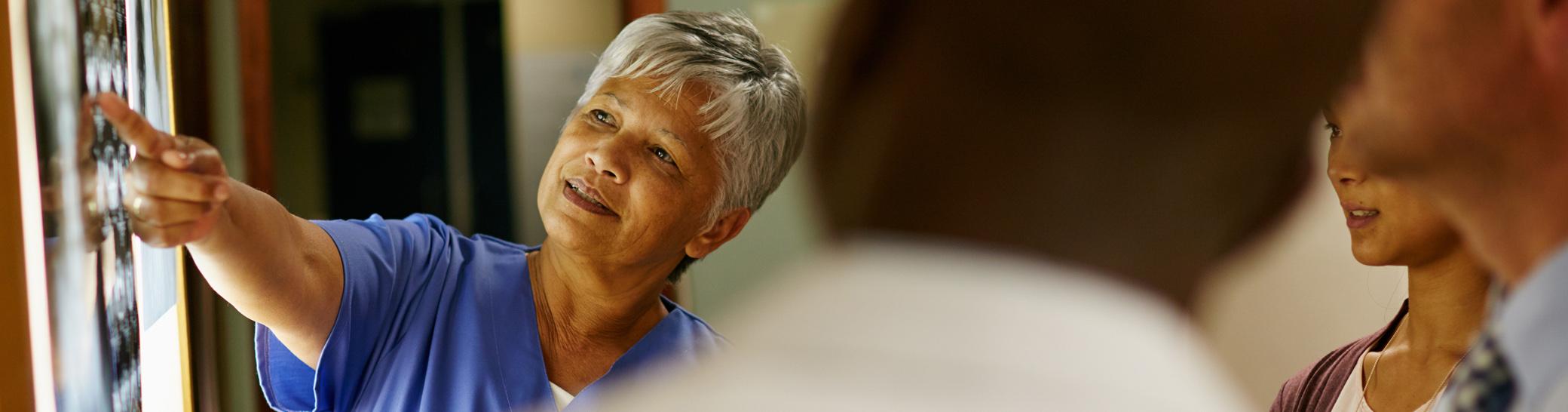
“You’ve seen one brain injury, you’ve seen one brain injury...” As someone who treats patients with traumatic brain injury, you know that every brain injury is unique and diagnosis and treatment are rarely simple.
In this section for professionals in the field of brain injury, you will find research on topics from chronic traumatic encephalopathy and blast injuries to neuroimaging techniques; tools and strategies from other experts in the field; and fact sheets and resources to offer your patients and their families. If you are a teacher, administrator, or sports coach, you will also find useful information on IEPs and assistive technologies for school as well as return-to-play guidelines and resources for keeping players safe on the field.
As a professional, you may be particularly interested in:
Brain Basics
Physical Symptoms of Brain Injury
The brain is incredibly complex — take an interactive journey to see how the brain works and what impact an injury can have.
Mild Traumatic Brain Injury
About Traumatic Brain Injury
This animation gives an overview of the frequency of TBI — from causes and symptoms to available diagnostic imaging techniques and basic information on brain anatomy.
The Effectiveness of Cognitive Rehabilitation
Brain Injury Rehabilitation
Cognitive skills can be relearned with a structured rehab plan of strategies and repetition.
Any injury to the brain from an external force is a TBI. Penetrating head injuries occur when an object, like shrapnel, enters the brain and causes damage in a specific area. Closed head injuries occur when there's a blow to the head, which can happen during a fall, car accident, sporting event, or any number of different ways.
Types of Brain Injury
Learn what can happen to the brain — from compression fractures to contrecoup injury.
Get the Stats on Traumatic Brain Injury in the United States: 2002–2006
New TBI stats out from the CDC.
A blow or jolt to the head can disrupt the normal function of the brain. This is called a brain injury, or concussion. Doctors may describe these injuries as “mild” because concussions are usually not life threatening. Even so, the effects of a concussion can be serious.
What Exactly Does the "Mild" in Mild Traumatic Brain Injury Mean?
We still have a lot to learn about the brain and what happens at a cellular level after a concussion. But for now, the good news is that most people diagnosed with a “mild” TBI recover quickly and fully.
Physiologic Post Concussion Disorder
"Only you can decide how important football is in your life," the doctor told the young player after he sustained a concussion with lingering symptoms.
The parts of the brain most frequently damaged in a TBI are the frontal lobes. The frontal lobes govern personality and impulsivity. If damaged, a person may have problems with self-control, anger, or aggression. Or the opposite might happen … someone’s personality may become muted or seemingly emotionless. This is called “flat affect.”
An Introduction to Rehabilitation: The Healing Brain
An invaluable overview and resource to the rehab process — short- and long-term.
Simple Interventions After TBI Prove Highly Effective
Simple interventions — from regular exercise to the use of a "quiet room" — are practical, inexpensive, and effective.
Sports-related brain injuries can happen in countless ways. A football player can sustain a traumatic brain injury (TBI) in a head-to-head collision. A cheerleader can fall on her head during a “basket toss.” A skier can smash into a tree. A skateboarder can lose control and fall against a curb. Coaches, parents, and athletes need to learn about brain injury to prevent injury and make the best decisions if an injury does occur.
Head Games, the Film
A powerful documentary that explores the question, “How much of you are you willing to lose for a game?”
Top Four Concussion Screener Apps for Athletes
iPhone & Android apps that check for brain injury in athletes.
And for brain injury rehabilitation resources in your area, click on “Resource Directory” on the top grey bar. Click on your state and go directly to a list of nearby TBI resources — rehab centers, outpatient services, and more. Or you can simply enter your zip code into the search box to find out what is available near you.
We hope you'll visit BrainLine often. We'll be adding new information, resources, voices, and stories on a regular basis. Tell us what you think here.
Creativity in Caregiving
Loving wife and teacher Abby Maslin uses her creativity and teaching skills to help her husband recover from a severe TBI.
Caregiving for Someone Whose Nose Doesn't Always Know
Traumatic brain injury makes quirky seem quirkier, especially when a person is in the initial months of recovery. Rosemary learned that Hugh's loss of his sense of smell came with both dangers and quirkiness.
Starting or Nourishing Romantic Relationships After TBI
Every relationship has its ups and downs, but when a partner or spouse sustains a brain injury, other problems can arise, too.
Challenges with Acts of Daily Living After a Brain Injury
Problems with acts of daily living like dressing or washing can vary greatly and sometimes professional help is necessary.