

Sorting Through Evidence While Researching Concussion
So, we're looking right now at signs, symptoms,
neurology, cognitive deficits, and also imaging and biomarkers.
So, it's quite a large catch.
We're looking within 3 months of the head injury.
We are going to be in another phase looking at beyond 3 months,
but the task force, the methodology group decided for the first take
we would look at articles within 3 months of a presumed head injury
and look at articles--into the prevalence of these signs, symptoms,
neurology, and cognitive deficits.
So, let's suppose within the first 24 hours,
what percentage of people have headaches or are dizzy?
What percentage of people have balance problems?
What percentage of people have memory or attention problems?
And then what happens over time up until 3 months?
Mapping all that out and looking at good and poor quality evidence,
you can see a picture evolves.
I mean, it's like we're taking a picture of concussion,
and some of the pixels are very well-defined, you see clearly.
Sometimes they're not very well-defined.
If, for instance, we don't have enough evidence at, say, 2 or 3 weeks
in terms of headaches, then maybe we should fund studies to look at that.
And I think our initial take is that there are very good articles out there.
I think we assume some articles that were very high quality research
actually aren't that high quality.
Others that we thought were poor quality actually are high quality and so on.
So, you have to really go through and see which ones meet the standards,
and then you can look at this picture.
The task force will be looking at this picture.
These are experts in their individual areas
representing medical societies, federal agencies,
and then through that interaction with a methodology group,
a definition will come out of that.
So, when we select out--we're not really selecting out the symptoms to look for.
We look at the articles and see what they report,
so we're just going by what the evidence is.
Show transcript | Print transcript
Learning more about concussion through research is like looking at a photograph -- some pixels will be more clear and defined than others.
See more of Dr. Ghajar's videos here.
Produced by Noel Gunther and Justin Rhodes, BrainLine.
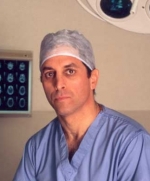
Jamshid Ghajar, MD, PhD is chief of Neurosurgery at Jamaica Hospital-Cornell Trauma Center, clinical professor of Neurosurgery at Weill Cornell Medical College and President of the Brain Trauma Foundation.
The contents of Brainline (the “Web Site”), such as text, graphics, images, information obtained from the Web Site’s licensors and/or consultants, and other material contained on the Web Site (collectively, the “Content”) are for informational purposes only. The Content is not intended to be a substitute for medical, legal, or other professional advice, diagnosis, or treatment.
Specifically, with regards to medical issues, always seek the advice of your physician or other qualified health provider with any questions you may have regarding a medical condition. Never disregard professional medical advice or delay in seeking it because of something you have read on the Web Site. If you think you may have a medical emergency, call your doctor or 911 immediately. The Web Site does not recommend or endorse any specific tests, physicians, products, procedures, opinions, or other information that may be mentioned on the Web Site. Reliance on any information provided by the Web Site or by employees, volunteers or contractors or others associated with the Web Site and/or other visitors to the Web Site is solely at your own risk.