

Turn Text Only Off

Page Utilities


How Exercise Can Help Heal the Brain After a TBI How Exercise Can Help Heal the Brain After a TBI

Click on any phrase to play the video at that point.
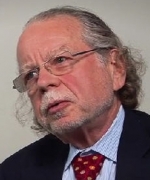
So a long, long time ago, the Central Park jogger, Trisha Meili, came to me because she felt that her exercise--her running-- played a significant role in her recovery. And she said, "Okay, do some research." At that particular time, we were doing a large quality-of-life study of folks with brain injury. So we put in some questions about exercise: Do you exercise? If you do exercise, what do you do? How often and for how long--how many times a week? And we had a group of people without brain injury, and what we did is looked at the folks with brain injury who did and did not exercise and the folks without a brain injury who did and did not exercise, and we saw that the folks with brain inury who did exercise reported fewer cognitive symptoms and were less depressed. The folks without a brain injury weren't depressed, and they didn't report cognitive symptoms. So that was not new, because there was a lot of literature in terms of exercise being a valuable treatment in terms of depression, but it's the first time the link to improved cognitive function had been made. So we're now in the middle of doing a clinical trial where we're using 2 doses of exercise with folks with TBI. It's interesting because there's been 1 study--there's been some animal work in which they've shown that exercise promotes regrowth--neuro-regeneration in the hippocampus, which is the area of the brain that controls memory. And there's been 1 study with humans--a very small sample-- in which the folks in that study followed an exercise regimen, and they did pre- and post-functional MRIs on these folks, and they showed there was increased blood flow in the hippocampus. So now we have some evidence of regeneration in that area of the brain, in people without a brain injury. We're not doing the neuro-imaging; it's too expensive. But we are looking at the outcomes; we're looking at our mood, cognition, and fatigue.

show transcriptShow transcript | Print transcript

Research studies show that people with TBI who exercise show fewer symptoms of depression, fatigue, and cognitive problems.

Produced by Noel Gunther, Ashley Gilleland, Victoria Tilney McDonough, and Brian King.


Wayne Gordon, PhD Wayne Gordon, PhD, ABPP/Cn, is the Jack Nash Professor of Rehabilitation Medicine and associate director of the Department of Rehabilitation Medicine at the Mount Sinai School of Medicine. He is a neuropsychologist and the director of the Mount Sinai Brain Injury Research Center.

The contents of Brainline (the “Web Site”), such as text, graphics, images, information obtained from the Web Site’s licensors and/or consultants, and other material contained on the Web Site (collectively, the “Content”) are for informational purposes only. The Content is not intended to be a substitute for medical, legal, or other professional advice, diagnosis, or treatment.

Specifically, with regards to medical issues, always seek the advice of your physician or other qualified health provider with any questions you may have regarding a medical condition. Never disregard professional medical advice or delay in seeking it because of something you have read on the Web Site. If you think you may have a medical emergency, call your doctor or 911 immediately. The Web Site does not recommend or endorse any specific tests, physicians, products, procedures, opinions, or other information that may be mentioned on the Web Site. Reliance on any information provided by the Web Site or by employees, volunteers or contractors or others associated with the Web Site and/or other visitors to the Web Site is solely at your own risk.

Related Content

Audio/Video:
 

 Comments

There are currently no comments for this article


BrainLine Footer


BrainLine.org is a WETA website funded by the Defense and Veterans Brain Injury Center through a contract with the Henry M. Jackson Foundation. Government funding support is not an endorsement of WETA or any of its products, including this website.

© 2013 WETA All Rights Reserved