

 Military & Veterans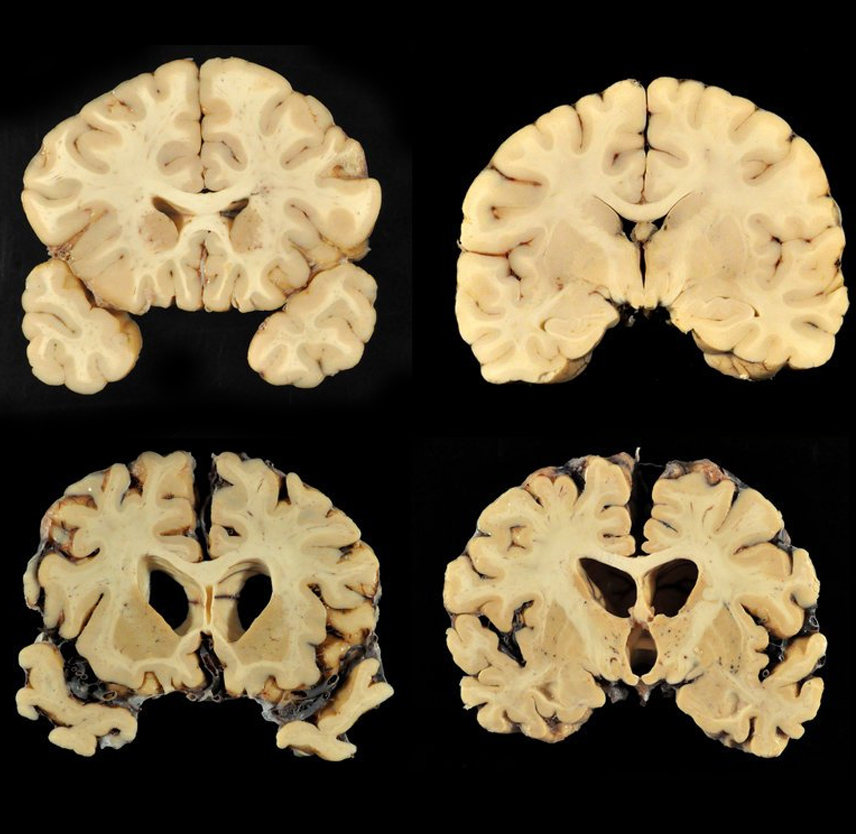
What is CTE?
CTE stands for chronic traumatic encephalopathy. And this is the disorder that has been described in primarily athletes who participate in contact sports. The first descriptions were in boxing, in boxers. And more recently has been widely discussed in the media, football players, professional football players, but this is expanded into hockey players and rugby players and soccer players and other examples that have been seen. But most of the discussion has either been in former boxers or in football players.
CTE is undoubtedly related to the repeated head trauma related to the participation in contact sports. How repeated head trauma triggers this kind of degeneration in the brain and the accumulation of a protein called tau we don’t understand as yet. But it’s very clear that it is related to the underlying repeated head trauma that one receives.
It’s a chronic disease that’s what we call a neurodegenerative disease, but by and large, the symptoms typically show up in the retirement years of these former athletes. It’s different than the scarring problem that we discussed about blast injury, although there is some overlap because some of the patients, or some of the cases, the specimens that we’ve looked at of individuals who have had blast injury who’ve survived for a significant number of years appear to be beginning to show the features of CTE. But we think of this as a late phenomenon down the road, years down the road from their exposure on the battlefield.
Related Resources
About the author: Daniel P. Perl, MD
Dr. Perl is a Professor of Pathology at USUHS and Director of the CNRM's Brain Tissue Repository, where he has established a state-of-the-art neuropathology laboratory dedicated to research on the acute and long-term effects of traumatic brain injury among military personnel.

Comments (2)
Please remember, we are not able to give medical or legal advice. If you have medical concerns, please consult your doctor. All posted comments are the views and opinions of the poster only.
Jim Lonneman replied on Permalink
I had a brain injury 46 years afo on 4/10/73. I was in a coma for about 3 weeks. I am now 62 years old. I still have double vision , and a slight speech impediment from the accident. I can drive and im very safe and considerant. But i still get mood swings when i ger angry. I found out from a psycologist that my injury on the head right above my left eye is what caused my bad mood swings. So I learned to somewhat control myself. Most of the time.
teri kapp replied on Permalink
My son has SEVERE rages lately(For the past 6 months)His TBI happened in 2004 and these severe rages are new to everything else we all were going thru.He is on seizure meds and anti depressants and im not sure how to help him.He has started becoming paranoid and delusional accuses us of horrible things .Can you tell me anything to help us.Thank you and God bless you