

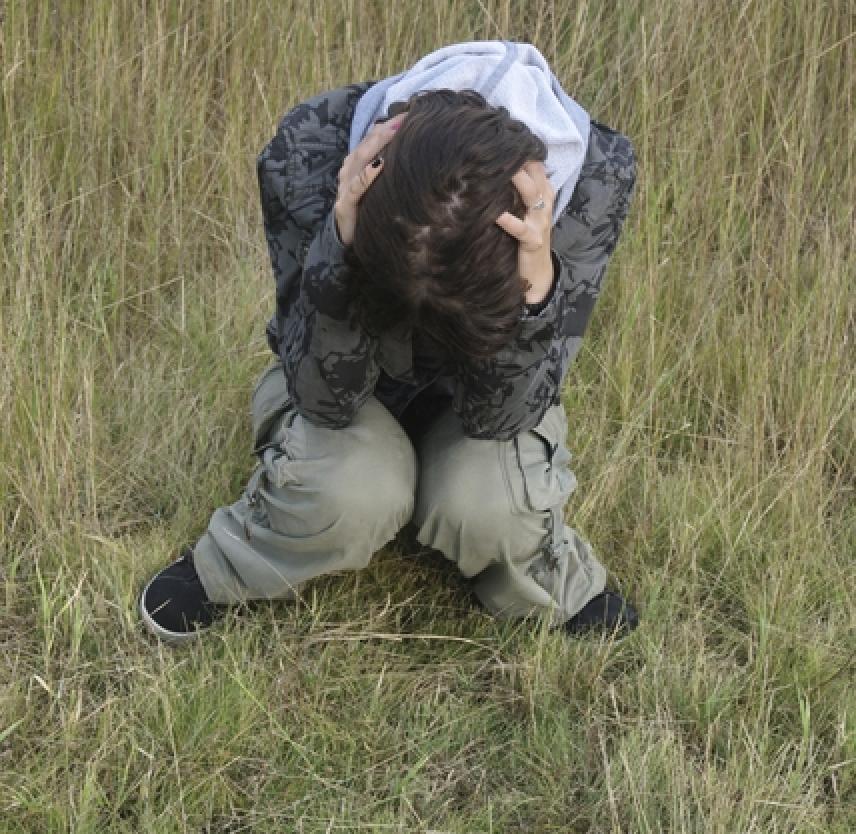
What is victimization?
According to the U.S. Department of Justice (2004), victimization occurs when “…a person suffers direct or threatened physical, emotional, and/or financial harm.” Victimization can include physical violence, sexual violence, psychological or emotional abuse, and neglect. The Centers for Disease Control and Prevention (CDC) acknowledges such victimization as a serious and preventable public health problem.
- Physical violence is “the intentional use of physical force with the potential for causing death, disability, injury, or harm.”(Rosenberg and Mercy 1991; CDC 2006) It includes, but is not limited to, “scratching, pushing, shoving, throwing, grabbing, biting choking, shaking, slapping, punching, burning, use of a weapon, and use of restraints or one’s body, size, or strength against another person.”(CDC 2006)
- Sexual violence is “the use of physical force to compel a person to engage in a sexual act against his or her will, whether or not the act is completed; an attempted or completed sex act involving a person who is unable to understand the nature or condition of the act, to decline participation, or to communicate unwillingness toengage in the sexual act; andabusive sexual contact.”(CDC 2004)
- Emotional abuse occurs when a person is “threatened, terrorized, or severely rejected, ignored, or verbally attacked.”(Nosek et al. 2001) It includes, but is not limited to, “episodes of yelling, threats, or acts meant to humiliate or hurt feelings.” (Curry et al. 2003)
- Neglect is a “situation in which the basic needs of a person (such as food, clothing, hygiene, protection, or medical care) are temporarily or permanently not met.”(Verdugo and Bermejo 1997) It includes, but is not limited to, “preventing a person with disabilities from using a wheelchair, cane, respirator, or other assistive devices as well as failure to address basic needs for food, clothing, shelter, or hygiene.”(McFarlane et al. 2001)
What is the extent of the problem?
Current knowledge about victimization of persons with disabilities is based on a small number of studies, and little is known about victimization of important groups such as persons with traumatic brain injury (TBI) (Marge 2003).
- Persons with disabilities are 4 to 10 times more likely to become a victim of violence, abuse, or neglect than persons without disabilities (Petersilia 2001).
- Children with disabilities are more than twice as likely to be physically or sexually abused as children without disabilities (Petersilia 2001; Sobsey and Mansell 1994).
- Similar proportions of women with and without disabilities report having experienced episodes of physical violence, sexual violence, or emotional abuse (Sobsey and Mansell 1994). Women with disabilities, however, report greater numbers of perpetrators and longer time periods of individual episodes than women without disabilities (Young et al. 1997).
Where does victimization occur?
- Victimization can occur anywhere; however, it usually happens in isolated locations where a person with disabilities has little or no control of the environment (Sobsey and Mansell 1994), and the setting is away from the view of law enforcement (Verdugo and Mermejo 1997).
- Institutional settings are risk locations for persons with disabilities because multiple episodes of physical and sexual violence, emotional abuse, neglect, or violence may be committed against them by staff or other residents and yet go undetected or unreported (Sobsey and Mansell 1994; Brown and Turk 1994; Turk and Brown 1993).
Who commits acts of violence?
- More men than women, either as intimate partners or as health care workers (Brown and Turk 1994; Marley and Buila 2001), are reported to commit acts of physical violence, sexual violence, emotional abuse, or neglect against persons with disabilities.
- Family members have been reported to commit crimes of victimization while caring for a relative with disabilities (Milberger et al. 2003; Stromsness 1993).
- Personal home care attendants (Oktay and Tompkins 2004; Saxton et al. 2001) or health care workers at institutions (Brown and Turk 1994; Sequeira and Halstead 2001) havebeen reported to perpetrate emotionalabuse and sexual violence against persons with disabilities.
- In institutional settings, persons with disabilities may commit acts of physical violence or sexual violence against other persons with disabilities (Sobsey and Doe 1991).
What factors make a person with disabilities susceptible to victimization?
Societal Factors:
- Misperceptions about disability include “having a disability protects a person from victimization”; the risks to a person with disabilities are thought to be less than the risks to a person who has none (Young et al. 1997).
- Unemployment or underemployment of persons with disabilities restricts their income and limits their choices for caregivers, leading to an increased risk of physical and sexual violence, emotional abuse, or neglect (Stromsness 1993).
- Lack of money often causes persons with disabilities to live in areas where crime rates are high and the potential for physical and sexual violence is greater than in wealthier neighborhoods (Curry et al. 2001).
Community Factors:
- Community resources for victims of physical and sexual violence, emotional abuse, or neglect are usually designed to assist people without disabilities (Swedlund and Nosek 2000; Chang et al. 2003; Cramer et al. 2003). Organizations that provide such resources do not routinely collaborate with organizations that assist persons with disabilities (Curry et al. 2001; Swedlund and Nosek 2000; Chang et al. 2003).
- Frequently, health care (Swedlund and Nosek 2000; Chang et al. 2003; Cramer et al. 2003) and law enforcement (DOJ 1998) professionals are uninformed about victimization of persons with disabilities. Thus, they may not have the specialized knowledge or skills to identify and assist these individuals when victimized.
What factors make a person with a traumatic brain injury, or TBI, susceptible to victimization?
Relationship Factors:
- Persons living with a TBI often have difficulty with anger management, which may prompt others to use undue physical force or inappropriate medication (Kim 2002).
- Misperceptions about TBI and its effects may lead to treatment that is demeaning or abusive (Sequeira and Halsted 2001).
Individual Factors:
- A TBI can cause cognitive problems that reduce one’s ability to perceive, remember, or understand risky situations that could lead to an incident of physical or sexual violence (Kim 2002; Levin 1999).
- Persons with a TBI may engage in at-risk drinking or drug use that place them in situations or relationships that lead to episodes of victimization (Kwasnica and Heinemann 1994; Li et al. 2000).
- In some persons, a TBI causes uninhibited behaviors that lead to risky sexual engagement, exposing them to HIV/AIDS or other sexually transmitted diseases (Jaffe et al. 2000; Kramer et al. 1993).
References
- Brown H, Turk V. Sexual abuse in adulthood: ongoing risks for people with learning disabilities. Child Abuse Review 1994;3(1):26–35.
- Chang JC, Martin SL, Moracco KE, Dulli L, Scandlin D, Loucks-Sorrel MB, et al. Helping women with disabilities and domestic violence: strategies, limitations, and challenges of domestic violence programs and services. Journal of Women’s Health 2003;12(7):699–708.
- Cramer EP, Gilson SF, DePoy E. Women with disabilities and experiences of abuse. Journal of Human Behavior in the Social Environment 2003;7(3–4):183–199.
- Curry MAA, Hassouneh-Phillips D, Johnston-Silverberg A. Abuse of women with disabilities: an ecological model and review. Violence Against Women 2001;7(1):60–79.
- Curry MA, Powers LE, Oschwald M. Development of an abuse screening tool for women with disabilities. Journal of Aggression, Maltreatment & Trauma 2003;8(4):123–41.
- Department of Health and Human Services (US), Centers for Disease Control and Prevention, National Center for Injury Prevention and Control. Intimate partner violence: overview [online]. 2006 [cited 2006 Apr 19]. Available from: URL: www.cdc.gov/ncipc/factsheets/ipvoverview.htm.
- Department of Health and Human Services (US), Centers for Disease Control and Prevention, National Center for Injury Prevention and Control. Uniform definitions for sexual violence [online]. 2004 [cited 2006 Apr 18]. Available from: URL: www.cdc.gov/ncipc/pubres/sv_surveillance/04_uniform_definitions.htm.
- Department of Justice (DOJ) (US) , Office of Justice Programs, Office of Victims of Crime. Overview of victimology [online]. 2004 [cited 2005 Nov 9]. Available from: URL: from www.ojp.usdoj.gov/ovc/assist/nvaa/ch03.htm.
- Department of Justice (DOJ) (US), Office of Justice Programs, Office for Victims of Crime. Working with victims of crime and disabilities. Washington (DC): Government Printing Office; 1998. OVC Bulletin No.:1. p. 1–15.
- Jaffe MP, O’Neill J, Vandergoot D, Gordon WA,
- Small B. The unveiling of traumatic brain injury in an HIV/AIDS population. Brain Injury 2000;14(1):35–44.
- Kim E. Agitation, aggression, and disinhibition syndromes after traumatic brain injury. Neurorehabilitation 2002;17(4):297–310.
- Kramer TH, Nelson DF, Li PW. AIDS knowledge and risk behaviors among traumatic brain injury survivors with coexisting substance abuse. Brain Injury 1993;7(3):209–17.
- Kwasnica CM, Heinemann A. Coping with traumatic brain injury: representative case studies. Archives of Physical Medicine & Rehabilitation 1994;75(4):384–9.
- Levin HS. Neurocognitive/behavioral outcomes in children and adults. In: Ragnarsson KT, editor. Report of the NIH consensus development conference on the rehabilitation of persons with traumatic brain injury. Washington (DC): Department of Health and Human Services (US), Public Health Service, National Institutes of Health; 1999. p. 49–54.
- Li L, Ford JA, Moore D. An exploratory study of violence, substance abuse, disability, and gender. Social Behavior & Personality 2000;28(1):61–71.
- Marge K. Introduction to violence and disability. In: Marge K, editor. A call to action: Ending crimes of violence against children and adults with disabilities, a report to the nation. Syracuse: State University of New York, Upstate Medical University; 2003. p. 1-16.
- Marley JA, Buila S. Crimes against people with mental illness: types, perpetrators, and influencing factors. Social Work 2001;46(2):115–24.
- McFarlane J, Hughes RB, Nosek MA, Groff JY, Swedlend N, Dolan Mullen P. Abuse assessment screen-disability (AAS-D): measuring frequency, type, and perpetrator of abuse toward women with physical disabilities. Journal of Womens Health & Gender-Based Medicine 2001;10(9):861–6.
- Milberger S, Israel N, LeRoy B, Martin A. Violence against women with physical disabilities. Violence and Victims 2003;18(5):581–91.
- Nosek MA, Howland CA, Hughes RB. The investigation of abuse and women with disabilities: going beyond assumptions. Violence Against Women 2001;7(4):477–99.
- Oktay JS, Tompkins CJ. Personal assistance providers’ mistreatment of disabled adults. Health & Social Work 2004;29(3):177–88.
From the Centers for Disease Control and Prevention. www.cdc.gov.