

I have a brain injury. When I’m tired or stressed it seems like my memory suffers. Will this get better with time?
The brain can’t store information in its memory efficiently when it’s tired or stressed. So when you’re too tired to focus your attention, your memory is likely to suffer as well. As your brain heals, you may have more energy and be able to pay attention for longer amounts of time. This, in turn, will help your memory. But, you can also use other strategies to help you remember. Here are some ideas:
- Reduce stress and stay well rested. Take breaks when you need them.
- Know your limits. When you feel you can’t absorb any more information, take a break or have someone else write it down for you.
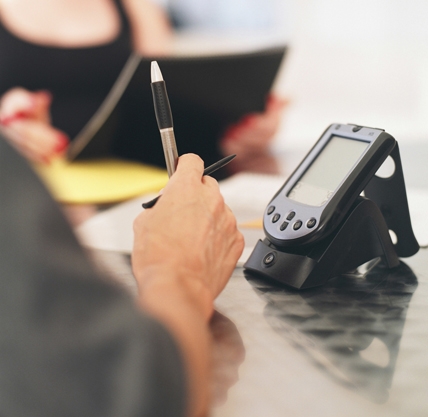
- Consider using a cell phone or PDA (personal digital assistant) to send yourself reminders, remember directions, or keep appointments.
- Work with a professional (such as a speech-language pathologist) to learn to organize information so it’s easier to remember.
- Carry a calendar or notebook to keep important information in one place.
About the author: Janet Brown, MA, CCC-SLP
Janet Brown, MA, CCC-SLP spent twenty years in practice at the Veterans Administration Medical Center and at the National Rehabilitation Hospital in Washington, DC. She is the former director of Health Care Services at the American Speech-Language-Hearing Association.

Comments (22)
Please remember, we are not able to give medical or legal advice. If you have medical concerns, please consult your doctor. All posted comments are the views and opinions of the poster only.
Anonymous replied on Permalink
I suffered a closed head moderate TBI 1981 in a minivan accident. The most severe of my Amnesia occurred from before the accident through late 1982. He came back progressively better after that ,through 1987 when I went back to work full-time and felt more functional. The tricks mentioned in the article certainly are helpful, keeping little notes, using a smartphone memo, photos, calendar... it helped me very much to visualize things. I also noticed if I look in mirrors when I do stuff it makes me remember where I put something, if I don't see where my hands put something, or did, I will forget it. In 2010 it was discovered that I am was undiagnosed celiac,believed to be brought about by trauma to my digestive system because of the amount of medications I was on during those first years when I was in traction for 3 years. But luckily since I have adopted the gluten-free diet healing processes have advanced and damages have even reversed!! I have memories coming back now that I hadn't remembered and things that happened to me prior to the accident have now come back in memories, so please keep digging, you will keep healing even years after. it is nearly 40 years since I was injured and I am still regaining my strength and energy and I have done well in college, recently (last 20 years ) I am learning new things! it can be done, you can still heal. Everybody be well and don't lose hope! :-) <3
Kelly S replied on Permalink
Thank you! This is exactly what I needed to see tonight :)
I suffered a TBI about 15 years ago. The first few years were rough, but after that I could really see progress and improvement in my memory. My mood swings (lots of intense anger!) settled down and I could handle a full-time job without absolutely crashing on Friday afternoons. Recently, however, I've really been getting down on myself. It's probably mostly due to my ever-changing hours at work. Last summer, I lost my full time architecture job and I've been working part time at a bakery. I'm just taking some time being nice to myself and I really enjoy going to work late and ending the day early, but I definitely struggle with the lack of a routine.
One huge bit of advice I can share (which other people told me but I ignored of course) is to stay away from alcohol! It really seemed to affect me more after my TBI and over time I realized I was drinking way too much. I've been sober 9 months now and it certainly helps with the memory, even though I'm still not as sharp as I used to be. Oh, well! This is the body and the brain that I have now so I'm trying to take much better care of it.
Thanks again for the message of hope!!! <3
Abby replied on Permalink
At 40, and almost 20 years since my brain injury, I'm starting to take classes to back to school. Assimilation of new information and remembering it is very difficult. Any suggestions? I have a healthy diet, I exercise, I get good sleep...do most of the things that are suggested for improving memory. I'm only doing one class now and have 6 more pre-req's to do before going back to be a full-time student. I can use all the helpful suggestions I can get. My symptoms are a lot like someone with ADHD.
Scott replied on Permalink
Be sure to spread your simple, like ge's or 100-200, throughout your planned timeframe. To get good grades/marks in school you only need to retain most information for a week when new for tests and by repetition most will become easily recalled by the brain as nessicary information over the weeks. The most important thing is to major in something you have a gift for or are passionate about. I seriously recommend being an avid note taker and to study by writing, this requires more attention and stimulates brain activity making it easier to retain, I'm not a fan of flash cards. DO NOT stack your schedule into 2 or 3 days do all 5. Finally do yourself the favor of scheduling office time with the professors of your major every 2 weeks or whenever you think fits you best, they will help you grasp the subject more in-depth. Me, BS degree and tbi affected.
Larry replied on Permalink
Hi. I had a traumatic brain injury 31 years ago when I was a senior in high school. I had intensive therapy immediately after and up to two years after at Gaylord in Ct. I attended some college right after but I never finished but want to. I feel your pain about forgetting stuff. It’s very difficult to deal with especially because one who can remember how easy it was to remember things prior to the injury can cause a lot of anxiety and frustration after the injury. I try to use as many tools as I can to remember things but sometimes forget to do it! Comical yet true! I wish that there was an app that was geared towards things like that! My major problem is executive functioning. It’s very difficult to improve this. Good luck and God bless.
anon replied on Permalink
The only memory problems I have consistently are remember conversations with my SO, and where I put my things. I lose my things the most, when I am the least stressed. I don't understand why this keeps happening, but I'm getting Tired of losing my wallet. Though, after that my stress does racket up into the stratosphere because I just lost all of my identification and money cards. How do I get better at remember where my stuff is?
Mary Jane Sykes replied on Permalink
Get tiles...they have ones that go on your keys and reverse back to your phone. Also sticker ones. I have only been using them for a few weeks, but they relieve the stress and panic of lost things. Before that, I tried to establish specific spots for things, purse in drawer, keys on door knob, but that does not work all the time. I am still looking for ways to remember to shut the oven off, rotate food in the fridge and even remember to drink water regularly, but all in due time I guess. The stress and panic of realizing your memory is poo, makes everything worse.
Michael Kendrick replied on Permalink
Well one thing you can do is get a wallet with a chain. Another thing you can do is to get a jacket with a front pocket. I was homeless basically and so when I went to sleep I would put my wallet in the front pocket of my jacket and button it and then use the jacket as my blanket. Slept real good knowing that once I woke up I wouldnt have to worry about trying to remember to see if my wallet had fallen out of my pocket and was laying on the ground. You have to be careful in this age of I.D. theft even if you are homeless. Clothes with pockets that zip and button up are great. I bought some khaki shorts and never wore them b/c I thought everyone would think Im a waiter but now I love them. If you dont want a wallet with a chain then get a shoestring and make a hole in your wallet and tie the dang thing around your belt everywhere you go and maybe even tie it to your wrist or ankle while you sleep would be my advice. You sound pretty relaxed about always losing your wallet lol. Good luck. Bottom line is just pretend your on vacation in africa lol.
Scott replied on Permalink
Habit and repetition. Get it out of your short term memory, positive habits are one of our greatest assets. Dedicated locations for stuff.
Adi replied on Permalink
I use Tile to help me find stuff as well. Tile link (app is free, you need to buy the Tile itself): http://ssqt.co/medNsFd
Nick replied on Permalink
Keep it in one spot, so you always know where it's at. I fell three stories in 2011 and had a TBI. It helps me.
Sam replied on Permalink
I had a TBI 3 years ago and at the very beginning I noticed 0 symptoms but now it is as if my mind is covered in mud. I cannot think clearly, my memory has suffered greatly and I feel tons of pains that I have never experienced before. I find that drinking at least 3 liters of water/day, and making myself eat a very well rounded diet (fats, carbs, dark greens, dark berries) and staying warm at all times helps me to feel almost normal. It even helps with my memory (albeit very slightly). I appreciate this thread and ANYTHING I can find that has helped others I am willing to try because, well, I just want to feel like myself again. Good luck to all brain damage sufferers out there!
Scott replied on Permalink
I recommend learning to "think" differently. Try to teach or allow your brain to create new pathways to retrieve and process information. Focusing though intensively or forcing things to the surface will hurt. If I'm having a hard time I make games of loosely remembering early life events and a number of times my brain will open and retrieve the passive thought of what I want to remember.
Tyler Cagle replied on Permalink
what if memory is still a 'Real' crucial deficit after 9 and a half years
are there any things that can help -OR- am i just suppose to give up hope... Finally!
Lori replied on Permalink
I am with you Tyler. I had an almost fatal brain aneurysm ten years ago. My memory has improved some, but not enough to work or even live on my own. I get depressed sometimes. Before my tbi, I was a financial advisor with a busy and active life. Thank God I have a faithful and caring husband who takes care of me. It feels unfair to him sometimes, but I don't know what to do about it.
L replied on Permalink
Have you looked into hyperbaric treatment ? The studies have shown that even many years after a concussion it can still help. Last I looked it was 5 days a week, 1 hour a day, for 8 weeks. Not cheap , but the results are very promising.
Becky replied on Permalink
There are places that will rent portable hbot chambers. Much more economical.
Camille replied on Permalink
I too have had a head injury. And like you, it was years ago. I have recently started to learn a musical instrument and study Spanish. My memory is awful! I am beginning to think it may have something to do with my long-a-go concussion. Please share with me any idea's sent your way.
Anonymous replied on Permalink
And make sure you eat frequently. An injured brains burns more calories because it is not operating efficiently. I find that, at 4 years out, if I'm having issues, stopping to eat often solves a lot of the problems I'm having.
Anonymous replied on Permalink
One thing that happened to me years ago after the first brain damage of long term addiction was an inability to read a note or reminder and actually convert it to anything relating to me.
I ended up with a numerical technique which worked for years until my 2014 sepsis and coma. Now I most certainly cannot use reminder notes in any form. They overwhelm me but the numerical trick is not working as well as it did. Not sure what I am going to develop. I am in the process of minimizing all obligations and appointments etc.
Anonymous replied on Permalink
Many years ago, I noticed that if I forgot what I was retrieving, if I rotated my dominant hand (in at eye level, out just above frontal lobe) in quick, successive circles my memory popped out. Recently, gesture and memory has been researched
(Using actions to enhance memory: effects of enactment, gestures, and exercise on human memory. Christopher R. Madan and Anthony Singhal. Front Psychol. 2012; 3: 507. Published online 2012 Nov 19. doi: 10.3389/fpsyg.2012.00507.).
Anonymous replied on Permalink
I notice that diet as well as activity is helpful. I notice when I eat more "brain foods" things are noticeably easier, additionally when I play fun but challenging games like sudoku, hidden object games, or lumosity, everything works a little better in my brain. Including mood.