

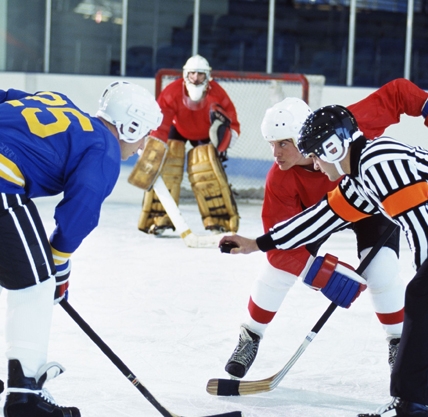
More and more studies are being conducted about contact sports and progressive brain injury. What is chronic traumatic encephalopathy, and what should we be doing to protect young athletes?
For years, we have known about a type of neurodegenerative disease, which may affect amateur and professional boxers, known as dementia pugilistica. Symptoms and signs of dementia pugilistica can develop progressively over a long period of time. Chronic traumatic encephalopathy, or CTE, may be similar and may be seen in more and more athletes who play contact sports like football or ice hockey. How much can the brain take, after all? It makes sense that a football player who is hit time and time again and who suffers multiple concussions would develop some sort of neurological trauma. The research that is being done on CTE is important, but it needs to be followed up with more research.
I think the increased awareness about traumatic brain injury is very helpful as is the awareness that a person doesn’t have to lose consciousness to sustain a concussion. This awareness will help everyone — from young athletes and coaches to soldiers serving in Iraq and Afghanistan. Everyone, including healthcare professionals at all levels, needs to know that TBI is not necessarily a benign event and sometimes symptoms do not go away.
About the author: Steven Flanagan, MD
Steven Flanagan, MD is professor and chairman of the Department of Rehabilitation Medicine, New York University School of Medicine, and the medical director of the Rusk Institute of Rehabilitation Medicine, New York University Langone Medical Center.

Comments (23)
Please remember, we are not able to give medical or legal advice. If you have medical concerns, please consult your doctor. All posted comments are the views and opinions of the poster only.
Brenda replied on Permalink
I have over the years had many blows to my head due to falling, being hit, or many other ways of bashing my head. I now for many years had issues that Dr.'s can't tell me anything of why I have the issues that I have. Could this be my problem? And if so what if anything can help me?
Loonyj replied on Permalink
My question is a bit different. I'm 6'6" tall and yes I played foot ball. 2 years at the big 8 level. However I also have daily impacts because of my height. I crash into the slides on my RV, every cupboard door, light fixtures, door ways, car door jams, you name it I hit it.
I went on to become a successful engineer. However by my early 50's the symptoms your are showing mark both myself and my middle brother, also 6'6" tall and did not play formal football. I retired because of diminishing capability. As kids we played everyday in the yard, no pads or helmets, but we didn't bruise each other like in organized sports
Do you think CTE occurs in very tall people. For a quick test check the top of the head of a tall bald person. While those of us with hair cover our scars they cannot. You can see the severe number of blows, and does the energy distribution of a foot ball helmet increase of decrease the events that lead to CTE?
What do you think. I cannot concentrate, even technical journals are not very hard to read and understand.
How do I tell the difference between CTE and general deterioration of my mental capabilities due to age.
I am 59 years of age, retired in my mid 50's, not by choice. I an very glad to have something that explains my distinct change not only in mental capability but the sudden rage that just comes over us. For a bit, no reason and then gone,
Sorry for so many questions but I think I may have some answers,
Dave replied on Permalink
I was diagnosed with traumatic brain injuries and suspected CTE. It sucks. I retired in 2010 at the age of 46. Fortunately, I was in the navy 20 years and they had records of all of my brain injuries, most of which occurred playing football from teenage years until I was in my fortues.
I no longer get upset - I get furious.
I get lost driving near my home of 10 years
I have trouble spelling
Went to walmart the other day and needed to ask for help finding something. I found a worker and asked them where I can find .... I forgot. I apologized and walked around a while. I remembered what I needed and saw the same lady, but by the time I had approached her, I forgot again and just left the store.
Anonymous replied on Permalink
Thank you all, and god bless your lives. I am so sorry to hear that this is happening to anyone. I recently have been doing a large research project on the subject and am so sorry to find that it truly is this severe. Also this site has good information on the subject
Anonymous replied on Permalink
I will be 63 next month and I feel I might have something like CTE. 15 years ago I had a TBI in a motorcycle accident. I had multiple concussions playing football off and on from the early 1960's. A young boy, playing in the streets, high school playing football, US Navy football team, AZ DPS playing full contact football games till mid 1980's. Many times being in a Dream state lasted till I woke the next morning. I played hard, head hitting first on every tackle. I've had 4 MRI on my head since my accident in 2001. I have seen several Neurologists, Psychiatrist. I'm on Lexapro & Xanax. They help but I do hear voices. I can't smell or taste because of the head injury, quality of life is gone. Everyday I think of ending it. That's all.
Anonymous replied on Permalink
I was involved in all types of sports from an early age and incurred many injuries as a result. Among them were a couple of skull fractures and numerous concussions. I recently turned 60 and have noticed changes that might signal CTE - mainly short-term memory loss, inability to sleep through the night and mood swings/depression. I'm almost afraid to be examined for this as I'm not sure that I want to know the truth. Has anyone else experienced what I've described and is there any effective treatment available?
Anonymous replied on Permalink
i wonder what the materiel is in the brain cells of those who have CTE? I have heard that the injury that leads to concussion is disruption of the gray matter and white matter in the brain: because the gray matter has a higher density than the white (has more fat because of myelin), when a rotational impulse hits the brain, a shear force is imposed between the white and gray matter, causing breaks between neurons and their axons.
is it possible that the materiel that accumulates in the cell comes from the cells attempt to reconnect to its axon? could there be a sort of extrusion of axonal materiel from the cell body into the axon as a routine process throughout the life of the cell, and when the connection between axon and cell body is broken, that materiel simply accumulates in the cell body?
Anonymous replied on Permalink
I have been ready to fire an employee for about two weeks now, for some outrageous behavior in the office and in the field. I found myself thinking, "how did she get so far in life, if she's always been this disorganized, angry, rude and flustered? How could any one make it to 60 years old and be so obnoxious?" As a retired nurse, I knew something wasn't quite right. My employee, who has some very valuable skills, neglected to tell me about a serious head injury some years back. Now, on Monday, I'm going to talk with her, and see if this situation can't be salvaged. Thanks for a great site and message board. And thanks for reminding me of how difficult it is for some with CTE. Another sad scenario averted!
Anonymous replied on Permalink
What isn't being addressed in CTE are the drugs being taken and the condition of the kidney. If one develops headaches, what is being done? Drugs? Opioids, pain medications, NSAIDS, are all known to cause kidney damage. Kidney damage is progressive and irreversible. Guess what, so is CTE and Alzheimers. It is my opinion that with increasing kidney damage, their is a corresponding decrease in the ability of the kidneys to filter out toxins and plaque. This accumulates then on vessels, heart and fine brain cells, causing their death. As the pain and subsequent symptoms develop such as changes in behavior, depression, then there is a corresponding reliance on drugs, causing more kidney damage.
Anonymous replied on Permalink
I'm a 27 year old male who recently had to drop out of a flight school due to a concussion in which I lost consciousness. Less than 6 months before that I was elbowed directly in the temple playing basketball. Before these recent occurrences I played basketball aggressively for years and also suffered shots to the head from older siblings in early life quite frequently. I am having a hard time remembering things with my new studies. I also have a hard time with my energy levels probably from depression. I just watched the documentary on CTE on PBS and now I am quite scared. Since there is no way of truly knowing if someone has this until postmortem, how can I get help with this?
Anonymous replied on Permalink
I played football from youth through college. It is frustrating to deteriorate mentally at such a rapid rate. I can't function in my current professional field. I appreciate the comment about creating connections through taxing the brain. I have lost my job and have lost my wife and two young kids. I'm afraid to be around them because I am so unstable. My behavior doesn't make sense to me after an emotional outburst. I can't sleep for more than a few hours at a time. My physical health is weakened because i am unable to care for myself because of depression. Can anyone help me?
Anonymous replied on Permalink
Anonymous replied on Permalink
Anonymous replied on Permalink
Jess replied on Permalink
I have been watching a lot of documentaries on the new research being done on cannabis, and how the progress of isolating certain strains for certain issues is coming. I also have a bachelor's degree in psychology - emphasis on drug and alcohol psychology. Colorado seems to be ahead of other legalized states in fine tuning and regulating the potency of strains produced. There are 66 chemical compounds in cannabis; only one of which makes you high (THC). CBD may help with your headaches. It's legal in all states and comes in many forms.
I have had increasing short term memory loss, and I'm only 34. I find that cannabis oil has made a small, but positive impact on the cloudiness I experience. It can be frustrating when I cant remember a word or lose track of what I was talking about mid-sentence. I dont have access to it all the time, as I live in a state that hasn't accepted the fact that cannabis is in fact a miracle plant.
Humans and many other mammals (including dogs and cats) have an endocannabinoid system...its a neurological system in our bodies that binds with properties in cannabis just like serotonin or dopamine. Why would we have this system, and kept it through evolution, if our bodies weren't meant to utilize it? Food for thought, I hope this gives you some hope.
Anonymous replied on Permalink
Anonymous replied on Permalink
Anonymous replied on Permalink
Anonymous replied on Permalink
Anonymous replied on Permalink
Anonymous replied on Permalink
Anonymous replied on Permalink
Anonymous replied on Permalink