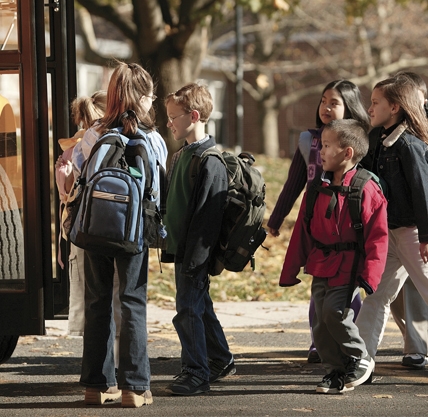
My 11 year old son sustained a traumatic brain injury when he was struck by a car while riding his bicycle. He will soon return to school and I am concerned about his ability to keep up with his class even though he has been tutored during his rehabilitation program.
Transitioning back to school after a TBI can be challenging for a child — and for the family and the school. But knowing what help is available will help ease the transition.
Your son may be eligible for support at school and in the community. Several laws prohibit discrimination based on disability. At school, if he is behind academically, he may be eligible for services under the federal special education law, the Individuals with Disabilities Education Act (IDEA). If he needs accommodations such as rest breaks or extra time to take a test, he could be covered by Section 504 of the Rehabilitation Act of 1973. And, if he meets the definition of a person with a disability, the Americans with Disabilities Act would protect him from potential discrimination in many community settings like stores, movie theaters, and recreation centers.
To qualify for special education services under IDEA, the schools must find that he needs academic support. Start talking with the school now about the eligibility process. You can contact your local special education department in the school system to set up an appointment. If your son is found eligible, you and the school will develop an Individual Education Plan (IEP) to be implemented once your son returns to the classroom. Even if he does not qualify for an IEP, the school can develop a 504 plan with specific accommodations to make his school day easier.
It's important that you — and perhaps a treating professional — make the educational system aware of your son's strengths as well as his weaknesses. The more you contribute to the process, the better the plans will be. Both types of plans can be amended frequently as your son's needs change.
As his parent, you know your child best. Learn what the laws can do for you and advocate for him to insure he receives the supports and services he's entitled to.
About the author: Carolyn Rocchio
Carolyn Rocchio is a nationally recognized advocate, author, and speaker in the field of brain injury. Her expertise in brain injury developed as a result of a 1982 auto crash in which her son sustained a severe traumatic brain injury.