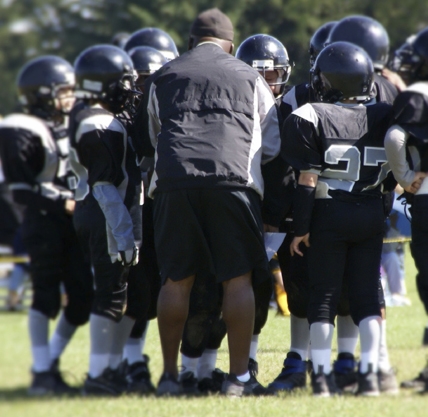
I work in a high school athletics program. Is there any training I should get to help me better respond to situations where a brain injury may have occurred?
Brain injuries can happen anywhere, but the risk is always higher while participating in sporting activities. The best way to respond to an injury is to prevent it from happening in the first place. Do your best to encourage and enforce safety standards, especially the diligent use of helmets during contact sports.
The Centers for Disease Control and Prevention offers a free toolkit designed for coaches and other individuals involved in school sports programs. It is immediately downloadable, or you can request a copy to be mailed to you.
There is also a 2006 book called The Heads-Up on Sports Concussions that discusses concussions at all levels of sport — from the earliest levels through the professional ranks.
You can also investigate the only specialized training program available to non-medical professionals — the Certified Brain Injury Specialist, or CBIS, which is offered through the Academy of Certified Brain Injury Specialist. In order to enroll in such a program, you must meet certain criteria and pass a test to receive certification.
Michael Paul Mason has served as an editor for two literary publications, and has appeared on several national media outlets, including the Lehrer Newshour, CBS News, and NPR's Morning Edition.
His writings have appeared in several newspapers and magazines, including Discover, The New York Times, and The Believer. Mason remains active as a lecturer and speaker. Mason has also built a reputation for noteworthy journalism. When Mason's article, "Dead Men Walking", appeared in Discover magazine, it ignited a national debate about the treatment of brain injured soldiers. Mason has since traveled to Iraq to report on healthcare and humanitarian issues.
Mason's first book, Head Cases: Stories of Brain Injury and Its Aftermath is an exploration into the harsh realities endured by brain injury survivors. While currently a brain injury projects manager at the Neurologic Rehabilitation Institute at Brookhaven Hospital, Mason continues to advocate on behalf of Americans with brain injury and is involved with several national legislative initiatives.
He is currently the founding editor of This Land, a monthly magazine based in Tulsa. He is also at work on a non-fiction book called The Human Assembly: The Discovery, History, and Industry of our Parts, Tissues, and Organs.
The contents of Brainline (the “Web Site”), such as text, graphics, images, information obtained from the Web Site’s licensors and/or consultants, and other material contained on the Web Site (collectively, the “Content”) are for informational purposes only. The Content is not intended to be a substitute for medical, legal, or other professional advice, diagnosis, or treatment.
Specifically, with regards to medical issues, always seek the advice of your physician or other qualified health provider with any questions you may have regarding a medical condition. Never disregard professional medical advice or delay in seeking it because of something you have read on the Web Site. If you think you may have a medical emergency, call your doctor or 911 immediately. The Web Site does not recommend or endorse any specific tests, physicians, products, procedures, opinions, or other information that may be mentioned on the Web Site. Reliance on any information provided by the Web Site or by employees, volunteers or contractors or others associated with the Web Site and/or other visitors to the Web Site is solely at your own risk.
As a current instructor and former athlete there is one word that sticks out to me as key to the progress of my recovery . . . patience. The coaches shouldn’t expect for an immediate return but should rather value the lessons learned and look to ignite a new spark among survivors so that they will appreciate the progress that they have made and in turn, be more willing to regain their athletic drive. Also being patient in the immediate recovery of an injured athlete is important because while miracles are great, they should not be expected to rush their recovery, however long that is.
Jul 14th, 2009 2:11pm