

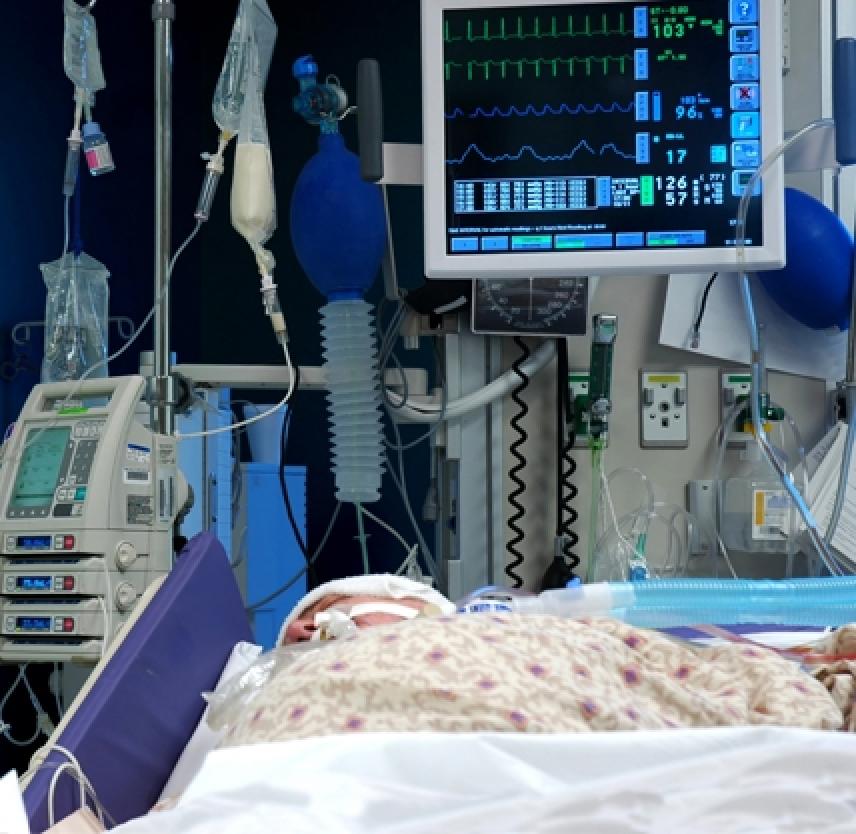
When a patient who has experienced a brain injury arrives in the ER (Emergency Room), staff will want to quickly find out how serious the injury is and start the treatments necessary to prevent further injury. As the treatments are started, the doctors and nurses will be asking lots of questions. If the patient was in an automobile accident they will want to learn all they can about the accident. How fast was the car going? Were they thrown from the car? Were they wearing a seat belt? Did their head hit the windshield? Answers to these questions help the doctors and nurses predict what kinds of injury the patient has. These answers also help them to predict how serious the brain injury is.
Often by the time the patient reaches the ER, they may be unresponsive, may appear to be in a coma, or deep sleep. They may be confused. If they are like that in the ER, the staff will want to know how they were right after the accident. Did the patient lose consciousness; if so, for how long? The staff will also ask if the patient has had a history of seizures. Had the patient been drinking or taking any drugs, especially mind altering drugs, such as cocaine and marijuana. Even though it may be embarrassing to have these questions asked, the staff needs to know in order to provide the best care for the patient.
Shortly after the patient arrives in the ER he/she will be taken away to an examining room. All family and friends will be asked to wait in the waiting room. They will not see the patient again until all the doctors have finished their exams and treatments, the patient will never be left alone. During this time the nurses and doctors will be monitoring the patient very closely.
Neurosurgeons will examine the patient to determine the extent of the brain injury; trauma surgeons will examine the patient for additional injuries; and internal medicine doctors, ophthalmologists (eye doctors), or neurologists, may be called in to examine the patient. Lots of tests will be ordered. The patient will have one or two IVs started. The patient will have blood tests and x-rays, and will be taken for CT scans and MRIs. CT Scans (sometimes call "CAT scans") are tests similar to x-rays, which are done to see if there is any swelling or bleeding of the brain. A similar type of test is called MRI. Both the CT scan and MRI can be very useful and may be done several times while the patient is in the ICU (Intensive Care Unit). The machines that perform the CT scans and the MRIs may not be located in the ER or ICU so the patient may need to be transported in their bed to the place where these tests are done. Nursing and other staff will take the patient to these tests and stay while the tests are being performed.
The ER or ICU staff will keep family and friends informed about the patient's condition and where the patient is going. Doctors may be asking for family consent for some procedures. During the time all these tests are being done, the doctors will be treating the patient.
The test results may indicate the patient needs surgery in which case the patient will be taken directly to the operating room. If the patient doesn't need surgery, the doctors will keep treating him/her. These treatments may occur in the ER or after the patient has been transferred to the ICU depending on how critically ill the patient is. If the patient is stable, he may be transferred up to the ICU. If the doctors feel the patient needs treatment before being moved, then the treatments will occur in the ER.
After a brain injury, there may be swelling of brain tissue. The pressure of the brain and fluid inside the skull may rise. The blood circulation to the brain may decrease. All three of these problems will be treated to try to prevent further brain damage. A small tube, called an intra-ventricular catheter (also called an intracerebral pressure or "ICP" catheter) may need to be surgically placed through the skull into the brain to monitor the pressure inside the skull and drain excess cerebral spinal fluid. The ICP catheter is connected to a transducer, a device that transmits signals to a monitor above the bed. This allows the doctors and nurses to tell what the pressure is inside the head. The transducer is often taped to a rolled up towel or washcloth and placed to the patient's head. The ICP catheter is also connected to a drainage bag. This bag is hung on an IV pole at the head of the bed. Surgery may be done to remove a blood clot, or even a part of the brain tissue, to reduce swelling.
If the pressure inside the skull remains too high, medications may be given into the vein, through an IV, to treat the swelling of brain tissue and speed up the drainage of cerebral spinal fluid.
The brain controls and coordinates all of the body functions. A severe brain injury often affects the ability of the body to function. Often a patient will need to breathe. An ET (endotracheal) tube may be put through the nose or mouth into the lungs and hooked up to a ventilator, a machine that assists breathing.
If the ventilator is needed for more than two weeks, a tracheostomy may be performed. A small cut is made in the windpipe, or trachea, directly above the "Adam's Apple." A tube called a "trach" is placed in the opening. The ventilator is then hooked up to the trach, similar to the ET tube. Usually a patient on a ventilator will have wrist restraints to prevent him from pulling out the ET tube. Extra fluids and medications may be needed to regulate the amount of water, salt and potassium in the body. Blood pressure, if too high or too low, may also need to be regulated with medications. An IV inserted into the upper chest (called a Swan Ganz catheter) will be monitoring how effective the heart is beating and the amount of fluid in the body. Blood pressure is monitored by another catheter placed in an artery (called an Arterial Line or A Line), usually placed in the wrist or foot.
The arterial line is used so that the doctors and nurses can tell what the blood pressure is at all times. It is likely the patient will be hooked up to a heart monitor, and will have EKG electrodes taped to the chest to monitor the heart rate rhythm. The patient may need medications to keep the heart beating normally. The patient usually is not alert enough to eat, and so he may be getting nutrients through a feeding tube.
Other IVs may also be run through pumps, so there may be several around the bed. Since the stomach may produce too much gastric juice, there may be a tube that goes into the stomach called a nasogastric, or NG, tube. This tube may be hooked up to a suction bottle to remove these gastric juices.
The stress of a brain injury may make some individuals prone to some bleeding from the stomach. This bleeding is called a stress ulcer. The patient may be treated with medications to prevent these stress ulcers from forming. Medications may also be given to help combat any infections in the bloodstream. A catheter may be placed in the bladder to drain urine.
By now it may seem that everything can go wrong. The important thing to remember is that the nurses and doctors will be monitoring the patient very closely, so they can treat all these problems as soon as they occur.
If the patient was in an accident, there might be other injuries beside the brain injury that require treatment. Often, patients have broken bones, therefore may have splints or casts, or may be placed in traction. A broken rib can puncture a lung. If this happens, the patient may have a chest tube to drain off blood or fluid from around the lungs. The patient may have internal bleeding and need medications or surgery to stop that bleeding.
Once stabilized in the ER, the patient will be transferred to the ICU. If surgery was necessary, the patient will go from the Operating Room to the ICU. The patient's family and friends will be allowed to see him or her, but because he or she is so sick, visiting hours will be limited and there will be rules about how many people can come at one time. These rules ensure that the nurses can provide the patient with the best care. Family and friends are usually directed to wait in a nearby lounge between the times for visiting. The times for visiting are usually posted on a sign outside the ICU, in special circumstances, it may be possible to visit at times other than those posted times. This must be arranged with a person at an information desk outside the ICU.
Most patients with a severe brain injury will initially appear to be in a deep sleep. They may not be able to move or open their eyes or talk. The nurses and physicians monitor the ability of the patient to respond using a scale, called the Glasgow Coma Scale (GCS). (See the page in the reference section of this book.)
After testing the patient's eye, motor and verbal response, the patient is assigned a score that best describes the nature of the response. The patient may respond in a strange way, arms and legs may spasm into strange positions. He or she may say strange things. The GCS is helpful for the doctors and nurses to evaluate how well the patient is doing and whether further treatment or tests are needed. Ask the physicians and nurses what the patient's score is. Sometimes patients are more responsive to family and friends than the doctors and nurses, so family and friends may get a different score than the doctors and nurses.
It may be very hard to visit a patient in the ICU who cannot talk or respond. Even if the patient cannot respond, act as if he or she can understand you. Speak to the patient each time you go into the ICU. Call the patient by name. Tell the patient who you are and that you care about him or her, and are hoping he or she will get better. The patient may be able to hear even if they are not able to respond, so do not say things that you do not want the patient to hear or know. You may feel awkward talking to a person who doesn't appear to be awake, but the more you talk to the patient the less strange it will seem.
The patient will stay in ICU until the doctors determine that the equipment and constant monitoring are no longer necessary. The ICP catheter in the head will have been removed and the ventilator may no longer be needed. The patient may not need to have heart rate and blood pressure monitored and may not need as many IV medications that have to be monitored closely. How long will this take? Some patients may be ready to leave the ICU in only a few days; others may require weeks or months. This is usually a very tough time for families and friends. Ask the doctors and nurses any questions you have to be sure you understand what is happening. Although both the nurses and doctors are busy, they want to keep you informed. Write questions down if that helps. If you don't understand, ask again.
Families and friends will also want to know how much damage was done to the brain, and when the patient will "wake up." Will the patient be like he/she was before the accident? Will he/she be able to go back to work? Will he/she be able to come home? Unfortunately, it's usually difficult for doctors to answer these questions. Some patients "wake up" and become responsive while in the ICU. Other patients may leave the ICU still unresponsive. A patient who is still unresponsive or comatose will leave the ICU and be transferred to a regular nursing unit when he no longer needs the ventilator, the heart monitor, and his condition is considered stable.
Some hospitals have "Family Groups" or "Family Support Groups" to help family members talk about what is going on and share how they feel. These groups are an excellent place to get information about what is happening, or to talk about your concerns. If you feel the need to talk to someone, the nurse will be able to put you in contact with a counselor or chaplain.
Usually after severe brain injury, patients will be different than they were before the injury. They may think, act, or speak differently. They may have trouble remembering. As the patient starts becoming more responsive, he/she may become agitated and may try to pull out the tubes, making it necessary to use restraints. Because of these changes, the doctors usually ask a rehabilitation medical doctor to evaluate the patient.
The doctors, nurses, social worker or discharge planner may all be talking with the family and friends about rehabilitation needs following discharge from the acute care hospital. Arranging for an admission to an appropriate rehabilitation facility takes time. The doctors and discharge planner often start talking with families about rehabilitation before the patient is out of ICU. This may seem to you too early to be talking about a rehabilitation referral. However, these early referrals need to be made to ensure that arrangements are in place when the patient is ready for discharge from the acute care hospital.
From the Brain Injury Association of Kentucky. Reprinted with permission. Third-party publishing restricted. www.biak.us.
Comments (29)
Please remember, we are not able to give medical or legal advice. If you have medical concerns, please consult your doctor. All posted comments are the views and opinions of the poster only.
Jesse Jones replied on Permalink
My mom fell and broke her arm and suffered a brain bleed, a very large one, the removed a large portion of her skull and did surgery, she survived but had a few heart attacks afterwards, she is in a come for 6 days now and not showing signs of improvement, on the ventilator too.. they are telling me she probably will be like this forever and not wake up, she’s not on any sedatives…is there any chance she could?
Anonymous replied on Permalink
My boyfriend asked me to marry him and then went out that night and was ejected from his vehicle after being hit by an 18 wheeler. His friend, wearing his seatbelt, was only scratched up. I waited for him to come home and he never did. I finally called his family who said to get up to the hospital where he was swollen with bags of ice on his body. He did wake up and tell me he loved me. His stepfather had already decided it was grave and they'd probably remove him from life support. They told me to go on home, that he'd died not much later from a heart attack. I have my doubts. I'm sure it was a hard decision to have to make, but the step dad was an ass, zero filter.
Phoebe replied on Permalink
I am so sorry. 2021 has been a terrible year. Never want to have anyone go through losing a significant other like this, especially when life had so much to look forward to. Please take care of yourself, not everyone understands what this is like. The last time mine said he loves me was the last late night phone call we had the Sunday before. It doesn't make sense.
Anonymous replied on Permalink
My boyfriend was in a car accident he had brain swelling and bleeding along with fractured elbow ankle and wrist, he now has a slight case of pneumonia and is being changed out from the tube down his throat ventilator to the treach ventilator..I have read the treach ventilator helps them ween off the ventilator faster..is he gonna be ok has anyone been through this?
Anonymous replied on Permalink
How severe is the head trauma when at first they needed to stabilize him first. And then moved to the ICU? There's a tube connected in his mouth and some kind of wire to monitor his heart rate.
The head trauma is from a motor accident.
Anonymous replied on Permalink
I came across a person who had GCS 2 and he had kidney failure ... is there any chance of survival ?
Destiny replied on Permalink
My freind areona was in a car accident and she was medical coma. And needs a surgey how long would that take
Maria replied on Permalink
My friend is in the icu he got into an accident Thursday night. & the doctors want to disconnect him already. He doesn’t have brain injury but his heart is bruise and has internal bleeding. The test to see if there was any movement in his eyes and also checked if he was able to breath on his own for 8 to 12 mind but he didn’t respond. I feel like it’s because he’s in shocked. My question is can they disconnect him this soon.
Ne replied on Permalink
A student I go to school with had a seizure and passed out in the bathroom. She apparently hit her head when she fell and they performed CPR and is in critical condition she’s currently in a coma. Is there any chance she’ll get through this. I’m really hoping and praying she makes it.
Anonymous replied on Permalink
I was in a coma on a ventilator in ICU for 7 days and then on a regular floor for another week due to aspiration pneumonia. I am fortunate to have been able to function with my full faculties as before the coma.
Anonymous replied on Permalink
That is great to hear. What was the reason that you were in coma?
Anonymous replied on Permalink
There is always hope. I'm a coma 3 victim. I lived because I worked out for 15 yrs, 5 days a week. Make your body and heart strong
Ryan replied on Permalink
What happened to you? I was a gcs grade of 5. The reason I lived was because I was a mechanic on vehicles. I was actually in the losing end of a car crash. That's how I got hurt.
Anonymous replied on Permalink
Patient is on a respirator. Is there hope?
Anonymous replied on Permalink
I'm writing this from the UK and have found, not only this article, but lots of others too, to be as relevant over here. ER care plans sound very similar. My daughter was hit by a car in early December 2015 and we're delighted that she was discharged from hospital just before her 21st birthday on 6th April. She's doing really well but still has a long haul over the next few years. She was at college with a part-time job which all seems a long way off for her at the moment. She had a lot of other injuries but the TBI overtook the teams' concerns once she was made stable. It has only been over the past few months that the enormity of what has happened has hit me hard, now that I'm not living on sheer adrenalin. I'm sure it will get better as the family move along the road of recovery, but at the moment I feel very emotional most of the day, finding it hard to find my usual resilience. What a journey this is and we're one of the 'lucky' ones.
Anonymous replied on Permalink
Hey this article helped a lot. I came across it doing research. I am a writer and I needed information on this topic. Thanks Xx
Anonymous replied on Permalink
I have to say it is one of the worse horrible things i have been thru with my son, he fell 40 ft off a bldg doing construction work. What a miracle and a blessing him surviving and coming as far as he has in almost 6 yrs.
Anonymous replied on Permalink
Response to July 18 share. Hope your husband did come around. Couldn't imagine what you went. Thanks for fighting for him. No matter the current situation of things, I pray you are having some hope in all of it. ---kenny
Anonymous replied on Permalink
The waiting period has got to be the worst! The routine phone call to the ICU nurses station only to hear a routine answer of... no changes. When I first saw my husband I spoke to him as though he could hear and understand me. Seeing him like this is gut wrenchingly horrible.his stroke was on the 15th and as of today he is still not awake.he's the most stubborn man I know and I thought for just a split second I saw a glimpse of a movement from him while I was talking to him,of a fight to come "to". Now I'm the most stubborn female I know and ours has been a rocky relation.unfortunately we are a separated couple at this time and my place there at the hospital has me questioning it tremendously,but when I spoke to him I thought I could see a second where he was trying to come around.I told him hey...at least wake up so we can fight! I told the nurse he is so stubborn and tough he IS going to come out of this and nothing is going to keep him down. I want to be respectful of his family as far as my presence there and staff is involving me and calling me as legally I'm his wife...but if needed I can step back or do what the family feels most comfortable for me to do. Seeing him like this is the worst experience ever.I love him and always will whether we remain married or not. I will do whatever he asks or requires of me.WHATEVER. from being there to help or stepping back and staying in the distance. Its about him and his and his families needs.the number one thing I want Is for him is to WAKE UP! Wake up and recover from this.he's a fighter and i just want that side of him to fight his way back to the world.how long will he stay asleep? Will the neurological damage increase the longer it takes him to come around? He lost quite a bit of blood so surgery was needed. I'm told his bp flucuates and is stabilized with meds but this waiting for him to wake period is the worst.the more time that goes on like this is it increasing his brain damage? Is there a possibility he WONT wake(that's a worst scenario option) I mean what can I expect.there s really not an answer for me I just have to hope and pray he comes round soon.he's got a lot of family and friends and that is enough to live for and they.... we...all still need him in this world.PLEASE WAKE UP BABE THIS IS RIDICULOUS! OK YOU GOT MY ATTENTION NOW WAKE YOUR ASS UP SO I CAN KICK IT AND VICE VERSA...THEN U DO WHAT YOU NEED TO DO BUT UNTIL THEN HURRY UP OR I'M GOING TO DESPERATE MEASURES TO BRING U BACK AROUND AND I DON'T FEEL LIKE GETTING KICKED OUT OF THE HOSPITAL FOR BRINGING OUR DOGS IN! So snap out of it and wake up and get better! I'm not trying to ramble on this here page...I hope my comments are appropriate I just don't know a thing about strokes and recovering from them so I m hoping I found A site where I can not only find comfort but also answers from those Already experienced in what I'm going through observing all this with him,the not knowing the when's and the what's and the how's is an excruciating errie deep dark endless pain of the unknowing world I can't even begin to explain how it feels.it's painfully nauceatingly unbearable. Thanks for listening.
Anonymous replied on Permalink
Hi. I pray to God he woke up. My daughter is now going thru this with her boyfriend/fiance. He fell down the stairs and hit his head. He was having pretty bad memory issues and recovering from drinking but that night said he drank one beer. My daughter feels horrible because they had been arguing. It was late she was sleeping and she called 911 because he was seemingly drunk when emt arrived they asked if she wanted him to go because they said they smelled the alcohol on him they said he's just blackout drunk and she said no take him I have my daughter here he can't be here like this then almost 2 hours later she gets a call that he is in critical condition and needs surgery and she was the only one on his paperwork there was no other contact. She said she was headed there and called his sister. He ended up in surgery for I think an epidural cerebral hemorrhage and now he's still asleep. His family is asking for this stuff and telling ppl it's her fault. She is fighting to see him and scared that they will say she can't see him anymore. We all pray and love him and want him awake. He is loved so much. I just wish that his family was just focused on him waking up and not telling us we can't see him especially my daughter and they are telling her she can't talk or touch him either. They tell her to go home. WE JUST WANT HIM TO WAKE UP AND BE OK.
sara replied on Permalink
Did he wake up?
Anonymous replied on Permalink
Did he ever wake up?
Anonymous replied on Permalink
2 years ago I had to ruptured brain aneurysm vasospasm hydrocephalus heart failure kidney failure and respiratory failure I was given a 2% chance I would live they said if I did live I would be a vegetable just to let you all know anything is possible I am a hundred percent recovered I walk talk work and take care of my family I am back 200 percent I wish you all the best god bless you
Alpha golf replied on Permalink
That's great. My mother just met a head injury and is in the ICU, I know that she's gonna recover and recover fast.
Anonymous replied on Permalink
Wow I have had a Tbi 4.5 years ago, I am still recovering and let me tell u this is the best site 4 wanting to learn about your brain injury
Jordy johnson
​auther of the book: The willpower to live
Anonymous replied on Permalink
I am very happy to read your articles it’s very useful for me, and I am completely satisfied with your website. All comments and articles are very useful and very good. Your blog is very attention-grabbing. I am loving all of the in. turn you are sharing with each one!…. blood pressure machine
Anonymous replied on Permalink
Anonymous replied on Permalink
Anonymous replied on Permalink