

I keep reading about neuroplasticity in the news. What is it exactly, and how does it help those of us recovering from a brain injury?
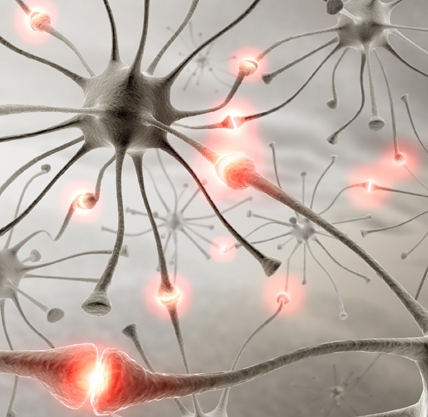
Neuroplasticity is the brain's amazing capacity to change and adapt. It refers to the physiological changes in the brain that happen as the result of our interactions with our environment. From the time the brain begins to develop in utero until the day we die, the connections among the cells in our brains reorganize in response to our changing needs. This dynamic process allows us to learn from and adapt to different experiences.
Neuroplasticity is definitely a factor in recovery from brain injury. In fact, it is the basis for much of our cognitive and physical rehabilitation practices. Part of rehabilitation is aimed at trying to rebuild connections among the nerve cells — or neurons. This "re-wiring" of the brain can make it possible for a function previously managed by a damaged area to be taken over by another undamaged area. The connections among the cells are infinitely receptive to this type of change and expansion.
In addition, we are now learning more about neurogenesis — the actual generation of new brain cells. Recent research has demonstrated that neurogenesis does indeed continue into and throughout adult life, although only in specific areas of the brain. Researchers are exploring ways to identify those areas of the brain where new cells are developing, to discover how to promote or inhibit neurogenesis, and to learn how new neurons may become part of the working brain. The hope is that this information will ultimately help people better recover from brain injury.
About the author: Celeste Campbell, PsyD
Dr. Celeste Campbell is a neuropsychologist in the Polytrauma Program at the Washington, DC Veterans Administration Medical Center. She has a long history of providing cognitive psychotherapy and developing residential behavioral management programs for children and adults.

Comments (13)
Please remember, we are not able to give medical or legal advice. If you have medical concerns, please consult your doctor. All posted comments are the views and opinions of the poster only.
Erin Rohweder replied on Permalink
Way back in March 2000 I had a TBI. It changed my life.
At first, I had short term memory issues so bad, I couldn't even remember I was talking mid sentance. I had learning issues before the TBI and now this, I thought. Slowly it got better but I still suffer from it. I wont remember where i put things and forget things said shortly after. Although I'll remember later. I really feel like it helped some of my learning issues. Like I've always been terrible at math but now I can do more than i used to. Like problem solving. My grammar and spelling still suck but it's gotten better overtime as well. My penmanship is much better.
Another thing I had or lack ther of was no sense of smell at all. I seen a doctor for it that said I would never regain it back. Jokes on him. Although not 100% better I can smell some flowers definately smell skunk some times before anyone else. Then there are things that smell different. Like cat poop randomly smells like sausage. Sometime sewage/farts are not detected at all. Some perfumes or Cologne will smell terrible.
In short I can see how my brain is rewiring itself.
Anonymous replied on Permalink
Eager to hear more about everything you can offer
Thomas Burba replied on Permalink
I have tinnitus. Just woke up 7 months ago with what started to be ringing in the ears. Now it is a hissing and sometimes screeching. It can go as high as a 10 and as low as a 2. I have learned to manage my tinnitus with daily routines that sometimes helps and sometimes does not. I have a very stressful business that I do notice on a daily basis my tinnitus does react to the stress. I am very athletic, mountain bike ride and motorcross, which keeps me sane and happy. Almost everyday along with the tinnitus I have pain in my neck, ache ears and I wear a night guard for grinding my teeth. I have been to many doctors and followed there path for healing and nothing has worked for the long haul. If you have any advice or direction for me I would very much appreciate your help.
JUMA DDAMULIRA KADDU replied on Permalink
I have similar effects of a ringing sound like the one I ve read above.
lorraine replied on Permalink
same thing happened to me. found out that tinnitus is a response certain brain cells being starved of sound. get your hearing checked. once i put on my device, my ringing stopped. that was 3 years ago. good luck.
Fariba replied on Permalink
i have Tinnitus too .is there any help for me?
Ashley replied on Permalink
I had a massive stroke a year ago and I have severe physical deficits! I can walk with assistance and can’t use my left arm. I wonder if Stemcell therapy can help me regain my movements! I’m extremely depressed and suicidal! Every one tells me not to give up, but it’s really hard to see the light at the end of the tunnel! My brain must have been extremely damaged because I didn’t get to the hospital on time. I wish I could bring that time back!
Sparkka Jones replied on Permalink
I have been living with the debilitating results of a TBI (complicated by multiple previous blows to the head through out my life) since 2010. After numerous therapies and rehabilitation, I didn't get better, I got worse.
It's all about coping skills. Most of the time it's what gets me to the next day. Sometimes I just sleep because all the coping skill activities make me tired.
What I have learned about plasiscity is the "writer" part of my brain is trying to compensate for the broken speech part of my brain.
When my aphasia becomes overwhelming I spell out words and think in bulleted lists.
I can equate my own going personal discovery to writing a thesis paper (remember 10th grade?) I have gathered numerous bits of data and now I am seeing patterns, but I only have a thesis statement.
My writer brain is trying to help my verbal brain
The one thing I can pass on as advice:
DON'T GIVE UP
Carmen whaters replied on Permalink
this was vary helpful!!!!!!!
Anonymous replied on Permalink
Hi
Interesting article and thanks for sharing. Keep up the great work at your most valuable resource.
Regards
craig
PS
“With focus, dedication, resilience, persistence and especially patience, support and love, a brain, any brain can be rewired to follow new neural pathways.”
from
https://headbraininjury.wordpress.com/2015/01/31/with-focus-dedication-persistence-and-especially-patience-support-and-love-a-brain-any-brain-can-be-rewired-to-follow-new-neural-pathways/
and www.craigsquotes.wordpress.com
Anonymous replied on Permalink
I too had a TBI in 1999 due to a motorcycle/pedestrian accident. I was the pedestrian! My short term memory had never returned and is horrible. Waiting for a response.
Anonymous replied on Permalink
Anonymous replied on Permalink