

BrainLine
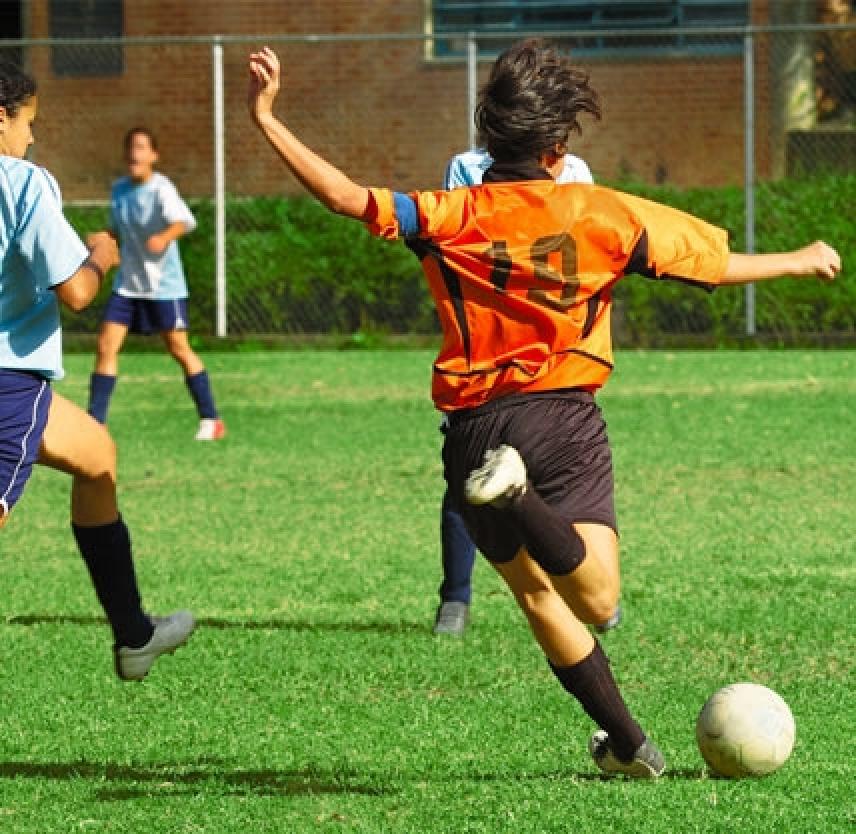
How many sports concussions occur each year?
- It is estimated that as many as 3.8 million concussions occur in the USA per year during competitive sports and recreational activities; however, as many as 50% of the concussions may go unreported.1
- Sports and recreation-related concussions are a leading cause of TBI-related emergency department (ED) visits among children and teens.2
- Children and teens make up approxiamately 70% of all sports- and recreation-related concussion seen in the emergency department.2
- Children have the highest rate of emergency department visits for traumatic brain (TBI) injury of all age groups.2
In what sports are concussions most often reported?
- Concussions occur in all sports with the highest incidence in football, hockey, rugby, soccer and basketball. 1
- The largest number of sports and recreation related TBIs among males occurred during bicycling, football, and basketball.1
- Among females, the largest number of sports and recreation related TBIs occurred during bicycling, playground activities, and horseback riding.1
- Among all sex, grade, and racial/ethnic subgroups, the odds of reporting a concussion increased significantly with the number of sports teams on which students played.8
How many athletes are sustaining multiple concussions?
- 15% of students (approximately 2.5 million) reported having at least one concussion during the 12 months.10
- 6% (1 million) reported two or more concussions.10
- 69% of athletes with a possible concussion played with concussion symptoms.9
- 40% of those athletes said their coach was not aware they had a possible concussion.9
What is known about sports concussion risk and recovery?
- In sports with similar playing rules, the reported incidence of concussion is higher in female athletes than in male athletes.1
- Young children and teens are more likely to get a concussion and can take longer to recover than adults.3
- Athletes who have had a concussion, at any point in their lives, have a greater chance of getting another concussion.3
- A greater number, severity, and duration of symptoms after a concussion are predictors of a prolonged recovery.1
- Recurrent concussion is associated with increased odds of post-concussion syndrome (PCS).4
How can sports concussions be prevented?
There are many ways to help reduce the risk of a concussion or other serious brain injury both on and off the sports field, including:
Tell athletes you expect good sportsmanship at all times, both on and off the playing field.
- Wearing the right protective equipment.
Use the right protective equipment for the sport or activity. Helmets should fit properly and be:- well-maintained
- age appropriate
- worn consistently and correctly
- appropriately certified for use
- Creating a safe sports culture.
Young athletes deserve to play sports in a culture that celebrates their hard work, dedication, and teamwork, and in programs that seek to create a safe environment—especially when it comes to concussion. As a youth sports coach or parent, your actions can create a safe sport culture and can lower an athlete’s chance of getting a concussion or other serious injury. - Enforcing the rules.
Enforce the rules of the sport for fair play, safety, and sportsmanship. Ensure athletes avoid unsafe actions such as:- Striking another athlete in the head;
- Using their head or helmet to contact another athlete;
- Making illegal contacts or checking, tackling, or colliding with an unprotected opponent; and/or
- Trying to injure or put another athlete at risk for injury.
What should you do if you think you or your child has had a concussion?
- Seek medical attention right away. A health care professional will be able to decide when it is safe to return to sports.
- Do not return to play with a known or suspected concussion until evaluated and given permission by an appropriate health care professional. Second concussions that occur before you have recovered can be very serious.
- Tell your coach or child’s coach about any recent concussions.
It is better to miss one game than the whole season.
Posted on BrainLine July 30, 2018. Reviewed February 2, 2023.
References:
- Harmon, Kimberly G., et al. “American Medical Society for Sports Medicine Position Statement.” Clinical Journal of Sport Medicine, vol. 23, no. 1, 2013, pp. 1–18., doi:10.1097/jsm.0b013e31827f5f93.
- Centers for Disease Control and Prevention. (2018). Report to Congress: The Management of Traumatic Brain Injury in Children, National Center for Injury Prevention and Control; Division of Unintentional Injury Prevention. Atlanta, GA.
- Centers for Disease Control and Prevention. (n.d.) Get a HEADS UP on Concussion in Sports Policies: Information for Parents, Coaches, and School & Sports Professionals. Centers for Disease Control and Prevention. National Center for Injury Prevention and Control; Division of Unintentional Injury Prevention. Atlanta, GA. Retrieved July 30, 2018. https://www.cdc.gov/headsup/pdfs/policy/headsuponconcussioninsportspolicies-a.pdf
- Zuckerman, S. L., Yengo-Kahn, A. M., Buckley, T. A., Solomon, G. S., Sills, A. K., & Kerr, Z. Y. (2016). Predictors of postconcussion syndrome in collegiate student-athletes. Neurosurgical Focus, 40(4). doi:10.3171/2016.1.focus15593
- Centers for Disease Control and Prevention. Brain Injury Safety Tips and Prevention. (2017). Retrieved July 30, 2018, from https://www.cdc.gov/headsup/basics/concussion_whatis.html
- Centers for Disease Control and Prevention. Responding to a Concussion and Action Plan for Coaches. (2015, April 7). Retrieved July 30, 2018, from https://www.cdc.gov/headsup/basics/concussion_respondingto.html
- Coronado, V. G., Haileyesus, T., Cheng, T. A., Bell, J. M., Haarbauer-Krupa, J., Lionbarger, M. R., Gilchrist, J. (2015). Trends in Sports- and Recreation-Related Traumatic Brain Injuries Treated in US Emergency Departments. Journal of Head Trauma Rehabilitation, 30(3), 185-197. doi:10.1097/htr.0000000000000156
- Depadilla, L., Miller, G. F., Jones, S. E., Peterson, A. B., & Breiding, M. J. (2018). Self-Reported Concussions from Playing a Sport or Being Physically Active Among High School Students — United States, 2017. MMWR. Morbidity and Mortality Weekly Report, 67(24), 682-685. doi:10.15585/mmwr.mm6724a3
- Centers for Disease Control and Prevention. (2017) HEADS UP: Concussion in Youth Sports Online Training. Centers for Disease Control and Prevention. National Center for Injury Prevention and Control; Division of Unintentional Injury Prevention. Atlanta, GA. Retrieved July 30, 2018. https://www.cdc.gov/headsup/pdfs/youthsports/course/HU-YSC_Transcript_2017-a.pdf
- DePadilla L, Miller GF, Jones SE, Peterson AB, Breiding MJ. Self-Reported Concussions from Playing a Sport or Being Physically Active Among High School Students — United States, 2017. MMWR Morb Mortal Wkly Rep 2018;67:682–685. DOI: http://dx.doi.org/10.15585/mmwr.mm6724a3
Comments (24)
Please remember, we are not able to give medical or legal advice. If you have medical concerns, please consult your doctor. All posted comments are the views and opinions of the poster only.
Anonymous replied on Permalink
I love this article because it helps identify safety and caution.
Anonymous replied on Permalink
This is good info cuz I'm doing this for something in school:]
Anonymous replied on Permalink
Yes Sir
Lillian replied on Permalink
same im doing an injury project so this was helpful
Horsatia Wighai... replied on Permalink
Same, I'm using it for a persuasive speech :)
Denise replied on Permalink
But teen getting hurt from contact sports is not only from not practicing right.
Anonymous replied on Permalink
You are right, in football players hit heads often. this is apart of game play.
Anonymous replied on Permalink
Hi i just wanted to say that this article is very helpful and that this is helping me a lot with college.
Anonymous replied on Permalink
Thank you this was super duper helpful!! love ya! :)
Anonymous replied on Permalink
VERY GOOD ARTICLE HEPL VREY MCUH THAKNS
Anonymous replied on Permalink
what is the cause and effect of concussions?
Eloise replied on Permalink
My mom says that I cannot play soccer without a football helmet. Is that really nesassary when I have been playing LACROSSE since KINDERGARTEN???
Anonymous replied on Permalink
My question is which sport has the greater incidence if concussions - football or rugby I played both.My guess is football..also more-research is being done in soccer because if headers.
Anonymous replied on Permalink
Harmon, Kimberly G., et al. “American Medical Society for Sports Medicine Position Statement.” Clinical Journal of Sport Medicine, vol. 23, no. 1, 2013, pp. 1–18., doi:10.1097/jsm.0b013e31827f5f93.
Anonymous replied on Permalink
The largest number of sports and recreation related TBIs among males occurred during bicycling, football, and basketball.1
Among females, the largest number of sports and recreation related TBIs occurred during bicycling, playground activities, and horseback riding.1
Anonymous replied on Permalink
This article was great, helped so much for an essay I'm writing.
Raymond replied on Permalink
Nice artical helped me a lot
Nicholas replied on Permalink
Thank you. I was doing a current event, and I love reading about this.
Anonymous replied on Permalink
I don't know what to say besides a million thanks! ! This article really helped do the research I needed for an essay that I had to write, now I'm in a group about this topic, gathering all of our information! Thanks again!
Anonymous replied on Permalink
good advice
Anonymous replied on Permalink
Thank you for the info really helpful
Anonymous replied on Permalink
Very helpful
Anonymous replied on Permalink
Thanks for the info, you really helped me!
Anonymous replied on Permalink
This is very good info thank u