

Turn Text Only Off

Page Utilities


Raised Awareness of TBI Has Helped Boost Research Efforts Raised Awareness of TBI Has Helped Boost Research Efforts

Click on any phrase to play the video at that point.
When a patient comes in the emergency department, we evaluate them based on the Glasgow Coma Scale. So, we're just trying to codify their injury-- --are they severe, are they moderate, or are they mild? Depending on where they fit in there depends on, obviously, what interventions we do, and what's needed. I think, probably, the saddest thing is that we really have no treatment available, and depending on whether you're mild, moderate or severe, basically what we're doing is supportive care. Throughout their hospitalization that's all it is, it's supportive care and preventing anything from worsening the injury or any other bad thing from happening to them, but the reality is, there is no drug available to treat them with acutely and to prevent ongoing damage. So, part of the reason it gives me passion in studying traumatic brain injury, is that every time I have to go to a family member and tell them that their loved one has had a bad brain injury, and there's not really anything we can do, other than to sort of wait and support them and see what happens, that's really disheartening. It's frustrating as a physician because you want to do something, and it's devastating to the family. There's just not a lot of hope. So, that's why we're working, many of us, working very hard to try to find a treatment for this devastating disease. The most important changes over the last 10 years, has been awareness, and if there's silver lining to OIF and OEF, the Iraq and Afghan conflict, it is that it has brought to light the importance of traumatic brain injury, especially mild traumatic brain injury, and what the laypeople in sports, we call it concussion. Concussion is essentially a traumatic brain injury. So, it has brought it forth. People now have a recognition of it, an awareness that it's a problem, and that has really helped us in the research realm. First of all, getting access to patients and to subjects. Second of all, in funding, in putting money towards research in this area which had been left alone for many years. In fact, the CDC, prior to OEF, called traumatic brain injury the 'silent epidemic,' because it was devastating, causing huge problems, and nobody paid attention to it. So, that's been the best thing that's happened over the last 10 years. From a research standpoint, we're just getting going. There is a lot of great stuff. We're learning more about the pathology and the pathophysiology and about mechanisms, targets that we can use. The polydrug, the multidrug approach is now being accepted as a legitimate approach, which is great. New detection devices are being developed to help us with our concussion assessments.

show transcriptShow transcript | Print transcript

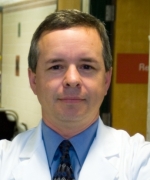
It's disheartening for physicians like Dr. David Wright to have to tell families with a loved one with severe TBI that, to date, there is no definitive treatment besides waiting and offering support.

See more videos with Dr. Wright.

Produced by Victoria Tilney McDonough, Ashley Gilleland, Justin Rhodes, and Erica Queen, BrainLine.


David Wright, MD David Wright, MD, FACEP is a tenured associate professor in the Department of Emergency Medicine at Emory University, and the director of the division of Emergency Neurosciences. The Emergency Neurosciences program is dedicated to finding novel therapies for the treatment of rapidly evolving neurological conditions, including traumatic brain injury, stroke, status epilepticus, spinal cord injury and others.

The contents of Brainline (the “Web Site”), such as text, graphics, images, information obtained from the Web Site’s licensors and/or consultants, and other material contained on the Web Site (collectively, the “Content”) are for informational purposes only. The Content is not intended to be a substitute for medical, legal, or other professional advice, diagnosis, or treatment.

Specifically, with regards to medical issues, always seek the advice of your physician or other qualified health provider with any questions you may have regarding a medical condition. Never disregard professional medical advice or delay in seeking it because of something you have read on the Web Site. If you think you may have a medical emergency, call your doctor or 911 immediately. The Web Site does not recommend or endorse any specific tests, physicians, products, procedures, opinions, or other information that may be mentioned on the Web Site. Reliance on any information provided by the Web Site or by employees, volunteers or contractors or others associated with the Web Site and/or other visitors to the Web Site is solely at your own risk.

Related Content

Audio/Video:
 

 Comments

There are currently no comments for this article


BrainLine Footer


BrainLine.org is a WETA website funded by the Defense and Veterans Brain Injury Center through a contract with the Henry M. Jackson Foundation. Government funding support is not an endorsement of WETA or any of its products, including this website.

© 2013 WETA All Rights Reserved