

Turn Text Only Off

Page Utilities


How Do You Get a Patient's Consent to Be in a Trial If He is Unconscious? How Do You Get a Patient's Consent to Be in a Trial If He is Unconscious?

Click on any phrase to play the video at that point.
The original trial--and classically the way a lot of emergency trials operate-- used something called proxy consent. You have consent from the patient which in a head injury trial--by definition--you can't do. The next best thing in the world of research is to find a proxy--or a family member or a legally-authorized representative--to provide the consent. Basically what they're doing is they're saying, this is what we think the subject or our family member would want, and we're okay with this study as well. So, that's what proxy consent is about, and in Protect I--the first study that we did--we used proxy consent. The problem with proxy consent is that it takes time. It can't be used if you've got to get a drug in really, really quickly. We actually proved that in the Protect study-- and many other studies have shown this-- that it takes on average 4, 6--sometimes even more--hours to sit down with the family member, describe first of all the condition. The treatment team separately needs to go in and talk to them about the condition and what's expected; and then a study team comes in and talks to them about the study, the risks, and the benefits, and all of that takes time. So for this study--for the Protect III clinical trial-- we are operating under a very, very special condition called EFIC which is exception from informed consent. This is an FDA-approved process, so we had to submit all of our materials to the FDA to get their approval to do this. Essentially what it means is that as soon as the patient meets criteria, then they can be enrolled into the study and given the drug. This is a very special process. You have to meet very rigorous criteria before the FDA will allow it to occur. An example--and why traumatic brain injury fits--is that there has to be no really good alternative therapy--which in traumatic brain injury, there is none. It has to be a devastating disease or one that is life-threatening, and of course traumatic brain injury meets that criterion. There a number of other things that you have to meet. Then you have to go about doing community consultation before the study starts. You go out and gather up members of the community, and you talk to them about this trial happening in their community-- get suggestions from them, provide them information, see if they're for or against the study. And by the way, for Protect over 85 to 90% of the people agreed that this was a good thing to do in the community. And then we also have to do--at the end of the trial--something called public disclosure in which we have to release the information to the public and really try to get it out there--what the results of the study were. Those are just some of the requirements of the FDA's EFIC process.

show transcriptShow transcript | Print transcript

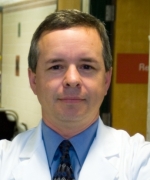
Dr. David Wright talks about the PROTECT III trial studying the use of progesterone for moderate to severe TBI and how you get patients' consent.

See more videos with Dr. Wright.

Produced by Victoria Tilney McDonough, Ashley Gilleland, Justin Rhodes, and Erica Queen, BrainLine.


David Wright, MD David Wright, MD, FACEP is a tenured associate professor in the Department of Emergency Medicine at Emory University, and the director of the division of Emergency Neurosciences. The Emergency Neurosciences program is dedicated to finding novel therapies for the treatment of rapidly evolving neurological conditions, including traumatic brain injury, stroke, status epilepticus, spinal cord injury and others.

The contents of Brainline (the “Web Site”), such as text, graphics, images, information obtained from the Web Site’s licensors and/or consultants, and other material contained on the Web Site (collectively, the “Content”) are for informational purposes only. The Content is not intended to be a substitute for medical, legal, or other professional advice, diagnosis, or treatment.

Specifically, with regards to medical issues, always seek the advice of your physician or other qualified health provider with any questions you may have regarding a medical condition. Never disregard professional medical advice or delay in seeking it because of something you have read on the Web Site. If you think you may have a medical emergency, call your doctor or 911 immediately. The Web Site does not recommend or endorse any specific tests, physicians, products, procedures, opinions, or other information that may be mentioned on the Web Site. Reliance on any information provided by the Web Site or by employees, volunteers or contractors or others associated with the Web Site and/or other visitors to the Web Site is solely at your own risk.

Related Content

Audio/Video:
 

 Comments

There are currently no comments for this article


BrainLine Footer


BrainLine.org is a WETA website funded by the Defense and Veterans Brain Injury Center through a contract with the Henry M. Jackson Foundation. Government funding support is not an endorsement of WETA or any of its products, including this website.

© 2013 WETA All Rights Reserved