

Turn Text Only Off

Page Utilities


Dr. Jamshid Ghajar: Why Woodpeckers Don't Get Brain Injuries Why Woodpeckers Don't Get Brain Injuries

Click on any phrase to play the video at that point.
We're looking at the biomechanics of shearing in traumatic brain injury. If we're focused totally on the helmet, we're missing a lot about the biomechanics if we don't incorporate the neck because the head is moving back and forth. One analogy I like to make is that woodpeckers don't get concussions because they're going dead on. And so there's no shearing of the brain when they're hitting directly on. In fact, they've done studies with the NFL showing that players that get hit directly on are much less likely to get a concussion than if you get hit in the side of the head. So the side of the head, if you start moving, look at the neck. You start moving and then there's this shearing occurring. And there have been some very nice experiments actually at Washington University in St. Louis by Dr. Bailey where he's actually taken subjects in the MRI and they've just dropped just a little bit, and they can see the frontal lobes expanding and contracting, this shearing that's occurring in the front part of the brain, just with a little bit of rotation. So if you take that up several magnitudes, you can see how this expansion would tear white matter connections and produce many of the symptoms that people with concussion have. So here's the sort of anatomical, behavioral, and also neurophysiological if you include EEG or fMRI and so on, but these are the kind of things that go together in terms of a hypothesis that can be tested and also, if it turns out to be true, you can come up with diagnostics and therapeutics once we understand the science behind it. But I think that the biomechanic part would be great just to prevent all this from happening anyway. It's like back in the days before cars had seat belts and airbags. Seat belts and airbags have dramatically reduced injury--huge-- and it's because understanding the biomechanics of injury. They've been focused on merely bodily injury. Of course you don't fly out of the car anymore, you don't hit the windshield, and so that reduces brain injury. But you still have the person inside the car going like this and so on. The whole issue of getting head restraints and so on, they do that in NASCAR with the HANS device. They basically hold the helmet back to the car so there is no rotation of the head, and indeed, brain injuries have dropped dramatically in NASCAR and Formula 1 racers because of the HANS device. That's an extreme, right? So now there's no rotation of the head with respect to the torso. Let's take that somewhere in between where maybe there is some rotation but it's dampened. So we have to look at the biomechanics of the neck, and we're not going to solve this problem until we do that.

show transcriptShow transcript | Print transcript

Understanding the biomechanics of the neck from injury is crucial for diagnosing and treating TBI. Getting hit straight on, the way a woodpecker moves it's head, will be less damaging than being hit from the side where the neck can twist, causing tearing of white matter connections.

Produced by Noel Gunther and Justin Rhodes, BrainLine.


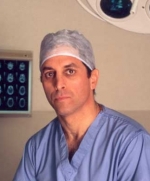
Jamshid Ghajar, MD, PhD Jamshid Ghajar, MD, PhD is chief of Neurosurgery at Jamaica Hospital-Cornell Trauma Center, clinical professor of Neurosurgery at Weill Cornell Medical College and President of the Brain Trauma Foundation.

The contents of Brainline (the “Web Site”), such as text, graphics, images, information obtained from the Web Site’s licensors and/or consultants, and other material contained on the Web Site (collectively, the “Content”) are for informational purposes only. The Content is not intended to be a substitute for medical, legal, or other professional advice, diagnosis, or treatment.

Specifically, with regards to medical issues, always seek the advice of your physician or other qualified health provider with any questions you may have regarding a medical condition. Never disregard professional medical advice or delay in seeking it because of something you have read on the Web Site. If you think you may have a medical emergency, call your doctor or 911 immediately. The Web Site does not recommend or endorse any specific tests, physicians, products, procedures, opinions, or other information that may be mentioned on the Web Site. Reliance on any information provided by the Web Site or by employees, volunteers or contractors or others associated with the Web Site and/or other visitors to the Web Site is solely at your own risk.

Related Content

Audio/Video:
  • video content icon
    People with brain injury can usually process information, though it may happen slowly. However, the timing of their processing attention may be off. More research is needed. See more of Dr. Ghajar's videos here.
  • Attention Is a Person's Window on the World
  • video content icon
    The standard medical guidelines published in 1995 have already significantly improved outcome, but more knowledge and change in doctors and the public is necessary to continue to improve outcome in people with TBI. See more of Dr. Ghajar's videos here.
  • Using Knowledge for Better TBI Patient Outcome
  • video content icon
    A great deal of good basic science research has and continues to get done, but mostly in silos. Standardizing what is known in clinical practice would be the smart way to optimize care for people with TBI. See more of Dr. Ghajar's videos here.
  • Start with Low-Hanging Fruit in TBI Treatment
  • video content icon
    Eye tracking technology is dynamic and quick. One test takes 30 seconds and picks up hundreds of data points per second in contrast to static reaction tests which collect only a few per second. See more of Dr. Ghajar's videos here.
  • Eye Tracking Technology to Test TBI Symptoms
  • video content icon
    Trauma centers that comply with evidence-based medicine for TBI — or any medical condition, for that matter — should be certified and given incentives. See more of Dr. Ghajar's videos here.
  • Evidence-Based Medicine Leads to Better Outcomes
  • video content icon
    In 1995, the first evidence-based guidelines endorsed by the American Association of Neurological Surgeons were published. But implementing them for equal care for all proved to be more difficult. See more of Dr. Ghajar's videos here.
  • First Standard Guidelines for Brain Injury Trauma Care
  • video content icon
    Learn how predictive timing stems from attention and how that timing becomes out of synch and variable for people post-TBI. See more of Dr. Ghajar's videos here.
  • Learn How Predictive Timing Stems from Attention
  • video content icon
    Shearing is the stretching and tearing of the tiny nerve cells that comprise the brain. Learn more about the research and neuroimgaging that shearing can cause when the brain is injured. See more of Dr. Ghajar's videos here.
  • Understanding the Nuances of Shearing Injuries in the Brain
  • video content icon
    You can't have a head without a neck ... more research is needed on how the neck moves and what impact those movements have on shearing within the brain during injury. See more of Dr. Ghajar's videos here.
  • More Research Is Needed on the Dynamics of Neck Motion
  • video content icon
    Helmets do a lot to prevent brain injuries, but the dynamics of head and neck movement should be part of the prevention equation, too. See more of Dr. Ghajar's videos here.
  • Do Not Ignore Neck Injuries
  • video content icon
    Learning more about concussion through research is like looking at a photograph -- some pixels will be more clear and defined than others. See more of Dr. Ghajar's videos here.
  • Sorting Through Evidence While Researching Concussion
  • video content icon
    The medical definition of  "concussion" needs be quantitative and non-static. It also needs to have clinical utility. See more of Dr. Ghajar's videos here.
  • Dr. Jamshid Ghajar: Complex Project to Define Concussion
  • video content icon
    Concussions have been around since the beginning of time, but our knowledge and treatment of them are and need to be vastly different. It all starts with the need for one, sound definition. See more of Dr. Ghajar's videos here.
  • Dr. Jamshid Ghajar: Multiple Definitions of Concussion
  • video content icon
    Doing whatever possible to get better outcomes for people with brain injury is crucial whether through research, diagnosis, treatment or a combination of all of them. See more of Dr. Ghajar's videos here.
  • Five Wheels on an Ambulance
 

 Comments

There are currently no comments for this article


BrainLine Footer


BrainLine.org is a WETA website funded by the Defense and Veterans Brain Injury Center through a contract with the Henry M. Jackson Foundation. Government funding support is not an endorsement of WETA or any of its products, including this website.

© 2013 WETA All Rights Reserved