
Turn Text Only Off

Page Utilities


Finding the Right Doctor for People TBI Finding the Right Doctor for People with TBI

Click on any phrase to play the video at that point.
How does a caregiver know when it's time to search for a new doctor or a new team? There is no easy answer to that one. You're asking me good questions. I think that certainly one should feel free to look for other opinions and get other opinions. Many physicians have a problem with patients requesting "second opinions," but I think you have a right to do that as a caregiver, as a patient, and all too often, physicians take that as a slap in the face to their own opinion, but I think ultimately, we as physicians need to facilitate those kinds of requests, not, in any way, inhibit them. I think that we need to encourage people to educate themselves, and some of the resources have been mentioned already. If you see things about new treatments for, for example, vision loss or perceptional impairments, you need to broach those kinds of questions to the treater and if the treater is not aware of that intervention, they need to refer you to places where you can get information about that treatment.

show transcriptShow transcript | Print transcript

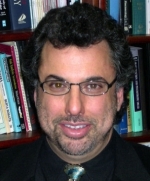
Dr. Nathan Zasler, an internationally respected physician specialist in brain injury care and rehabilitation, talks about how caregivers need to educate themselves about their loved one's TBI and not be afraid to get a second opinion.

This is an excerpt from BrainLine's webcast Caregiving and TBI: What You Need to Know. See full webcast here.

BrainLine


Nathan D. Zasler, MD Nathan D. Zasler, MD is CEO and medical director for Concussion Care Centre of Virginia, Ltd. as well as CEO and medical director for Tree of Life Services, Inc.  Dr. Zasler is board certified in physical medicine and rehabilitation and fellowship trained in brain injury.  He is an affiliate professor at the VCU Department of Physical Medicine and Rehabilitation, Richmond, VA, and an adjunct associate professor for the Department of Physical Medicine and Rehabilitation at the University of Virginia, Charlottesville.  He is a fellow of the American Academy of Disability Evaluating Physicians and a diplomate of the American Academy of Pain Management.

The contents of Brainline (the “Web Site”), such as text, graphics, images, information obtained from the Web Site’s licensors and/or consultants, and other material contained on the Web Site (collectively, the “Content”) are for informational purposes only. The Content is not intended to be a substitute for medical, legal, or other professional advice, diagnosis, or treatment.

Specifically, with regards to medical issues, always seek the advice of your physician or other qualified health provider with any questions you may have regarding a medical condition. Never disregard professional medical advice or delay in seeking it because of something you have read on the Web Site. If you think you may have a medical emergency, call your doctor or 911 immediately. The Web Site does not recommend or endorse any specific tests, physicians, products, procedures, opinions, or other information that may be mentioned on the Web Site. Reliance on any information provided by the Web Site or by employees, volunteers or contractors or others associated with the Web Site and/or other visitors to the Web Site is solely at your own risk.

Related Content

Audio/Video:
 

 Comments

There are currently no comments for this article


BrainLine Footer


BrainLine.org is a WETA website funded by the Defense and Veterans Brain Injury Center through a contract with the Henry M. Jackson Foundation. Government funding support is not an endorsement of WETA or any of its products, including this website.

© 2013 WETA All Rights Reserved