
Chapter 10 - Physical Rewiring: Healing His Body with Exercise
The only thing that ever sat its way to success was a hen.
— Sarah Brown
Brain Injury Rewiring for Survivors strongly urges your survivor to get active and play to enjoy life and create new brain cells. Here we further explore the mental and physical benefits of exercise. Did you know that survivors who exercise far surpass those who don’t? We discover why and how physical activity helps survivors to recover and look at typical physical problems and places that offer help. This chapter covers:
- Benefits of exercise, including recent research.
- Recovery process — typical problems and common deficits.
- Before he starts — preparation, goals, motivation.
- Helpful equipment.
- Programs to improve his movement.
- Accessible gardening.
Introduction
You will probably hear something like this from your survivor: “Yeah, right, physical recovery — I don’t think so! Heal my injured body myself? It’s not gonna happen. My body is so damaged there’s nothing left to recover. It’s hopeless. Nothing I can do will bring it back.”
Encourage him to try. Encourage him to adapt the “Use it or lose it” motto and say, “Use it to lose it!” Lose what? How about his disability? If he argues that nothing can take that away, you can say, “You’re right. However, if you exercise, you’ll be less disabled — isn’t that better than the way things are now?”
There are several ways he can achieve this goal. Besides exercise, muscle-stimulating devices and Constraint-Induced therapy (see Chapter 7) also strengthen affected limbs.
How much can he recover?
Nobody knows, but he can recover function — if he works at it. Recent research studies of brain plasticity continue to uncover promising new information about the three Rs of rewiring: activity reorganizes neural circuits and networks, replaces cells and chemical messengers, and regrows axons, dendrites, and synaptic connections (Dobkin, 2000).
Exercise Benefits for Everyone
Physical Benefits
To help convince your survivor to exercise, remind him that exercise increases physical capacity and ability to perform activities of daily living (ADLs), enhances his immune system, and helps to reverse and control risk factors for heart disease and stroke — high blood pressure, high cholesterol, obesity, high triglycerides, low HDL (“good cholesterol”). Exercise can also prevent or reverse bone loss, help people achieve and maintain healthy body fat levels, prevent or delay serious complications of diabetes, reduce need for insulin, and reduce the risk of colon and breast cancer. Importantly for those with arthritis, it improves endurance, strengthens muscles, and increases joint flexibility and range of motion (CDC, 1999; Elrick, 1996).
Mental Benefits
These are as important as physical benefits. They include elevated mood, reduced depression and anxiety, increased feelings of well-being, improved ability to handle stress, improved self-image, and intellectual function (CDC, 1999; Elrick, 1996).
Enhances memory. Middle-aged adults who improved their fitness by 15% through cycling also raised their scores on a memory test. Other studies confirmed that cyclists over the age of 55 demonstrate better recall than their sedentary counterparts (Strickland, 1994).
Delays diseases of aging. Your survivor’s injury instantly aged him. He’s not a candidate for Alzheimer’s disease just yet — if he exercises. Exercise can protect him from developing this debilitating brain disease — or at least stay healthy longer. What’s the evidence? How about four decades of data on nearly 400 people who engaged in life-long physical activity? (Smith, 1998).
Increases creativity. “Cardio” workouts that elevate the heart rate release chemicals like endorphins, epinephrine, and norepinephrine that promote a positive mood and may also enhance creative thinking. How? Researchers speculate that these opiate-like chemicals release inhibitions which then promote stream-of-consciousness thinking — the ability to think freely and creatively.
Discuss what happens if he doesn’t exercise. An inactive lifestyle decreases cardiorespiratory fitness, impairs circulation to the lower extremities, and can lead to osteoporosis — all of which can increase his daily dependence on others, decrease social interaction, and lead to more disability! Inactivity also leads to lower self-concept, depression, and diminished intellectual functioning (Gordon et al., 1998; Elrick, 1996).
If you need still more reasons to convince your survivor to get off the couch, this next study ought to do the trick.
Exercise Benefits for Survivors
To explore exercise benefits, 240 survivors were recruited from various communities in New York. The group of 64 exercisers and 176 non-exercisers were nearly 70% male, ages 18-65, and on the average injured about 10 years earlier. To determine if effects of exercise were different for those with and without disabilities, two non-disabled comparison groups of 66 exercisers and 73 non-exercisers were also included in the study (Gordon et al., 1998).
Exercisers swam, jogged, or bicycled an average of 30 minutes per session, three times a week for six months. While some of the differences between exercisers and non-exercisers were sharper than expected, one finding was a surprise:exercisers were survivors of more severe brain injuriesasmeasured by loss of consciousness. Here are the results:
Overall health. Non-exercisers reported 23 symptoms of health problems significantly more frequently than exercisers. Nearly 35% experienced difficulty in handling personal care versus 8% of exercisers.
Improved physical health. Forty percent of the non-exercisers reported blurred vision compared to 14% of exercisers. Similar numbers were found for waking up and staying awake. Inactive survivors also showed other negative effects — decreased lung capacity and decreased ability to work.
Improved mental skills. Physical activity stimulates the brain and improves oxygen consumption. Continuous movement also requires focus and concentration, which likely results in cognitive improvements. Far fewer exercisers than non-exercisers reported problems in their daily lives — learning, remembering, reading, planning, using time, or seeing others’ points of view. Imagine that! For example: only 8% of active survivors found it difficult to handle personal care versus over 34% of the non-active survivors, and 20% of exercisers forgot chores versus 52% of non-exercisers.
Improved emotional health. Exercise-induced endorphins really improve mood! Significantly, 34% of the non-exercisers reported feeling depressed versus 13% of the exercisers, 60% felt irritable and nervous versus 40%, and boredom affected nearly 60% compared to 28%. Another study found that of the people diagnosed with major depression, those who exercised and did not take medication improved more than those who only received medication — and those who only exercised did just as well as those who received both medication and exercise (Duke, 2004).
Sharpened job skills. Survivors who exercised reported far fewer problems with being on time, learning, concentrating, organizing, following directions, and remembering. For example, trouble following instructions was experienced by 35% of the exercisers versus 63% of the non-exercisers, and 9% of exercisers experienced difficulty caring for others versus 30% of non-exercisers.
Increased productivity and community involvement. It is no secret that an active lifestyle and community participation are linked — regardless of disability. Exercisers felt less impaired and more mobile and productive, thus leading to better integration into the community. This means more opportunities for your survivor to feel connected to others and to meet others of the opposite sex!
Avoidance of the robot syndrome... This set of problems plagues survivors who don’t continue to work and is characterized by inactivity, weight gain, boredom, depression, and fear of attempting challenging motor activities (Gordon et al., 1998; Mercer & Boch, 1983).
Typical Problems and Deficits during the Recovery Process
When you read about all the possible problems in this section, you may think that physical activity is contraindicated, if not impossible. Actually not. Your survivor needs exercise even more than non-disabled others because of all these difficulties!
Why? When your survivor is inactive, the negative physiological effects of his disabilities are more pronounced (Gordon et al., 1998). Even if physical activity doesn’t improve your survivor’s ailments, it can ease some of the depression of being disabled. And the exercise may make him so tired he forgets about the whole disability mess for a while!
Motor Failure
Some time after your survivor’s initial injury, as his systems awaken, he tries to move. But as he attempts previous patterns of motion and skills, he soon finds that he no longer possesses the neuromuscular and sensorimotor capabilities to perform them accurately. His central nervous system does not correctly receive, interpret, and transmit information because damaged or inactive pathways distort it. What happens? Failure. Despair. Anger. Try as he might, his body doesn’t work like it did.
What are typical sensorimotor and other problems?
Survivors experience several kinds and degrees of problems.
Visual disorders that range from blurred vision to complete blindness are common, as are visual-perceptual and visual-motor coordination problems. If not initially found by medical professionals, spatial relationship difficulties often surface in failed attempts at daily tasks like using keys or inserting coins in slots, inability to find one’s way around, and lack of recognition of familiar people.
Vestibular dysfunction is a reduced ability to sense spatial location, due to impaired visual, auditory, and body awareness. Experiencing problems with balance, equilibrium, reaction time, and coordination can lead to dizziness, nausea, fatigue, and headaches.
Vertigo is an imaginary feeling of motion that affects nearly all survivors of moderate injury, and up to ¾ of those with mild head injury. Not to be confused with lightheadedness, vertigo causes sensations of spinning, falling, rocking, and rising.
Other sensory dysfunctions frequently reported include increased or decreased pain and temperature sensation, chronic pain — often from neck and back injuries, sleep disturbances — often an increased need for sleep, and a significant increase or decrease in sexual drive.
Impaired motor function includes problems with movement, fine and gross motor incoordination (ataxia), loss of ability to plan motor movements (apraxia), weakness (paresis) of one or both sides of the body, extremity weakness, abnormal muscle tone and muscle stiffness (spasticity), and seizures.
Diminished physical conditioning and flexibility. The degree of decrease depends on the length of inactivity. Fatigue is common and may be a result of injury-induced factors such as chronic pain, sleep disturbances, hypothyroidism, and depression. Your survivor may also have symptoms of the results of inactivity such as hypertension, diabetes, and heart disease.
Increased susceptibility to both injury and illness.Whether this is due to unrepaired physical damage and/or chemical changes due to head injury is controversial. Because all tasks are more difficult to do, it seems logical that the combination of increased strain, reduced tolerance for stress, and inadequate rest produces injury and/or sickness.
Personal experience. In addition to numerous stitches, many of the joints, muscles, and bones of my body have been sprained, strained, or broken in the years since my injury, as compared to a few sprains and strains pre-injury. Some may relate this to aging. Nonsense! Most of my injuries occurred between two and fifteen years after my brain injury at age 29. And, based on 12 physical biomarkers for aging, I am fitter than many people half my age! I simply become sick and injured more frequently. In my case, I believe it is due to a weaker immune system, a damaged right side, and decreased coordination, balance, and quickness. When my weaker right side fails, my left side takes the blow and breaks. But reduce my athletic pursuits? — Nah! Sports bring me joy!
What about his disability and length of inactivity?
Physical disability is not a deterrent. Is your survivor paralyzed? Does he use a wheelchair? These factors are not obstacles to getting a job. Research shows that motor disability does not have a significant impact on rehabilitation or long-term disability. What is vital is cardiovascular fitness and capacity to work. Face it: if he gets tired wheeling across the kitchen to the refrigerator, how likely is it that he could wheel around an office or school or store or repair shop for part of a workday?
Length of time since injury or activity is unimportant. Good news! Studies found that some improvement in functional physical activities can occur long after the injury and initial rehabilitation, even in people whose underlying neuromotor functioning remains unchanged.
Has he been inactive for a while? That’s okay, too. These same reassuring studies show that those who have not received intervention for several years may regain lost skills once they start therapy again (Bray et al., 1987; Dordel, 1989). So he just needs to begin — and persevere.
All available research points to the importance of extensive and prolonged retraining — practice! — for any return of function. Neural pathways need to be re-opened and re-energized through repetitive activity. So, remind him to just do it!
Exercise Basics
To rewire can be both fun and successful — if he does it right. Help him prepare his physical and mental environments to get fit.
What kinds of activities deliver these benefits?
Any rhythmic movement that continues for at least ten minutes brings benefits. If it’s fun, he’ll do it!
Outdoor examples include walking, wheeling, Frisbee throwing, cycling, running, skipping, rock climbing, in-line skating, skateboarding, swimming, paddling (kayak or surfboard), body-boarding, and team sports. Work-related activities (such as yard work, gardening, mowing, and carpentry) count too if they’re continuous.
Indoor examples include activity classes, circuit training, boxing, martial arts, dancing, exercise machines (treadmill, stepper, bicycle, arm cycle) or sit-down activities (wheelchair basketball, rock climbing wall, chair dancing). Work-related activities count if they’re continuous.
When does he start, how vigorous and how much activity?
Physical Benefits
Now! If not today, when? He needs to start before the “robot syndrome” is added to the rest of his problems. Remind him to wear his scientist hat — to look and listen during his physical therapy sessions.
Is he having fun? Also consider that 30 minutes of lawn mowing, leaf raking or snow shoveling is equivalent to 30 minutes of wheeling or brisk walking, a 15-minute run, 20 minutes of wheelchair basketball, or 45 minutes of playing volleyball.
Components of a Physical Rewiring Program
Preparation
Locate resources. Contact local facilities to learn about their programs, fees, and if scholarships are offered. Many communities offer free or low-cost activity programs. Explore anything that might be helpful for his continued recovery. Borrow or invest in fitness and strength training books and audio/video tapes. Investigate web sites. Consider investing in a trainer. Find others who want to join him — or a group or class he can join. Check health insurance to learn what it will cover. Be persistent!
Where do we find help?
- Hospital- or community-based rehab centers.
- Colleges — some campuses offer an adapted lab.
- Community/adult education programs.
- Health clubs, gyms, YMCA, YWCA, centers for yoga and martial arts.
- Fitness professionals.
- National and community brain injury foundations.
- Websites for programs such as National Center on Physical Activity and Disability (NCPAD), Disabled Sports USA, Disaboom. See Resources.
Schedule activity, record progress, and reward. Like other important events, remind him to write it on his calendar. Help him keep a record of his progress in a fitness notebook, including daily progress notes. Encourage him to select non-food rewards (or make a treat dependent on achieving a goal), like exercise equipment, outings, etc. — make it his choice! Plan to transport him — or, better yet, join him in activities!
Set goals. Work with your survivor’s health-care professionals to help him determine realistic goals. Ask about any limitations, possible medication effects, and warning signs and treatment for overexertion.
Fitness Goals
Before we discuss ways to motivate him — and ourselves — to exercise, let’s look at basic fitness goals beyond the enjoyment factor. The primary goal for most people is to “improve health,” which includes developing and improving strength, flexibility, and endurance.
As a survivor, he likely needs to add “develop and improve balance and optimism” to his list of goals. It is well known that an improved outlook is a byproduct of a regular exercise program.
A secondary goal could be to “improve appearance.” Looking better means losing fat and gaining muscle. Offer to take his photo before he starts his exercise program. Update it every month to remind him of his progress, especially if he becomes discouraged.
Another goal could be to participate in an athletic event — a wonderful opportunity to meet like-minded others. Both indoor and outdoor events occur year-round. “Team-In-Training” programs prepare enthusiasts for a good experience.
The fitness program itself focuses on building strength, flexibility, and endurance. Each program includes three elements: frequency, intensity, and duration. See Brain Injury Rewiring for Survivors for more information.
Motivation
Your survivor has decided he wants to be healthier, and to look and feel better. For most of us, participation in activity is based on level of enjoyment, satisfaction, and success. If we like what we do and feel good about it, we do it — if not, we don’t. Let’s explore how you can help him learn how to overcome any obstacles he might encounter to physically rewiring.
How do I counter his objections?
Beyond enjoyment, motivating himself also involves dealing with some issues. If he has set goals, scheduled activity, and is still reluctant to do it, remind him to use positive self-talk about how good he’ll feel. If that fails, try these ideas:
The 10-minute rule. Suggest that he do an activity for 10 minutes. Then, if neither body nor mind wants to go on, he stops what he’s doing and asks himself if he needs food, sleep, or a different exercise? At first, he may need to try all the options to find the right answer. Eventually, he will know right away what he needs to do. Basically, he needs to be his own coach — to ask himself what will work to be active.
Change. If he still wants to quit, suggest that he change something else, like his location. Maybe he needs to add music or a companion. Maybe to team together on a work project. Any kind of change can help! If boredom hits in the middle of an activity, suggest that he change the pace (either faster or slower) or direction. Anything helps!
Rephrase “exercise.” Tell him that he’s not “exercising”; he’s just getting outdoors to see what’s happening, neighbors, animals, cars, businesses, etc. Go with him to explore the local park, shops, or malls, or maybe take a road trip somewhere.
Reward exercise time minute-for-minute with something he wants to do — he could exchange activity minutes for video game time. Or make some other activity conditional upon exercise — if he exercises, then he can…
Adopt a dog. He can take it for a walk once or twice a day. And taking care of its other needs can build his self-esteem!
Personal experience. I often used to exercise even if my body didn’t want to — then got sick. I eventually learned to take a nap first if I felt tired or didn’t want to work out. If I awoke refreshed, I’d follow my plan. If not, I’d go for an easy bike ride or rest more, knowing I’d feel better tomorrow because I didn’t push it. Now, I ask myself immediately “Is it food, sleep, or exercise?” and usually get the right answer after I review the past few hours. For example, “I just ate, so it’s not that.” I also take one or two easy or rest days a week to stay healthy.
What if he’s discouraged about learning a new skill?
Remind him that “behavior change precedes attitude change” (Isenhart, 1992). Encourage him to keep going. Frustration often accompanies doing something new. Did you know that moving the memory of a new physical skill to a permanent storage site in the brain may take up to six hours — in non-disabled folks? Researchers found that the first lesson was erased when people tried to learn two new skills within six hours (Liu, 1997) — so suggest that he start with one skill and practice it!
Movement Programs
Many programs have been created over the years to re-educate bodies and minds to promote freer movement. These include Feldenkrais, Hellerwork, the Alexander Technique, and Pilates. In a series of sessions, exercisers practice techniques designed to reduce muscle tension, increase circulation, and change unconsciously ingrained physical and mental patterns of movements in order to improve performance. Other specialized programs (such as Brain Gym) focus on motion to improve brain functioning in the belief that “movement develops intelligence” (Rogers & Brady, 1998).
Despite the ages of participants, most programs begin with functional assessment — can someone roll, crawl, sit, and stand — with and without support. Next, ability to walk is assessed, followed by walking up and down stairs. After mastering these skills, participants attempt advanced techniques like hopping, skipping, jumping, and running.
Feldenkrais
This non-intrusive movement education technique was named after its creator. Trained as an engineer and physicist, Israeli scientist Moshe Feldenkrais developed methods to stimulate proper movement as he attempted to rehabilitate himself after an old knee injury (Walford, 1997). Imagination plays a part in these specific movement lessons that engage the sensorimotor pathways of the brain. Feldenkrais believed that achieving greater movement increases activation of other mental and physical resources — each stimulating the other.
Functional Integration is a hands-on Feldenkrais therapy in which a practitioner guides body parts with gentle precise movements aimed to integrate the body through simulating the natural exploratory style of learning (Walford, 1997; Wildman, 1986). During a session, people develop new patterns of movement and learn how to reorganize their bodies to operate more efficiently.
Awareness through Movement is a Feldenkrais group therapy in which highly structured motor sequences are verbally directed by a trained instructor. In this technique, parallel to “Functional Integration,” group members instruct their bodies to move in ways that will in turn instruct their brains to function at a level that is closer to their potential. The intent of this method is for people to forge new neural pathways through slow, repetitive (20-30 times), tiny movements. Using imagination aids these movements (Walford, 1997; Rosenfeld, 1997).
Who can benefit from Feldenkrais?
Anyone who can move! Whether injured or not, clients learn how to work with their limitations — not necessarily correcting or treating them — to develop more efficient ways of moving. Moshe Feldenkrais believed that most of us use only about five percent of our brain-body potential and that everyone, in a sense, is brain-damaged through non-use or misuse of our brains — whether or not the damage is visible. Some people with motor limitations (such as hemiplegia) who previously had little hope, showed dramatic improvement (Wildman, 1986).
Hellerwork
Joseph Heller developed this mind-body technique that combines deep tissue muscle therapy, movement education, and massage. To help realign the body and release chronic pain or stress, clients follow a specific sequence of movements while engaged in a structured dialogue with their practitioner. The aim is to gain insight into the memory or issue that is the underlying cause of the tension (Natural Healers, 2004).
The Alexander Technique
Developed in the late 19thcentury by F.M. Alexander, this is considered the “grandfather” of movement re-education techniques. This mind-body method to understand coordination is practiced by observing habitual patterns of movement and then self-correcting by eliminating those that are unnecessary. Alexander discovered that the head literally acts as a steering wheel for all body motion by moving ever so slightly (Engel, 2004).
Pilates
This mat exercise technique combines calisthenics and yoga to improve flexibility, strength, and balance. Recently popular as a new way to develop core strength, “mat work” was actually developed in the 1920s by Joseph Pilates when he was interned in England during World War I. To help rehabilitate those he nursed, Pilates devised equipment using bed springs. Today’s equipment is remarkably similar to the early design with back and neck supports, spring tension, and straps to hold hands and feet. As a complement to mat work, sessions with a trained teacher to develop abdomen, buttocks, and back using precise slow movements designed to enable a new awareness of muscle function and control (Pilates Method Alliance, 2004; Pilates, Inc. 2004).
Personal experience. A program featured in my local newspaper was recommended by professional athletes so I paid attention. The premise of this approach is that the body is naturally designed to work smoothly as a unit. The program’s focus was to re-align our bodies through relaxing, strengthening, and stretching so that functioning will return — or at least improve. I signed up for four sessions and still refer to The Egoscue Method of Health through Motion(Egoscue & Gittines, 1992) as I learn to trust the wisdom of the body.
What equipment is helpful?
While high-tech apparatus is beneficial and fun for your survivor, lack of access to a rehab center does not mean his improvement needs to stop. Daily practice with basic equipment promises greater gains than once-a-week training on high-tech devices and it doesn’t need to be expensive to work. The key? Practice-practice-practice!
Mobility training: Lying or kneeling on a scooter board is useful and fun. This apparatus can be a skateboard-like device or a small box with large casters and a cutout for one leg. Weights can always be added for more resistance (Torp, 1956).
Balance work: Build or purchase the spring-a-ling, a trampoline-like device constructed from two 3’ square boards with heavy-gauge springs at the corners (Wahlstrom, 1983). A balance board can be constructed from a 1’ x 2’ x 1½” piece of hardwood that sits on two 3” wide x 3” thick x 10” long wooden half-circles. This can be made wider, lower to the ground, and/or covered with carpeting. For a balance disk purchase a 3’ disk of wood and cut a space for a softball.
To work on both balance and flexibility and to have fun, your survivor can lie on a large balance ball, rolling forward or backward or in other directions to play!
Assistive devices support injured limbs and provide stability for walking, balancing, and lifting. Walkers, canes, crutches, braces, and prostheses improve mobility. When your survivor begins balance activities, he may feel more secure with a supportive device such as a horizontal bar attached to walls, posts, or even a chair or table. As his skills develop, he can gradually diminish his use of a support — for peace of mind, it helps to have something to grab, if necessary. Custom-made shoe inserts (orthotics) equalize legs of different lengths and help support feet and legs. If gripping is a problem, limbs can be strapped to equipment with elastic or Velcro wraps.
Why is practice so important?
Studies show that functional motor skills may have to be relearned in much the same way as originally learned (Rinehart, 1983). According to experts, precise practice must occur — thousands, even millions of times — in order to successfully perfect the motor pattern (Kottke, 1980).
Although brain plasticity allows the formation of new synapses during learning, practice may be required for months — or even years — before new synapses develop and function (Rinehart, 1983). To exasperated objections to his practice paradigm from survivors like me, Dr. Kottke replied, if it took three million steps to learnto walk, why expect that it would take any fewer to re-learnto walk?
Relaxation Activities
Several activities provide techniques for relaxation. Your survivor may find any or all of them helpful.
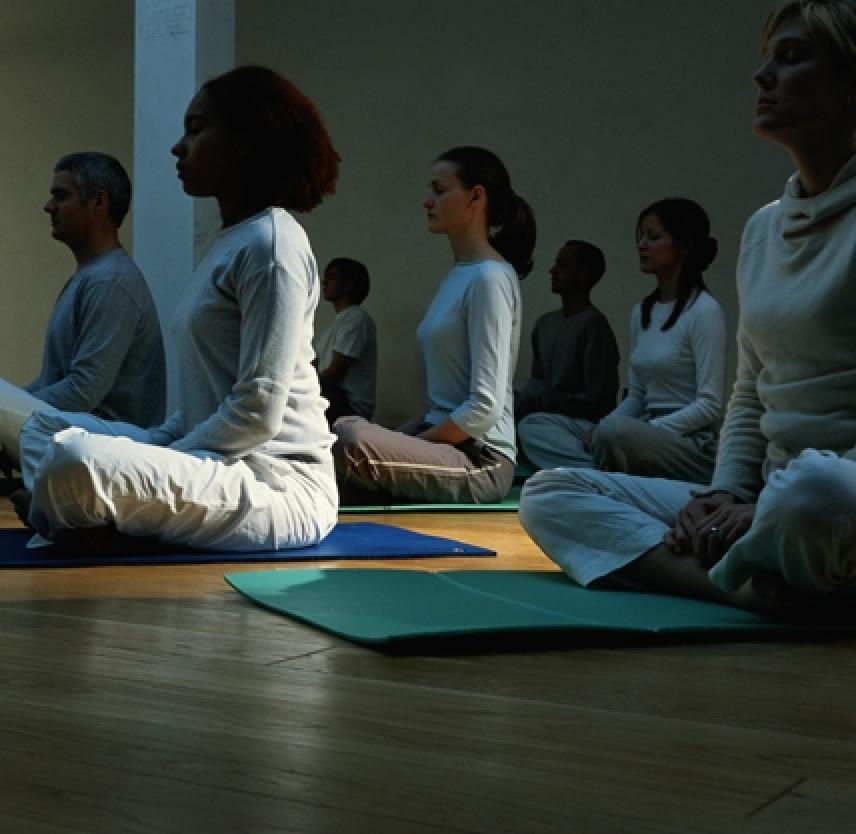
Yoga
Yoga is the spiritual tradition from which the healing Ayurveda emerged. Although we Westerners view yoga as a gentle strengthener for the body and calming technique for the mind and spirit, as traditionally practiced it is a complex system of exercise, diet, and philosophy. See Brain Injury Rewiring for Survivors for more information.
Qigong
You’ve likely seen Kung Fu and Tai Chi movements practiced, but maybe did not know that the grounding concept behind these systems is Qigong, which literally means “the meditation practice of Qi energy.” The name is derived from the Chinese characters qi meaning universal bioenergy andgong, which represents the effort placed into qi.
Developed 4,000 years ago in the cold and damp region along China’s Huang River, locals who did what was called “the big dance” stimulated the acupuncture meridians and did not succumb to the aches, pains, and illnesses normal to this climate (Evans, 1997).
Accessible Gardening
Encourage your survivor to use the natural world and gardening activities to enrich his body, mind, and spirit. Confronting obstacles and finding creative solutions is a liberating process.
Perhaps a green thumb connects to a blue ribbon — and maybe not. Either way, hands get dirty and hearts get warm. Anyone who’s planted a seed or seedling learns about growth and life. Your survivor nurtures it with food, light, and water, and watches it grow and blossom, satisfied and joyful with his efforts that resulted in such a product! Yes, it is indeed sweet to see the fruits of our labors — and they are edible.
And anyone who’s seen his plant wither and die — or not even germinate — also learns about death and loss. We can sit and sulk or rise and explore what didn’t work and why — and try again. The miracles of growth also encourage psychological healing and social development as interactions about nature and gardening naturally occur — a perfect rehabilitation setting!
Accessible Gardening guidelines:
- Paths. Make paths at least 36” wide. Raise beds 4” to 27” off the ground, accessible from both sides and up to 4’ wide.
- Watering. Using a pulley system is easier than watering cans.
- Easier moving. Use discarded coolers set on dollies
- Horizontal planters. Construct these from PVC pipe using old pots for end caps and wire them to a fence or mount on wooden legs.
- Vertical garden. Use wire, a discarded plumbing pipe for support, and two wooden pallets to construct a “sandwich.” Drive the pipe into the ground and wire the wooden pallets on the outside. Line with black plastic. Fill with soil-less mixture — lighter than soil. Make slits in the plastic for seedlings (Hair, 1999).
- Adaptive Tools. Lightweight hand tools affixed to the end of a long handle extend reach without the usual bending and kneeling. Padding for handles can be easily created from foam rubber or pipe insulation. Ergonomically designed products such as “Handform Trowel” allow your survivor to dig into the soil without needing a tight grip on a tool. A “cut and hold flower gatherer” facilitates cutting and retrieving flowers at any height. To locate these tools, see your local garden centers, adaptive catalogs, or the Holden Arboretum website.
My Recovery Journey Experience
At the time of my injury (1976), physical and occupational therapy for moderate head injuries was not offered. I was told, “You’re not bad enough” when I requested help, despite my problems with right-sided weakness, balance, visual-perceptual coordination, speech, headaches, and total body pain! Although medical authorities — and insurance — offered massage for my black-and-blue back twice a week, two of these sessions provided more than enough pain, so I declined any more.
What did I do? Well, after numerous outbursts relocated me to the psychiatric ward, I decided that the medical community was not going to help me. Duh! So, after my last hospital release, I began my own rehabilitation program at the local gym.
For more physical rewiring, I also enrolled in activity classes at the local community college. These included tennis and golf, which my body wasn’t ready for yet, and karate, for which it was. I also played softball with a low-level recreational team. As a collegiate athlete, it was not especially gratifying to play at this level, but it was where my skills fit. I could still be a star, it was fun, and I liked my teammates.
What else did I do? Swimming! In desperate need of independence again, about eight weeks after my injury I moved back to my apartment building, which was blessed with a swimming pool. Lucky for me, my father — a former coach — came over every day after work to swim with me. He not only knew how to motivate me — “Do one more [lap] than you think you can do, Honey” — but he wanted to be with me, which survivors know is not that common.
Bicycling! Although doctors told me I wouldn’t be able to ride my bicycle or play tennis, naturally I didn’t believe them. However, after many erratic attempts and a few falls, I believed them — for a while. To relearn how to ride, I decided I needed a more user-friendly bike, so I purchased a mountain bike with wider tires and an upright position.
Do I still fall? Yep — but I’m falling less and it sure beats driving! During the over thirty years since my injury, I have crashed a number of times, injuring nearly all of my body part, but not my brain — thanks to my brain-bucket helmet! Crashes are the price I’m willing to pay to feel the sun on my face and wind on my back. I also feel much safer and happier riding a bike than driving a car, so I ride — and compete in triathlon and duathlons, in off-road and track venues — they’re all fun!
Running! I found running to be one of the most difficult sports to relearn. After persevering with minimal success for eighteen years, I finally analyzed the problem — coordination! Finding an understanding coach who advocated special drills helped me to look more like a runner, but I’m still not fast — I just look and feel better and actually like it now!
In-line skating! I’d never seen a skater with fat legs, so I decided to try this sport to improve coordination while saving my joints. It’s fun, gives a good workout in a short amount of time, is not difficult to learn, and can be fast or slow. It does require a bit of daring — no problem, right? Ski poles with rubber tips give my arms a good workout and aid balance.
Board-surfing! Learning to surf was a goal of mine for several years after I moved to San Diego. After trying several boards that didn’t fit, numerous crashes, little fun, and no professional instruction, in 1994 I found a coach, a board that fit, no major crashes — and I began to enjoy myself! I stood up on the very first day, and gradually felt more confident as I went through three lessons and eight weeks of practicing. My balance deficit still hampers me but I congratulate myself after small successes, and the ocean is a soothing and forgiving medium. My brain and body don’t always do what’s needed, so some days I surf smaller waves, but that’s okay — “small steps lead to success.” I know I have to “pay my dues” to learn.
Body-board surfing with fins is fun, easy, and a good workout!
Kayak surfing! What to do when most surfing adventures find me on my butt? Buy a sit-on-top kayak! I still fall — but it’s a shorter distance and easier to climb back in and catch another wave.
Strength training! Even when injured, enough of me always worked well enough to sit and lift weights — and if I worked hard enough, I could even get a “runner’s high.”
Yoga and stretching! A gentle voice to guide me, peace and calm — that’s been my yoga experience. Whether in a large class or small, I always enjoy the gentle work and feel better during the rest of my week. Yoga is a deceiving workout — it feels harder than it looks.
My Hope for All of Us
I hope and pray that your survivor too will utter the “I will” and “I can” words. Maybe he won’t say them at all — he’ll just do it! Or he may refuse to do anything at first. Encourage him, be a role model, ask him to join you. Soon you’ll hear, “Okay, I’ll try.” Then you’ve got him!
Gradually he’ll come to find enjoyment in activity and the camaraderie of it. Joy is contagious! Later, perhaps, he’ll initiate being active — or maybe not. He’s still trying to accept his new physical state. Keep searching for fun ways to engage him physically and emotionally. I promise it’ll work!
Summary
- Believe that exercise benefits survivors in a big way!
- Know that length of time since injury or previous activity is unimportant.
- Understand that if it took three million steps to learn to walk, why would take any fewer to relearn to walk?
- Help set him up to succeed before he starts.
- Encourage him to do physical activities he likes every day.
- Remind him to schedule his activities.
- Investigate programs that improve his movement.
- Explore accessible gardening and relaxation activities.
- Seek places that offer help with physical activity.
From Brain Injury Rewiring for Loved Ones by Carolyn E. Dolen, published by Idyll Arbor, Inc. © Carolyn E. Dolen, 2010. Used with permission. www.idyllarbor.com.