

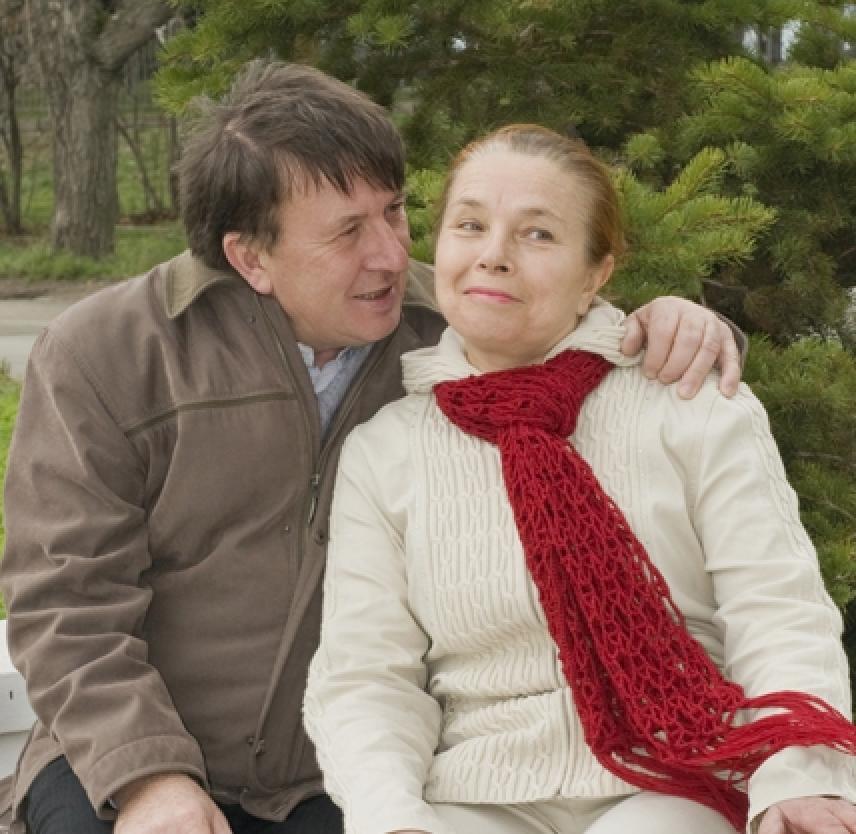
Many survivors and family members describe changes in their relationships after the injury. They may not hear much from friends, co-workers, and extended family members. Others notice that their phone calls, emails, and letters are left unanswered. Some survivors find themselves feeling alone even when they spend much of their time with family members or friends.
Are you concerned about your relationships with other people? You may be wondering how other people feel about you and what they think about you. To help you better understand how you feel about your relationships, read the list of words below. On the list below, mark the words that describe how you feel now.
- Lonely
- Neglected
- Abandoned
- Ignored
- Isolated
- Rejected
- Disrespected
- Disliked
- Unworthy
- Different
- Unsupported
- Misunderstood
Think about the items you checked and the ones you did not. The more items that you checked off, the more unhappy you may be with your relationships.
Keep in mind that relationships are a two-way street. You may be thinking a lot about how other people treat you. Just as important is thinking about how you treat other people. The way you act toward other people affects the way they treat you.
Could you be pushing other people away without meaning to? People sometimes do things that hurt their relationships without realizing it. Review the items below to help you recognize if you are doing things that might hurt your relationships. Mark the items that describe you.
- I often talk about my brain injury and how my life has changed for the worst.
- I have a hard time listening when other people speak.
- I interrupt people more than I should.
- I often argue with other people or disagree with them.
- I have a hard time thinking about other people’s needs and feelings.
- I talk about myself a lot.
- I ask people very personal questions.
- I usually don’t listen to other people’s advice or suggestions.
- I have trouble accepting people’s offers of help.
- I touch or hug people without asking them if it’s okay.
- When talking, I stand very close to other people.
- I talk more than I should.
- I usually say the first thing that comes to my mind.
Look at the items you checked off. Talk to trusted family members, friends, and professionals about the ones you checked. Then, ask yourself these important questions: “Am I making it harder for other people to like me?” “Am I being a good friend to other people?”
Building healthy relationships is important to many people. Most people want to feel understood, liked, loved, and accepted. We’ve talked to lots of survivors and their families to learn how they cope with feelings of loneliness and how they build relationships. Here are a number of strategies that have worked for them. Look over this list with trusted family or friends and try out the strategies you think will work for you.
- Work on being a likeable person. Remember, in order to have friends, you must be a good friend, too. Be the kind of person people like to be around.
- Be a kind and considerate person. Be polite. Try to do things that will help other people feel good about you and about themselves.
- Be a good listener and other people will want to share more with you. Ask and talk to others about their lives, interests, and well-being — and listen carefully to what they say.
- Learn to communicate in positive and helpful ways. Avoid being too quick to share negative thoughts and feelings with others. Talk about things that are good in your life and the world around you.
- Be careful not to be overcome by your problems and the challenges you face. Look for the good in other people as well as in yourself. Remember that most people have a good heart and enjoy helping others.
- Before you speak, think carefully about what you want to say and how others might react. Try to say things in a way that brings a positive reaction. Avoid confrontation and try to be agreeable.
- Take care of your appearance. After injury, many people become discouraged about themselves and their lives. Feelings of helplessness and discouragement can lead some people to stop taking care of themselves. No matter how you feel, don’t let the basics go undone. Wear clean clothes, brush your teeth, and comb your hair. People will have a better view of you, and you’ll feel better about yourself.
- After brain injury, you may feel overwhelmed by changes in yourself and your life. You may have trouble not thinking about your injury and the challenges you face. Try to think about others at least as much as you think about yourself. Thinking about others is a skill. The more you practice, the better you get.
- Keep an open mind about what you can do and what you want to do. It is often easier to talk to someone and start a relationship when you have something in common. Look for new activities or hobbies. Join a support group, club, fitness center, or sports team.
- Don’t lose track of your faith. You may meet understanding and kind-hearted people with similar interests and values at your house of worship.
- Everyone does better with understanding and support from others. Offer to help and do things for others without expecting anything in return. Try to do at least one nice thing for someone else every day. You’ll feel better, and so will the people you help.
- Do volunteer work. By helping others, you are likely to meet people with a kind and giving heart.
- Show a commitment to helping yourself. People will be more supportive and respectful if you do.
- Adopt a pet. Pets are wonderful companions and can help to deal with loneliness. There are many pets out there without anyone to take care of them. You can offer them a loving home and find yourself a grateful companion in return.
- Talk to and spend time with people who care about you. Write, call, or email your family and friends even if you’re just saying “hello.”
This column was written by Jeff Kreutzer and Laura Taylor from the VCU TBI Model System Program. For more information about outpatient rehabilitation services and VCU research programs, please contact Dr. Taylor by phone at 804.828.3703, toll free at 1.866.296.6904, or by email at taylorla@vcu.edu.
If you’d like more information about building relationships and overcoming loneliness, stay tuned for a book that will soon be published entitled, “Recovering Relationships after Brain Injury: The Essential Guide for Survivors & Family Members.” The book will be available through the National Resource Center for Traumatic Brain Injury (https://tbi.vcu.edu/).
This article was originally printed in the Virginia Commonwealth University Medical Center’s newsletter, TBI Today. It was reprinted with permission from the authors.
From the National Resource Center for Traumatic Brain Injury, Virginia Commonwealth Model Systems of Care. Reprinted with permission.
Comments (14)
Please remember, we are not able to give medical or legal advice. If you have medical concerns, please consult your doctor. All posted comments are the views and opinions of the poster only.
Caroline replied on Permalink
I agree with volunteer to help others and surround yourself with people that are good for you and that like you.
Other than that this list was very clearly not made by someone who has ever had a Trumatic brain injury
This list makes you feel like it’s your fault it makes you feel like you’re not doing things that are appropriate
Sorry-I like your other piece,, but this just feels like your shaming people with TBI
Angela replied on Permalink
Some of the list is physically impossible to do and my concern is this could add to the difficilties by putting unreachable expectations on other people and make a person like myself with TBI trying to do this list and not being able to which makes the frustration and low self worth increased. Some was helpful and i will try but some just does not show understanding of TBI realities I feel.
Anonymous replied on Permalink
Angela, I totally agree that the list of things that someone with a TBI can do to help themselves are mostly just impossible. It is fine to help or do 'nice' things for other people, but I have found people do not want my help because "hey she is disabled and is just going to make work for everyone else when she messes up". As for developing new interests, how easy is that if you have disabilities, so that being able to do a new activity well enough to be an acceptable member of a group, is an impossibility. And if the only things that you can do is surf the internet, that does not generate conversation with "normal" people who have full busy lives. I have had AB people bounce up to me and ask me what I have been doing. I have no job, no partner, no kids, no friends, I am not physically capable of any interesting hobbies, so I have no conversational topics, so the "well meaning" person walks off to find somebody more interesting to talk to. They did the right thing of making the effort to talk to Maree the stroke victim, but "she is so hard to talk to", how will that interaction increase my self worth?
Lori replied on Permalink
I was feeling the same way.
It’s easy to say “be likeable.” Or “be the kind of person others want to be with.”
If it were that easy, I’d have done it 20 years ago.
Lori replied on Permalink
I was feeling the same way.
It’s easy to say “be likable.” Or “be the kind of person others want to be with.”
If it were that easy, I’d have done it 20 years ago.
Anonymous replied on Permalink
I know you mean well with this advice but it often doesn't work out like this unfortunately. In the past I didn't know all my symptoms were caused by TBI, doctors never added up the symptoms for about 20 years. During those years I have been laughed at, ridiculed, dropped like a brick for symptoms even when I had told people I was sick (just didn't have the right label), bullied at school, people have gotten mad at me because I "still wasn't better" or because I was too tired to listen to their endless problems (yes, me being their "rock") and bullied at work so eventually I lost several jobs. I am intelligent (overcompensate), but have aphasia, anxiety and chronic fatigue. Dress well, am a nice person, "normal" on the outside. Raised my child without social network or father. In the end it depends on recognizing patience and kindness in others, their ability to look past my symptoms, empathize and actually see me and invest only in those kind of relationships. Much better than trying to overcompensate for social acceptability so much it leaves me drained and depressed because I can't fully control the symptoms.
Anonymous replied on Permalink
Volunteer work? If I had the energy and mobility to volunteer I'd look for work which pays because my TBI has left me desperately poor. As for a pet, I make it through each month financially only because of the charity of churches. How could I afford a pet?
Anonymous replied on Permalink
About the judgment that people with TBIs are "negligent" in not bathing regularly: I've had three and four day blocks of time in which exhaustion and pain have left me too weak to take a bath. I hate this more than anyone else might not just because I hate the physical muckiness but because of what it emblemizes, my unwanted separation from the normal life of my friends who are healthy. I don't choose this anymore than anyone with a TBI chooses to be destitute, misunderstood, alone.
Anonymous replied on Permalink
Although this could be quite helpful for some, there are others, who, whatever they decide or intend (or are advised) will find themselves behaving quite differently. It is not their fault and it can take a lot of years to get to something like this list. Always such advice should be offered and read by others with compassion for these reasons.
Anonymous replied on Permalink
My son, 21, AVM rupture at 17, is lonely. However, his personality does not match your descriptors. While he has typical social graces/poise, he does have difficulty initiating conversation/social activity & remembering that he scheduled it. He was left out of your article because he doesn't have the personality concerns you described.
Anonymous replied on Permalink
I believe it is very important to turn to someone who has proven themselves to be trust worthy and ask them to help you with these "check lists" because brain injury can cause severe lack of insight; therefore, you won't necessarily see that anything needs to be "checked". Not to mention, that lack of insight can be a "relationship breaker" also because it's the lack of insight that can be a factor in hindering connection with others.
Anonymous replied on Permalink
I'm living in hell with this brain injury which I received shortly after arriving in the US to be with my husband who now has mental health issues. Lack of support from everyone is not something I'm imagining.
Anonymous replied on Permalink
Loving yourself for many things first, dig deep if need be. But being cheer full and yes clean would be a way to draw friend's. But it takes time , and some work. I am thankful I have a husband, for he helps keep me grateful for what we are accomplishing , go forward . And embrace the new you . Then figure a way to draw other's to you . By the things from article . Thank you for sharing . G.L.F.
Anonymous replied on Permalink