

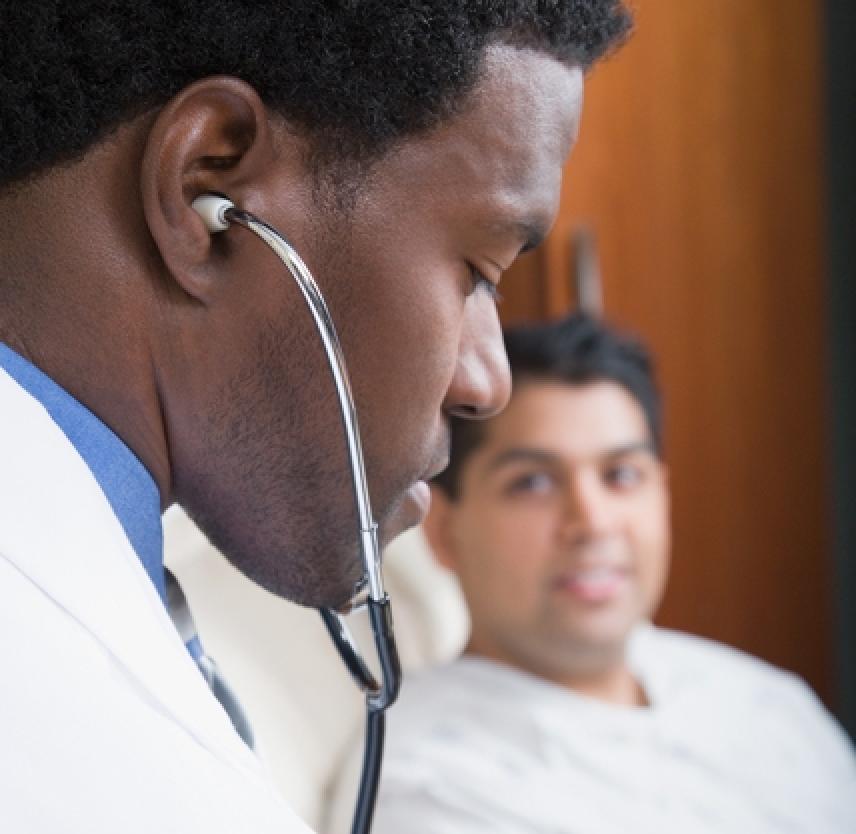
Delivering quality healthcare to culturally diverse populations is an increasing challenge in healthcare. The following steps are important to building bridges between healthcare professionals and families from different cultures.
Understand your values and assumptions.
Understanding your cultural heritage requires identifying your values, beliefs and customs. Everyone has a culture, but often individuals are not aware of behaviors, habits and customs that are culturally based. All cultures have built-in biases, but there are no right or wrong cultural beliefs.
Be aware of patients' cultural beliefs.
Healthcare providers must know and understand culturally influenced health behaviors. Examples are cultural issues about medications, decision makers in the family, body language, strongly held beliefs about alternative practices, diet and herbs. A person's cultural background can influence views on:
- Family structure and authority
- The role of an elder
- Respectful communication
- Proper behavior
- Dress and personal hygiene preferences
- Food preferences
By becoming aware of the patient and family's cultural beliefs, instruction on medical care can be more effective.
Be an effective communicator.
Communication may involve interpreters and translators. Using a trained interpreter, and not a family member, is recommended. When family members are upset, it is difficult to absorb information. Using a family member to interpret increases the risk that information will not be understood correctly. Children are often the only bilingual family members present. They should never be asked to interpret medically complex and culturally sensitive information.
Listening is also a communication tool. To provide culturally competent healthcare means to truly listen to the patient and the family to learn about the patient's beliefs of health and illness. This cannot be stressed enough.
Culture is a complex phenomenon. It is more than race and ethnic background. Cultural diversity also includes age, place of birth, disabilities, religious belief and sexual orientation.
Culture encompasses beliefs and behaviors that are learned and shared by members of a group.
Tips on Educating Families about Traumatic Brain Injury
- Explain differences between brain injury and mental illness or other developmental disabilities.
- Stress that changes in the patient's mobility, behavior or learning may be from the brain injury and not because of any wrongful act committed by ancestors or other beliefs.
- Explain the importance of taking medicine for the prescribed number of days, even if the patient feels better or is not showing any more symptoms. If the culture has a present orientation, the family may not understand the need to continue preventive medications, such as those for seizures. If the culture has a past time orientation, the family may prefer "traditional” medication or procedures.
- Make sure that the family uses standard measures for medications. Demonstrate the exact dosage or give the family a medicine spoon or measure to use.
- Ask for dates of cultural holidays. Avoid scheduling appointments during these times.
- Consider the terms "noncompliant, passive or resistant" as warning flags that communication is not working. Explore cultural reasons why the family and patient are not able to understand and respond.
Resources to Improve Cultural Competency
There are good resources on the role of culture and heritage on healthcare interactions. If your patient population includes members of cultures with which you're not familiar, please consider downloading and reviewing some of the available materials:
Ethnomed, Ethnic Medicine Information from Harborview Medical Center,
http://ethnomed.org/
Cross Cultural Healthcare Program,
http://www.xculture.org/NWRCwelcome.php
From the Washington State Department of Social & Health Services, Aging & Disability Services Administration. Used with permission. www1.dshs.wa.gov.